Natural Beauty: Craft Wood Slice Coasters with Personality
Transform fallen branches into stunning one-of-a-kind coasters for under $1 each
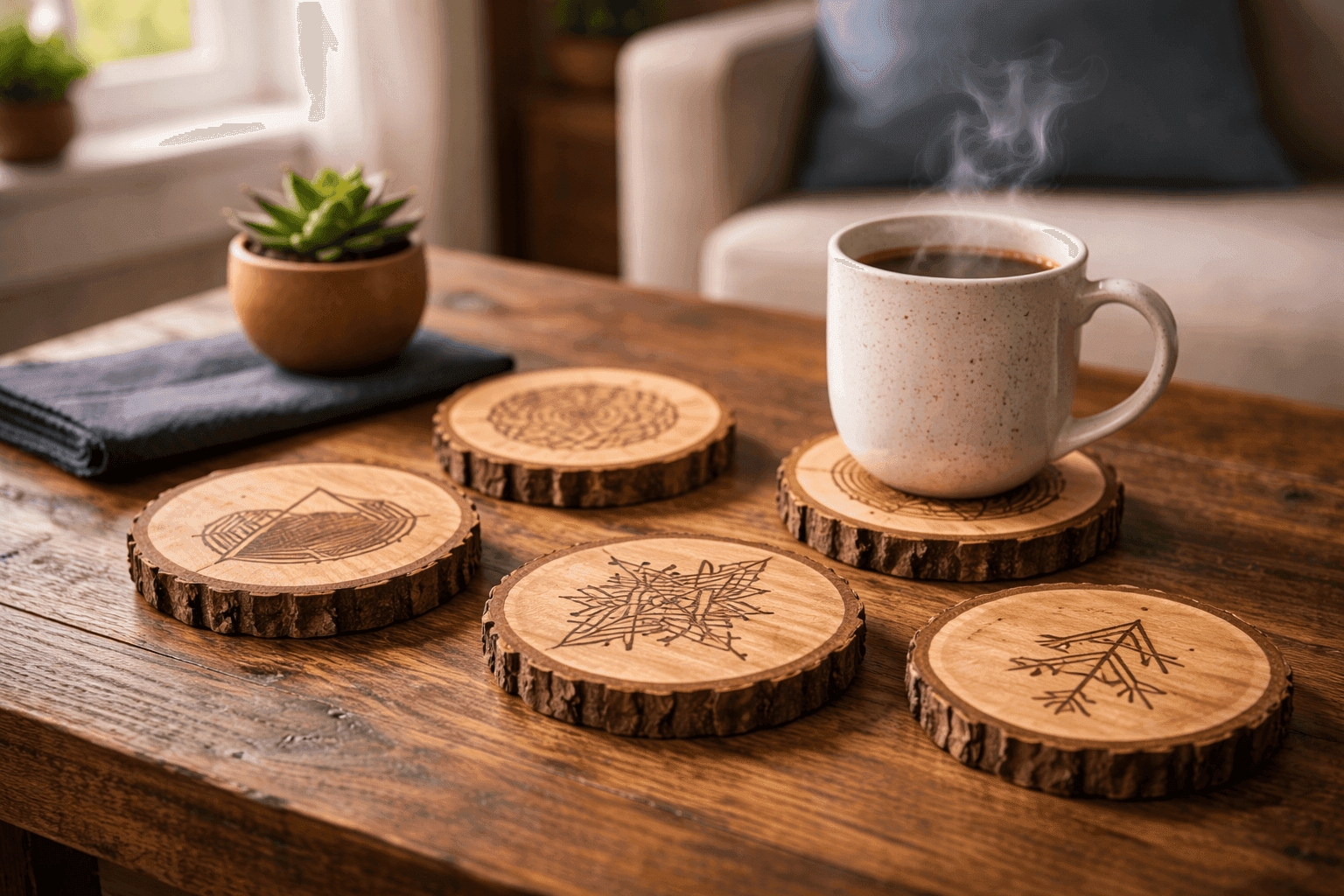
There's something deeply satisfying about creating functional household items from natural materials, especially when those materials cost nothing and would otherwise end up as firewood or yard waste. Wood slice coasters capture that perfect intersection of rustic charm and practical utility, showcasing the beautiful grain patterns and growth rings that make each piece genuinely one-of-a-kind in a way that mass-produced coasters simply can't replicate. Whether you're working with a fallen branch from your own yard, a friend's tree trimming project, or purchasing pre-cut wood slices from a craft store, this project lets you create stunning coasters for under $1 each that look like they came from an expensive artisan boutique. The optional wood-burning step adds a personalized artistic element that transforms simple wood slices into custom gifts that people actually cherish and use, and I love how the natural variations in wood grain mean you can make a dozen coasters and each one tells its own story through the rings and patterns. In 1-2 hours, you can create a complete set of 4-6 coasters perfect for your own home or as thoughtful handmade gifts that show you put genuine effort into creating something beautiful and functional.
What You'll Need
- Wood Branch: One branch 3-4" in diameter from hardwoods like oak, maple, walnut, or cherry (free from yard trimming, or pre-cut slices from craft stores for $3-5 per set)
- Cutting Tools: Miter saw for clean, straight cuts, or hand saw with steady patience (each slice should be approximately 1/2" thick for proper weight and durability)
- Sandpaper Progression: 80-grit for initial smoothing, 120-grit for refining, 220-grit for final silky finish (orbital sander speeds the process but hand-sanding works fine)
- Wood-Burning Tool: Basic pyrography pen ($15-25 for starter kit) for adding custom designs—geometric patterns, initials, nature motifs, or simple borders
- Protective Finish: Food-safe polyurethane for water resistance (2-3 coats), or mineral oil for natural matte look that needs periodic reapplication
- Felt Pads: Self-adhesive furniture pads for bottom protection to prevent scratching table surfaces
- Optional Supplies: Chisel for bark removal if desired, pencil for design sketching, clean rags for finish application
Step-by-Step Instructions
- Cut your branch into 1/2" thick slices using a miter saw for perfectly straight cuts, or carefully with a hand saw if that's what you have—aim for consistency in thickness so coasters sit flat and stable.
- Decide on bark by examining each slice and choosing whether the rustic bark-on look fits your aesthetic, or removing it with a chisel for a cleaner, more refined appearance that showcases the wood grain.
- Sand progressively starting with 80-grit to remove saw marks and rough spots, moving to 120-grit for smoothing, and finishing with 220-grit for that silky-smooth surface that feels luxurious to touch.
- Sketch your design lightly in pencil if you're adding wood-burned details—simple geometric patterns work beautifully for beginners, while those with experience can try more intricate nature motifs or personalized monograms.
- Wood-burn carefully by practicing on scrap wood first to get comfortable with temperature and pressure, then working slowly and deliberately on your coasters—remember that mistakes are permanent, so take your time.
- Apply protective finish in 2-3 thin coats of polyurethane or mineral oil, letting each coat dry completely and lightly sanding with 320-grit between coats for professional smoothness that protects against water rings and stains.
- Sand between coats very lightly with 320-grit or fine steel wool to knock down any raised grain or dust particles, wiping clean with a tack cloth before applying the next coat.
- Add felt pads to the bottom of each finished coaster to protect furniture surfaces from scratches, positioning them near the edges for best support and stability.
Here's the woodworking secret that transforms amateur coasters into gallery-quality pieces: embrace and enhance the natural imperfections rather than trying to hide them. Professional woodworkers know that knots, spalting (those beautiful dark lines from natural fungal patterns), cracks, and irregular growth rings are what give wood slices their character and value—these "flaws" are actually premium features in rustic woodworking. When you encounter a crack during sanding, you can fill it with colored epoxy resin for a stunning contrasting detail, or leave it natural and apply extra finish to stabilize it. Sapwood (the lighter outer rings) versus heartwood (the darker center) creates natural color variation that you should celebrate rather than try to eliminate. When selecting which slices become coasters, look for the most interesting grain patterns and natural features rather than the most "perfect" uniform pieces. This mindset shift—from seeking perfection to celebrating natural variation—is what separates beginner woodworkers from those who create pieces with genuine artistic value that people want to display and preserve.