Mirror, Mirror: Make Disco Ball Planters That Dazzle
Mirror tiles, strong adhesive, and a plain pot — the $5 planter transformation that catches every beam of light and turns your plant collection into a full moment
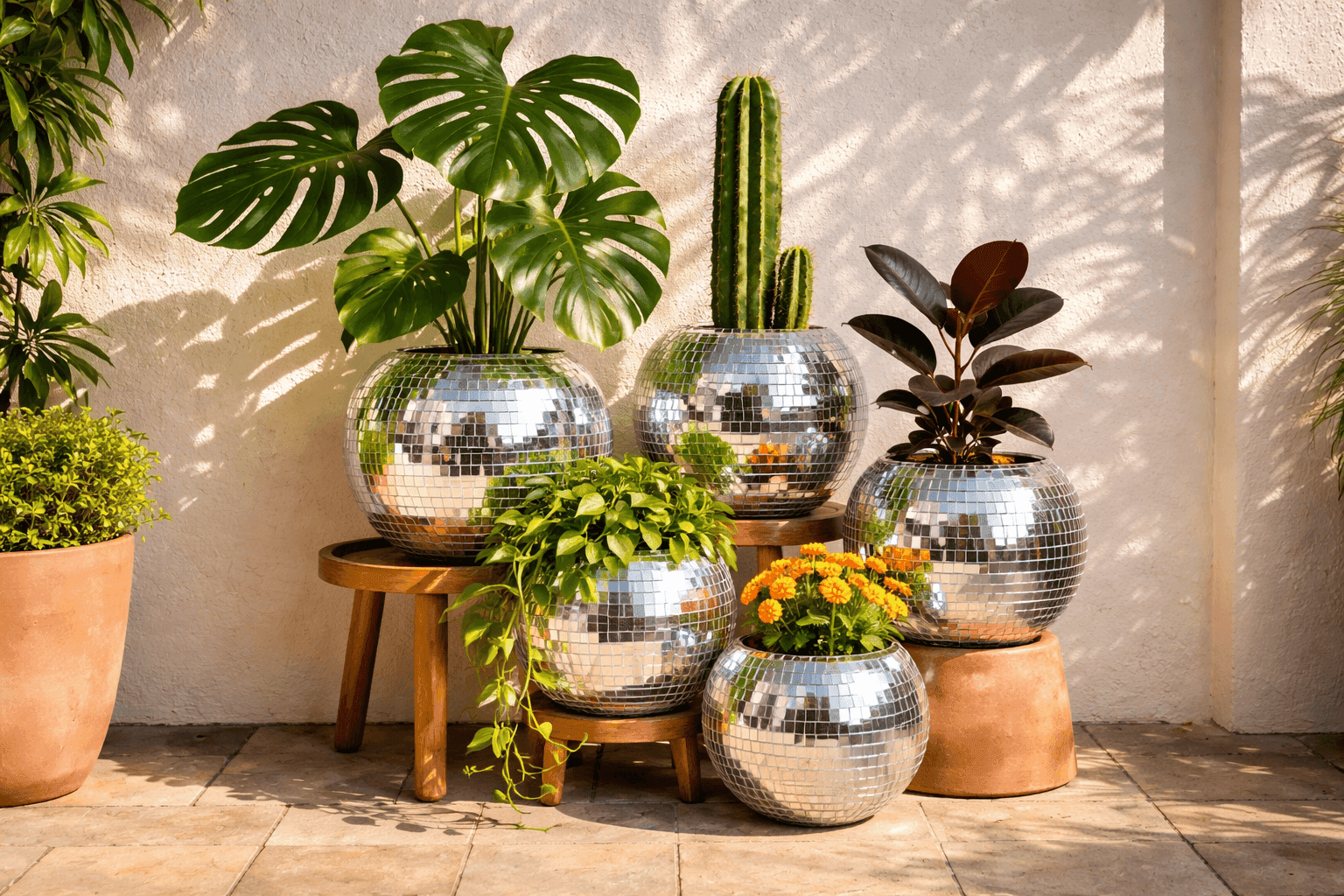
There is a very short list of DIY projects that make people audibly gasp when they walk into a room — and a collection of mirror tile disco ball planters is absolutely on it. The concept is simple enough to explain in one sentence: glue small square mirror tiles all over a plain pot and plant something bold in it. The effect is something else entirely. In direct sunlight or under indoor lighting, the finished planters throw dancing light reflections across every surrounding surface, the contrast between living green plants and glitzy mirrored containers is genuinely arresting, and a collection of three or five planters in graduated sizes turns any corner of a patio, living room, or entryway into a space that feels designed rather than decorated. Each planter costs $5–$8 in materials, takes about an hour of tiling plus 24 hours of drying time, and produces a piece that looks like something from a high-end garden boutique at a price that makes the whole collection completely reasonable. This is the Sassy Saturday project for anyone who has ever looked at their plant collection and thought it needed significantly more drama.
What You'll Need
- The Pots
- Plastic or ceramic pots in a range of sizes — 4-inch, 6-inch, and 8-inch make a great graduated collection — sourced from a dollar store, garden center, or your existing pot collection for $1–$3 each
- Smooth, straight-sided pots tile more easily and produce a cleaner result than pots with pronounced ribs, ridges, or significant taper — save the dramatically shaped pots for another project and let the mirror tiles be the star here
- Avoid unglazed terra cotta as the base — the porous surface absorbs adhesive unevenly and the tiles are more likely to pop off over time as the terra cotta expands and contracts with moisture. Sealed ceramic or plastic gives a much more stable bond
- Mirror Tiles
- Small square mirror tiles — ½-inch or ¾-inch squares are the most versatile size for curved pot surfaces, conforming to the curve without leaving large gaps — sold in sheets at craft stores like Michaels or Hobby Lobby for ~$3–$5 per sheet, with each sheet covering one to two medium pots
- Pre-mounted mosaic mirror sheets on mesh backing are the easiest starting point — they keep tiles evenly spaced automatically and can be cut with scissors into strips for working around curved surfaces section by section
- Mixing tile sizes across the collection adds visual interest — use ¾-inch tiles on larger pots and ½-inch tiles on smaller ones so the tile scale stays proportional to the pot size rather than looking oversized on small containers
- Gold or bronze mirror tiles as an alternative to standard silver for a warmer, more glamorous effect that works especially well in indoor settings with warm-toned lighting
- Adhesive
- E6000 craft adhesive — the single best adhesive for this project, bonds mirror to ceramic and plastic with exceptional strength, remains slightly flexible after curing so tiles don't pop off when the pot is handled, and is completely clear-drying — ~$4–$6 per tube, one tube covers three to four medium pots
- Tile mastic adhesive as an alternative for anyone doing a large collection — comes in a tub, applies with a notched spreader, and is more economical for high-volume tiling — ~$8–$12 per small tub
- Avoid super glue for this project — it bonds instantly but creates a brittle joint that chips off in sheets when the pot flexes or is dropped, and repositioning a tile that landed slightly wrong is impossible once the bond sets
- Finishing Supplies
- Unsanded tile grout in white, silver, or charcoal gray for filling the gaps between tiles — ~$6–$8 for a small bag that covers many pots. White grout maximizes the reflective effect; charcoal creates a more graphic, industrial look
- A rubber grout float and a damp cellulose sponge for applying and cleaning grout
- Tile spacers — the tiny plastic cross-shaped ones used in standard tile work — for maintaining consistent gaps between tiles during the adhesive drying period if you're not using mesh-backed sheets
- Rubber gloves and safety glasses — mirror tile edges are sharp and grout is alkaline
How to Make Them
- Clean every pot thoroughly with rubbing alcohol and let it dry completely before touching adhesive — any grease, dust, or moisture on the pot surface prevents the adhesive from bonding properly and causes tiles to pop off within days of completion. This prep step takes two minutes per pot and is the entire difference between a planter where tiles stay put through years of handling and watering and one that starts losing tiles the first week.
- Plan your tile layout before applying any adhesive — hold the pot next to the tile sheet and visualize how the tiles will wrap around the curve, where cuts will be needed, and how the top rim and the bottom edge will be handled. The top rim is the most visible area of the pot and where the tiling should look most intentional, so always start there with your most complete, uncut tiles and work downward rather than starting at the bottom and arriving at the rim with awkward partial tiles.
- Work in manageable sections of about 3–4 inches at a time — apply a thin, even layer of E6000 to the pot surface with a craft stick or small palette knife, press tiles firmly into the adhesive one at a time using consistent pressure for three to five seconds per tile, and use tile spacers or the mesh backing to maintain even gaps. Working in sections rather than coating the entire pot at once prevents the adhesive from skinning over before you've had a chance to place tiles in a particular area, which produces a weaker bond than fresh adhesive.
- Navigate the curved surface by cutting mesh-backed tile sheets into narrow strips of three to four tiles wide with scissors — narrow strips conform to the pot curve far more cleanly than large sections that buckle and gap on a curved surface. Press each strip firmly against the pot surface with your palm, working from the center of the strip outward to the edges so any excess adhesive squeezes toward the sides rather than building up in the tile faces where it shows through the mirror surface.
- Handle the bottom edge by cutting individual tiles to fit the final partial row at the base of the pot if needed — a clean bottom edge with consistent partial tiles looks intentional and finished, while a ragged uneven bottom edge with random-sized tile fragments looks like the project ran out of patience. Measure the gap at the bottom before cutting rather than eyeballing each tile individually, and cut all the bottom-row tiles to the same height in a single session for a consistent finished base.
- Let the adhesive cure fully for a minimum of 24 hours before handling the pot, adding plants, or applying grout — E6000 reaches handling strength in a few hours but full bond strength takes a full day, and applying grout over incompletely cured adhesive introduces moisture that weakens the adhesive bond before it's fully developed. If any tiles shifted out of alignment during the drying period, now is the time to pry them gently with a craft stick and reposition before the grout locks everything permanently in place.
- Grout the gaps by mixing unsanded grout to a smooth, thick consistency, pressing it firmly into every joint between tiles with a rubber float held at a 45-degree angle, letting it firm up for 15–20 minutes, then cleaning the mirror tile faces with a well-wrung damp sponge in gentle diagonal passes. Work in sections and clean promptly — grout that dries on mirror tile faces hazes the surface and requires significant buffing to clear, and cloudy mirror tiles defeat the entire glittery purpose of the project.
- Style the finished collection by grouping three or five planters in graduated sizes at varying heights — use a stack of books, a small plant stand, or an overturned pot as risers under one or two of the planters so the collection has visual dimension rather than sitting flat at the same level. Plant each pot with something bold and contrasting — dark green tropical foliage, a structural cactus, trailing pothos, or a bright flowering plant — and position the collection where it will catch the most direct light for maximum reflection drama. Then stand back, watch the light dance, and be completely unapologetic about how good this looks.
Visual merchandisers who style retail plant displays and editorial garden shoots use a specific placement strategy for highly reflective objects that maximizes their visual impact without tipping into sensory overload — and it applies directly to a disco ball planter collection. Never position mirror planters opposite each other in a space, because mirrored surfaces facing mirrored surfaces create an infinite reflection loop that reads as chaotic and dizzying rather than glamorous. Instead, position the collection against a single solid backdrop — a painted wall, a fence, a shelf with a solid back — so the reflections bounce off the surrounding space rather than back into themselves. The most dramatic single placement move: position the collection so it catches afternoon or late morning sun at an angle, which is when moving light creates the maximum dancing reflection effect across adjacent walls and ceilings. A disco ball planter in flat, even light is impressive; the same planter catching raking afternoon sun through a window is a full event. The plant choice matters too — bold, dark, architectural foliage like a black ZZ plant, a dark burgundy rubber tree, or a deep green monstera creates a contrast with the glittery container that reads as intentional styling rather than a pot that got bedazzled.