Steeped in Green: Succulents in a Vintage Teacup
A thrifted teacup, a handful of small rocks, and one tiny succulent — the desk décor that looks precious, costs almost nothing, and barely needs watering
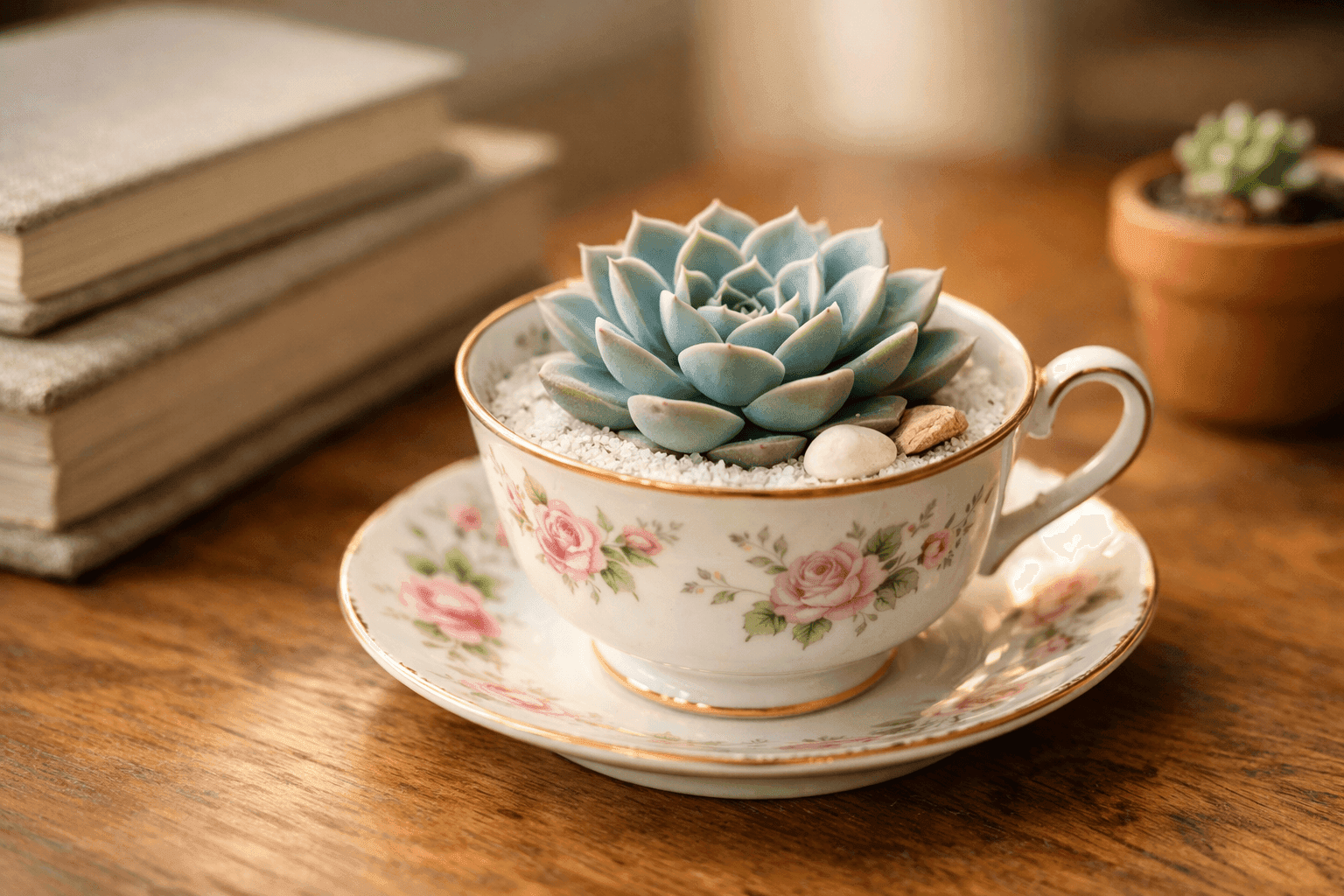
There's a specific kind of desk or windowsill charm that only a very small, very well-chosen plant can produce — the kind that makes visitors pick it up, examine it, and immediately ask where you found it. A succulent planted in a vintage teacup hits that note perfectly, and it's one of those projects where the materials do most of the design work for you. The teacup brings the character, the succulent brings the life, and the combination of something antique and something growing creates that layered, collected quality that no amount of purchased décor quite replicates. Succulents are the ideal plant for this application — they stay small, they thrive in the shallow soil depth a teacup provides, and they genuinely prefer to be slightly neglected over constantly watered, which makes them the most forgiving desk plant imaginable. A single teacup arrangement costs $5–$15 depending on whether you already own the cup, takes about 20 minutes to plant, and lasts for months with almost zero maintenance. Make one for your desk, one for a windowsill, and a few more as gifts — they're the kind of thoughtful handmade present that anyone with any taste will genuinely love.
What You'll Need
- The Teacup
- A vintage or thrifted teacup with its saucer — the saucer catches any drainage and doubles as a visual base that makes the finished arrangement look intentional rather than just placed — $0.50–$3 at a thrift store, estate sale, or from your own cabinet
- Cups with a wide opening (3 inches or more across) give the succulent roots the most room and allow for a more interesting multi-plant arrangement if desired
- Floral or patterned vintage china looks especially beautiful against the geometric forms of succulents — the contrast between the delicate china pattern and the architectural plant shapes is what makes these arrangements so visually compelling
- Cups without drainage holes work fine for succulents with a careful drainage layer — teacups are not thrown pots and drilling them without cracking the china requires a diamond drill bit and patience, so the layered drainage method is the practical approach
- Drainage & Soil
- Small pea gravel, aquarium gravel, or crushed granite for the drainage layer — a ½-inch layer in the bottom of the cup creates a reservoir that keeps roots from sitting in standing water — free from your yard or ~$3–$4 for a small bag
- Activated charcoal granules sprinkled over the gravel layer — available at pet stores or garden centers for ~$4–$6 — absorbs excess moisture and prevents the bacterial buildup that causes soil to sour in a container without drainage holes
- Cactus and succulent potting mix — never standard potting soil, which retains too much moisture for succulent roots and causes rot within weeks in a confined teacup — ~$5–$8 for a small bag that fills many teacup arrangements
- The Plants
- One to three small succulents depending on cup size — echeveria, haworthia, sedum, and aloe are all ideal choices that stay compact, tolerate the limited soil volume of a teacup, and produce interesting shapes and colors — ~$2–$4 per small plant at a garden center
- Haworthia is the single best choice for low-light indoor locations like desks away from windows — it's one of very few succulents that genuinely tolerates indirect light without stretching or losing its compact form
- Echeveria rosettes in soft dusty blue, rose pink, or silver-green create the most visually striking single-plant arrangements in vintage floral china
- Avoid fast-growing succulents like aloe vera cultivars that will outgrow a teacup within a single season — the whole appeal of this arrangement is its lasting miniature scale
- Top Dressing & Finishing
- Fine decorative gravel, white sand, or small polished pebbles for top dressing the soil surface — this single finishing step covers bare soil, prevents soil splash during watering, and gives the arrangement a complete, intentional look — ~$3–$5 for a small bag
- Optional accent elements: a tiny piece of driftwood, a single small crystal or polished stone, a miniature figurine, or a few tiny seashells nestled against the plant base
- A small spoon or chopstick for tamping soil and placing top dressing material precisely without disturbing the plant
How to Plant It
- Choose your teacup and succulent together if possible — hold the plant beside the cup before buying to confirm the scale relationship works. The plant should fit comfortably inside the cup with at least ½ inch of clearance on all sides for soil, and its mature size should remain proportional to the cup rather than quickly dwarfing it. A single dramatic echeveria rosette in a wide-mouthed floral teacup, a cluster of three tiny sedums in a deeper cup, or a solitary haworthia in a simple white cup — each is its own complete design decision rather than a default.
- Add the drainage layer first by pouring a ½-inch layer of small gravel into the bottom of the dry teacup — this layer sits below the soil and gives excess water somewhere to collect that isn't in direct contact with the roots. Tap the cup gently on a flat surface after adding the gravel so it settles into an even layer, then sprinkle a thin layer of activated charcoal granules over the gravel surface before adding soil. The charcoal is the detail that keeps a drainage-hole-free teacup arrangement healthy for months rather than weeks.
- Add succulent potting mix to fill the cup to approximately 1 inch below the rim — this headspace gives you room to seat the plant at the right depth and add top dressing without soil spilling over the edge every time you move the cup. Do not tamp the soil down firmly before planting — loose soil allows you to create a small depression for the root ball without cracking or stressing the roots during placement.
- Prepare the plant by gently removing it from its nursery pot, loosening any tightly bound roots with your fingers, and shaking off excess soil until the root ball is compact enough to fit comfortably in the teacup with soil covering the roots to the base of the lowest leaves. Examine the roots and pinch off any that are visibly brown, mushy, or dried to a papery nothing — starting with healthy roots is what determines whether the plant thrives or slowly declines in its new home.
- Set the plant in position by creating a small depression in the soil with your finger or a spoon, nestling the root ball into it, and gently firming the surrounding soil against the roots so the plant sits upright and stable with its base at the correct depth — the lowest leaves should sit just above the soil surface, not buried and not floating above a visible stem. For multi-plant arrangements, position the largest or most architectural plant slightly off-center first and work outward, placing smaller or trailing plants around it.
- Fill any soil gaps around the root ball with additional potting mix using a small spoon to direct the soil precisely without getting it on the leaves — soil trapped in succulent rosette centers causes rot at the growing point, which is the most common and most fatal planting mistake in small succulent arrangements. Tap the cup gently a few times to settle the soil naturally rather than pressing it down firmly, which compacts the mix and reduces the drainage the plant needs.
- Apply the top dressing by spooning fine gravel or decorative sand over the entire soil surface around the plant base, using a small brush or a puff of breath to clear any top dressing material that settled into the plant's leaves or rosette center. The top dressing layer should be about ¼ inch deep — enough to completely hide the soil surface for a polished result, but thin enough that it doesn't block moisture from reaching the soil during the infrequent watering this arrangement needs.
- Water sparingly and position thoughtfully — give the arrangement one small amount of water around the base of the plant using a spoon or a narrow-spouted watering can, allowing any excess to drain into the gravel layer below. Place the finished arrangement on its saucer in bright indirect light for the first two weeks while the roots settle, then find its permanent home on a desk, windowsill, or shelf where it will receive at least a few hours of indirect natural light daily. Water again only when the top inch of soil is completely dry — for most indoor environments this means once every two to three weeks, which is the entire maintenance commitment this arrangement asks of you.
Floral designers and interior stylists who work with small-scale botanical arrangements use a display technique called a curated collection — instead of placing a single teacup arrangement in isolation, they group three to five teacup succulents at slightly varying heights on a small tray or wooden board, mixing cup styles, plant varieties, and top dressing materials across the grouping for a collected-over-time quality that a single arrangement can never achieve. Use a small wooden cutting board, a slate tile, or a shallow tray as the base, vary the cup heights with a small book or folded cloth under one or two of the saucers, and group cups so their handles face different directions rather than all pointing the same way. The result looks like a thoughtfully assembled display that took years to collect rather than an afternoon to plant — which is precisely the quality that makes people stop and ask about it. For gifting, a single teacup succulent tied with a length of jute twine and a small handwritten care card tucked under the twine is one of the most genuinely charming and universally appreciated handmade gifts in the entire DIY repertoire.