Jar of Light: Make Mason Jar Hanging Lanterns
Battery tea lights, wire handles, and mason jars hung at varying heights — the enchanting outdoor lighting that costs $1–$2 per lantern and transforms any patio or garden
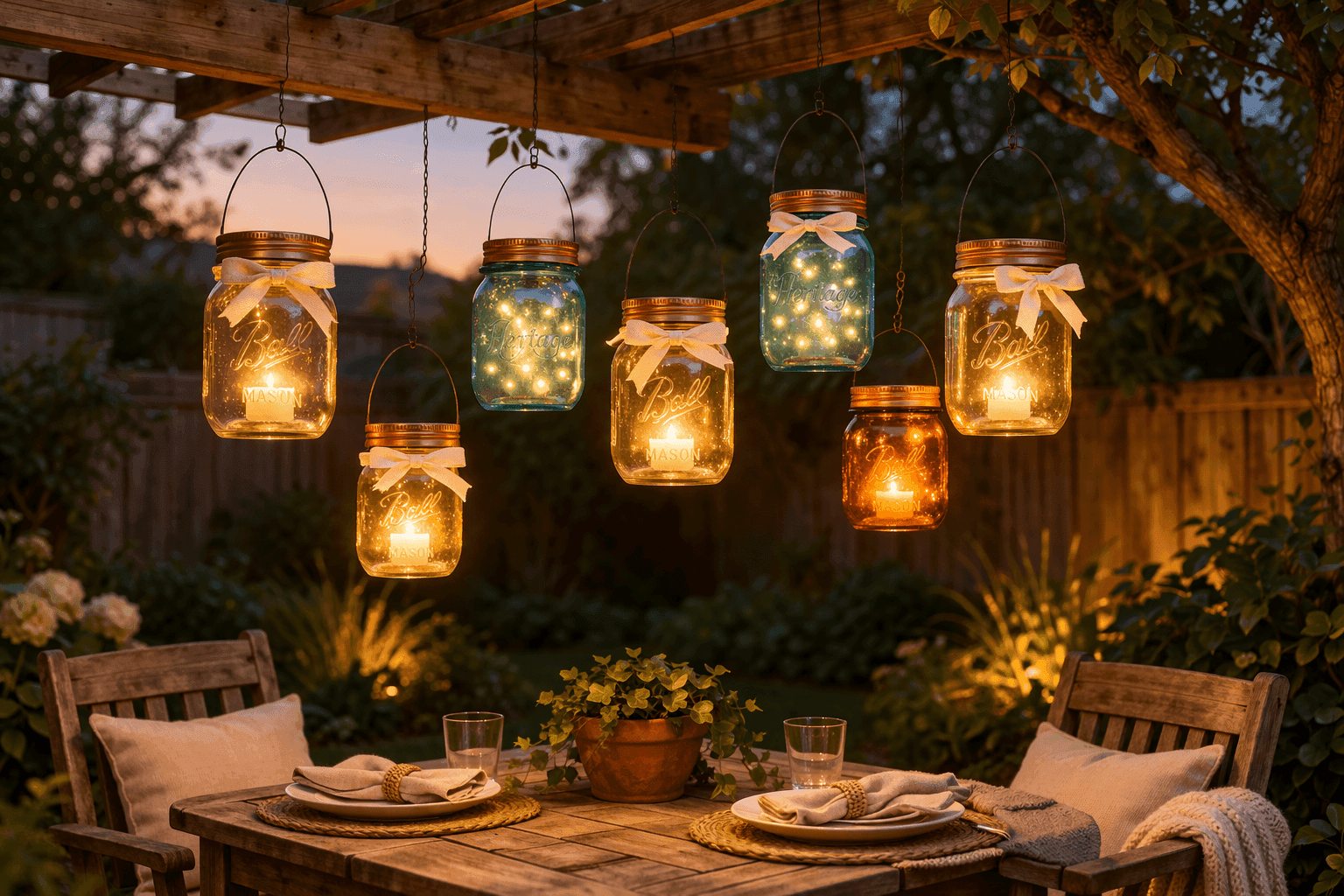
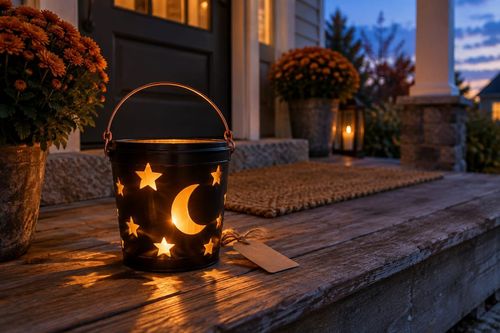
There is a specific kind of outdoor evening light — warm, soft, slightly flickering, contained in glass — that makes any space feel like a special occasion even when the occasion is just a Tuesday. Mason jar lanterns hung at varying heights from tree branches, pergola beams, and shepherd's hooks create exactly that quality of light for about $1–$2 per lantern using jars you probably already own. The wire handle construction takes about five minutes per jar, battery-operated tea lights eliminate any electrical safety concerns entirely, and a cluster of five to seven lanterns hung together at different heights transforms a plain patio or garden corner into the kind of atmospheric outdoor space that makes dinner guests slow down and actually notice where they are. Add a ribbon bow where the wire meets the jar neck, paint the lids in gold or copper metallic, or etch a simple monogram into the glass for the kind of personalized detail that makes these look custom-made rather than assembled from pantry castoffs. These are the lanterns you light on the first warm evening of the year and don't take down until it gets cold again.
What You'll Need
- The Jars
- Mason jars in a mix of quart and pint sizes — the size variation in a hung cluster creates the varied heights and proportions that make the display look intentionally styled rather than uniform and institutional. Wide-mouth quart jars produce a generous, glowing lantern; narrow-mouth pint jars create a more delicate, intimate light — free from your pantry or ~$1–$2 each at a grocery or hardware store
- Tinted or colored mason jars — blue Ball Heritage jars, green tinted jars, or amber jars — produce warm colored light that adds visual variation to the cluster and looks especially beautiful mixed with clear jars in the same display
- Jars with lids included — even if you don't use the lids in the finished lantern, having them allows the option of painting them metallic for a finishing touch that elevates the overall look of the display
- Wire Handles — Option One
- 18 or 20-gauge galvanized or craft wire — heavy enough to hold the jar weight securely without stretching or deforming over time, flexible enough to bend and twist into a handle shape with pliers. One 25-yard spool covers eight to ten lanterns — ~$4–$6 per spool at a craft or hardware store
- Needle-nose pliers for making clean, tight wire wraps and bends — the quality of the wire work determines both the security of the handle and the visual neatness of the finished lantern
- Wire cutters for clean cuts that don't leave sharp wire ends pointing outward where hands will contact the finished lantern during hanging and adjusting
- Pipe Clamp Handles — Option Two
- Hose clamps or pipe clamps sized to fit snugly at the jar neck — these provide a more polished, industrial-looking handle attachment than hand-wound wire and require no bending or shaping skill — ~$2–$4 each at a hardware store
- A length of chain, jute twine, or ribbon threaded through the clamp for the hanging loop — this combination of a hardware clamp with a natural fiber loop creates a charming rustic-meets-industrial aesthetic that suits both garden and patio settings
- Light Sources
- Battery-operated LED tea lights — the safest, most practical choice for outdoor jar lanterns. Flameless tea lights eliminate fire risk entirely, last 50–100 hours per battery set, and produce a warm flickering glow that reads as nearly identical to real candlelight inside glass — ~$8–$12 for a pack of 12 at any craft or dollar store
- A small coil of LED string lights (fairy lights) dropped inside larger quart jars instead of a tea light — produces a more scattered, sparkling effect rather than a single warm glow point, which looks especially magical in tinted or textured glass jars
- Solar-powered tea lights as an alternative that eliminates battery replacement entirely — place jars in a sunny spot during the day to charge, and they light automatically at dusk — ~$10–$15 for a pack of six at a garden center
- Decorative Finishing
- Ribbon, twine, or raffia tied in a bow at the wire attachment point on the jar neck — a 12-inch length of ribbon per jar is sufficient — ~$2–$4 per spool that covers many lanterns
- Metallic spray paint in gold, copper, or silver for painting the jar lids before attaching the wire handles — one can covers all the lids in a cluster display — ~$6–$8
- Glass etching cream for adding a monogram, simple botanical motif, or name to the jar surface — available at craft stores for ~$8–$12 per bottle, and the etching is permanent and weatherproof
How to Make Them
- Plan the display before building any lanterns — decide where the cluster will hang, count the hanging points available (tree branches, pergola beams, shepherd's hooks, fence posts), and determine how many lanterns you need to fill the space with appropriate density. A cluster of five to seven lanterns at varying heights between 3 and 6 feet creates an immersive display; fewer than five tends to look sparse rather than intentional, while more than ten in a tight area can feel cluttered rather than magical.
- Paint the lids if using the metallic finish option — spray two thin coats of metallic paint on the flat disc of each mason jar lid before assembling the wire handles, letting each coat dry fully between applications. Painting the lids before handle assembly keeps the lid surface fully accessible from all angles and prevents overspray from coating the wire handle you've already attached. Set painted lids aside to cure for 24 hours before assembling the finished lantern.
- Create the wire handle by cutting a 24–30 inch length of 18-gauge wire with wire cutters, then locating the exact center of the cut length and positioning that center point at the back of the jar neck just below the threaded rim. Wrap each wire end forward and around the jar neck in opposite directions until they meet at the front, twist them together three or four times at the front of the neck to create a secure anchor point, then continue each wire end upward from the twist point and bring them together 4–5 inches above the jar to form the hanging loop, twisting the ends together again to secure the loop.
- Test the handle security before adding the light source by holding the wire loop and lifting the empty jar — the wire should not slip along the jar neck or rotate around the circumference under the jar's own weight. If the wire slips, unwrap and add one additional wrap around the neck before re-twisting the anchor point at the front. A wire handle that holds an empty jar completely stationary will hold a jar with a battery tea light and remain secure through an entire season of hanging outdoors in varying weather.
- Tuck in the ribbon or twine bow at the wire attachment point on the jar neck — slide the center of a 12-inch ribbon length under the wire wrap at the front of the jar, bring both ends upward, and tie a full bow over the twisted wire anchor point. The bow softens the utilitarian wire hardware visually and adds the decorative detail that makes the finished lantern look crafted rather than just constructed. Choose a ribbon color that complements the jar color and the intended display location — cream or ivory for a soft garden look, copper or gold for a warmer metallic aesthetic, or a seasonal color for holiday or event-specific displays.
- Drop the tea light or fairy lights into each jar — for tea lights, simply drop the battery-operated candle into the jar bottom and confirm it sits flat and centered before hanging. For fairy lights, feed the battery pack over the jar rim first, then drop the light string loosely into the jar and arrange it so the lights are distributed across the jar interior rather than bunched at the bottom — a few lights touching the jar sides produce a more scattered, glowing effect than a pile of lights at the base. Tuck the battery pack behind the wire handle at the jar neck where it's hidden from the front viewing angle.
- Hang the lanterns at varying heights using S-hooks, additional wire loops, or the handle loop itself tied directly to tree branches, pergola beams, or shepherd's hooks. A height variation of 12–18 inches between the lowest and highest lanterns in the cluster creates visual rhythm; all lanterns at the same height produces a uniform row that reads as functional rather than atmospheric. Adjust each lantern so it hangs level with the jar mouth facing straight up — a tilted jar looks unintentional and allows the tea light to slide to one side of the jar interior.
- Turn them on at dusk and assess the display from your normal seated viewing position — the height, spacing, and density that looked right in daylight may need small adjustments when actually lit and viewed from where you'll be sitting or standing during evening use. Move any lanterns that look isolated from the rest of the cluster, raise any that sit too close to eye level where the direct LED light is too bright rather than softly glowing through the glass, and add one or two more jars if any area of the display feels sparse. Then sit down, pour something cold, and enjoy the light you made.
Lighting designers who create outdoor event and entertaining spaces use a technique called light layering that transforms a display of identical light sources into something that reads as genuinely atmospheric rather than simply bright — and it's directly applicable to a mason jar lantern cluster. The technique requires three distinct light levels in the same display: a few lanterns positioned high (6 feet or above) that provide ambient background glow, the majority of lanterns at mid-height (3–5 feet) that create the primary visual focal point of the cluster, and one or two lanterns positioned at low levels (18–24 inches) near plants, stones, or other garden features that create unexpected pools of warm light at ground level. This three-tier arrangement is what makes a cluster of lanterns feel like a designed lighting scheme rather than a collection of lights hung at convenient points. For maximum visual warmth, vary the light source type within the same display — fairy lights in some jars and tea lights in others — since the scattered sparkle of fairy lights and the focused warm point of a tea light create complementary light qualities that together produce a richer, more complex ambient glow than either alone.