Number Crunching: Make a Mosaic Address Sign
Broken tile and a piece of wood backing — the unexpected combination that turns your house numbers into genuine curb appeal
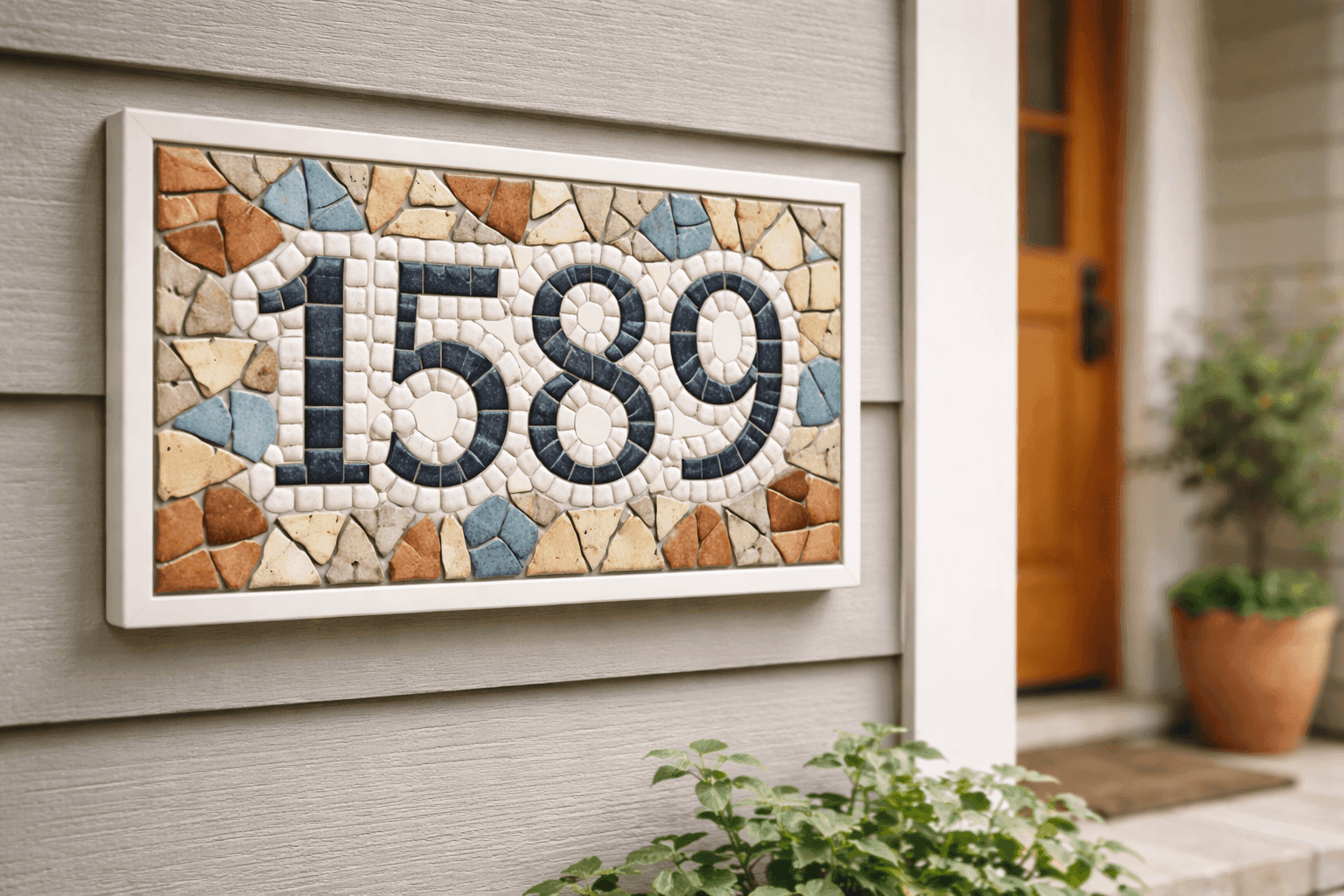
House numbers are one of those details that most people treat as purely functional — slap some brass numerals on the siding and call it done — but they're actually one of the highest-visibility design opportunities on your entire exterior. A mosaic address sign made from broken ceramics and tile pieces arranged on a wood backing is the kind of handmade detail that makes a house look genuinely considered from the street, and it costs $20–$35 in materials including everything you need to build it from scratch. The technique is far more forgiving than it looks — mosaic work doesn't require precision cutting or artistic skill, just a good eye for color and pattern and the patience to dry-fit your design before committing to adhesive. Broken dishes, leftover tile from a bathroom project, thrift store ceramics you smash deliberately — all of it becomes raw material for a sign that's completely unique to your house and impossible to buy anywhere. This is the weekend project that delivers the most visible transformation per dollar of anything you can do to your front entrance.
What You'll Need
- The Backing
- One piece of ¾-inch exterior plywood or cement board cut to your desired sign size — a 12x16 inch rectangle accommodates most four-digit addresses comfortably — ~$5–$8 for a cut piece from a hardware store
- Cement board (Hardiebacker) is the more weather-resistant option and the professional mosaicist's choice for any outdoor piece — it won't swell or delaminate in rain and freeze-thaw cycles the way even exterior plywood eventually will
- Sand all plywood edges smooth and seal with exterior primer before tiling — cement board needs no prep beyond cutting
- Tile & Ceramic Materials
- Broken ceramic dishes, thrift store plates deliberately smashed, or leftover tile from a home project — free to ~$3–$5 for a bag of thrift store plates
- Vitreous glass mosaic tiles for the house numbers themselves — sold in small bags at craft stores for ~$4–$8, and their uniform thickness makes number outlines much cleaner than irregular ceramic shards
- Tile nippers for shaping ceramic pieces to fit tight spaces — ~$12–$18 at hardware stores, and genuinely worth owning if you plan to do more than one mosaic project
- Safety glasses — non-negotiable when breaking or nipping ceramic and glass tile, which sends sharp fragments in unpredictable directions
- Adhesive & Grout
- Outdoor mosaic adhesive or exterior tile mastic — ~$8–$12 per small tub, enough for several signs
- Unsanded tile grout in your chosen color — gray, white, and black are the most versatile choices — ~$6–$10 per bag
- Grout sealer for finishing and weather protection — ~$8–$10 per bottle
- Rubber grout float for pressing grout into joints
- Large cellulose sponge and two buckets for grout cleanup
- Mounting Hardware
- Two heavy-duty D-ring picture hangers with screws rated for outdoor use — ~$3–$5
- Exterior-grade screws or masonry anchors for mounting to your wall or fence surface
- Exterior wood stain or paint for finishing the sign edges and back before mounting — ~$5–$8
- Clear silicone caulk for sealing the back edges against moisture intrusion once mounted
How to Make It
- Prepare your backing by cutting it to size, sanding any rough edges, and sealing plywood with a coat of exterior primer on all faces and edges — paying particular attention to the edges where raw plywood is most vulnerable to moisture wicking. If using cement board, score and snap it to size with a utility knife and straightedge rather than cutting with a saw, which produces a fine silica dust that requires respiratory protection.
- Break your ceramics safely by placing plates or tiles in a heavy canvas bag or pillowcase, laying the bag on a concrete surface, and striking firmly with a hammer — the bag contains the fragments and prevents dangerous shards from scattering. Aim for irregular pieces between ½ inch and 1½ inches across for the background fill, and use tile nippers to refine any pieces that need a cleaner edge near your number outlines or sign borders.
- Sketch your number layout directly on the backing with pencil before touching any adhesive — draw your house numbers in bold block style, centering them on the board and sizing them to be clearly readable from the street at your mounting distance. Bold, simple number forms work far better in mosaic than thin or ornate fonts because the grout lines between tile pieces are part of the visual at reading distance, not invisible background detail.
- Dry-fit your entire design without adhesive first — lay out your number tiles and background ceramic pieces across the full sign surface, arranging colors and shapes until you're genuinely happy with the composition before committing a single piece. This dry-fit step is the most important thing you can do for a mosaic that looks intentional rather than random, and it takes as long as it takes — rushing past it is the number one reason mosaic projects come out looking like an accident rather than a design.
- Adhere the number tiles first by applying a thin, even layer of mosaic adhesive to the backing within your penciled number outlines using a small palette knife or craft stick, then pressing each tile firmly into place with a slight twisting motion to ensure full contact and no air pockets underneath. Work the numbers completely before moving to the background fill — having your numbers locked in place first makes filling around them dramatically easier than trying to work both simultaneously.
- Fill the background by working outward from the numbers in small sections, applying adhesive to the backing rather than the tile pieces, and pressing each ceramic shard firmly into place with consistent spacing of approximately ⅛ inch between pieces for grout lines. Vary the orientation of your ceramic pieces as you go — all pieces facing the same direction creates a monotonous surface, while varied angles catch light differently and give the finished mosaic that rich, dimensional quality that makes the medium so visually compelling.
- Let the adhesive cure fully for the time specified on your product — typically 24 hours — before touching grout, and do not move or disturb the sign during this period. Grouting over incompletely cured adhesive is the single most common cause of mosaic tile popping off outdoors, because the grout locks everything mechanically and if the adhesive hasn't fully bonded yet the whole assembly can shift as it finishes curing underneath the grout layer.
- Grout, clean, and seal by mixing unsanded grout to a smooth peanut butter consistency, pressing it firmly into all joints with a rubber float held at 45 degrees, letting it firm up for 15–20 minutes, then cleaning the tile faces with a well-wrung damp cellulose sponge in diagonal passes. Buff the remaining haze with a dry cloth once fully cured at 24 hours, then apply two coats of grout sealer to every joint — this is what keeps outdoor moisture from getting under the grout and slowly loosening your tiles through freeze-thaw cycles over the years.
The grout color you choose does more visual work in a mosaic than most first-time makers expect — it's effectively the color that ties every individual tile piece together into a unified composition, and changing it can completely transform the same tile arrangement. Dark charcoal or black grout makes colors pop dramatically and gives the finished piece a bold, graphic quality that reads well from the street. White or light gray grout creates a softer, more vintage feel that works beautifully with delicate floral china patterns or pastel tile colors. Avoid matching grout color too closely to your dominant tile color — when grout and tile are the same tone the individual pieces lose their definition and the whole mosaic reads as a flat, muddy surface from a distance rather than the rich textured design it actually is. For an address sign specifically, always grout test on a scrap piece first — what looks right up close often reads completely differently at the ten to fifteen foot distance from which most people will actually see your house numbers.