Feed the Birds: Build a Platform Bird Feeder for $12
A base board, four corner lips, a roof, and two support posts — the classic platform feeder that brings more bird species to your yard than any tube feeder ever will
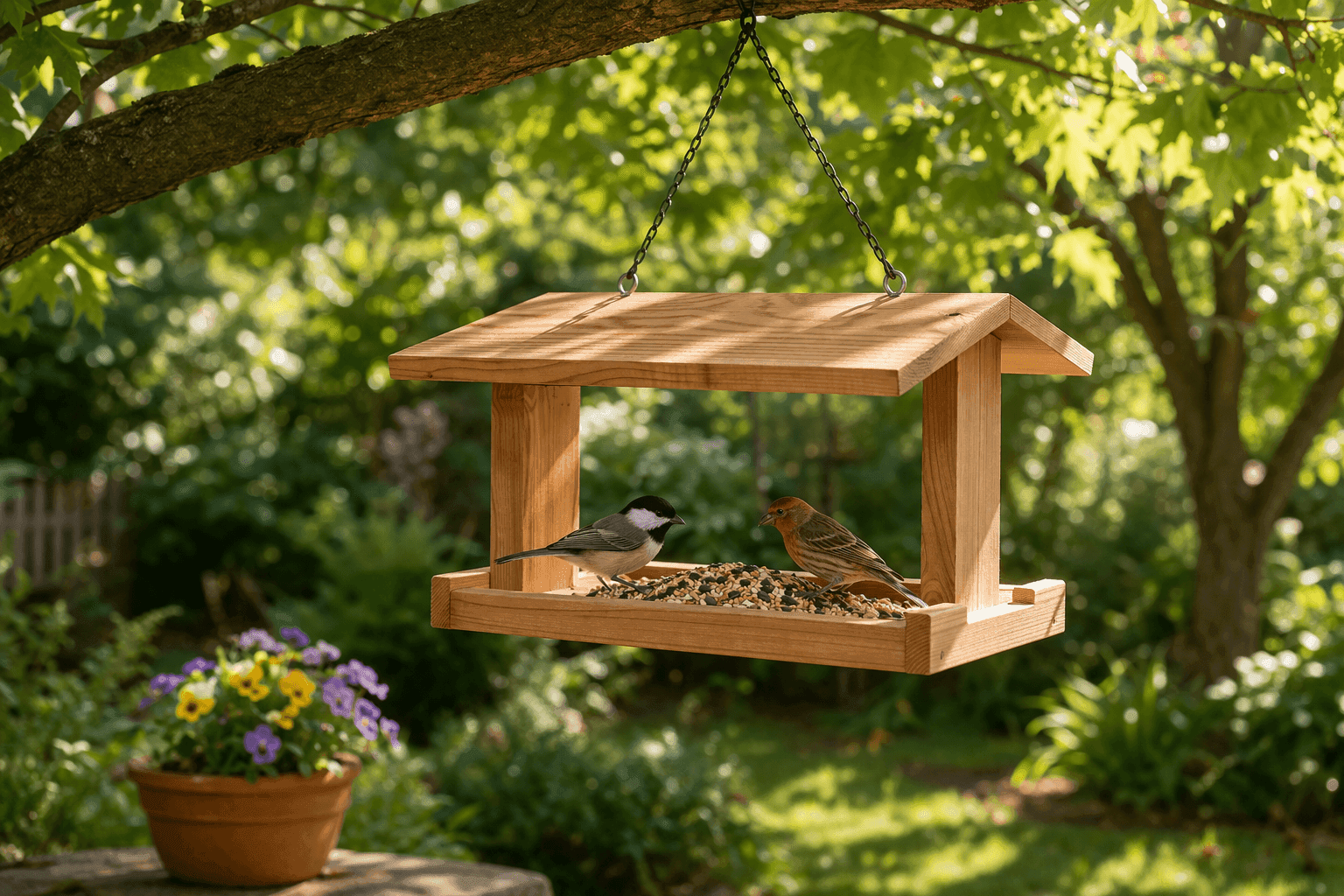
A platform bird feeder is the single most versatile feeder design available — it attracts the widest variety of bird species of any feeder type because the open platform allows every bird to land and feed comfortably, from small chickadees to larger cardinals and jays that can't fit inside tube feeders or hopper feeders with restricted perch access. The design is also the most beginner-friendly woodworking project imaginable: a flat base with small corner lips, two vertical support posts, and a roof board — that's the entire structure. It costs $10–$15 in cedar or pine lumber, takes about 90 minutes to build, and is genuinely the kind of project where the satisfaction of the first bird visit the next morning makes every minute of the build feel completely worthwhile. Build this for Earth Day, build it as a first woodworking project with a child, or build it because your yard needs more birds in it — all three are equally good reasons, and all three result in the same thing hanging from your favorite tree branch by the end of the afternoon.
What You'll Need
- Lumber
- One 1x8x4 board for the feeder base — cut to 10 x 12 inches — ~$4–$6. Cedar is the ideal species for bird feeders because its natural oils resist rot and repel insects without any chemical treatment that could harm birds; untreated pine works well and costs slightly less but needs a non-toxic outdoor finish for durability
- One 1x10x2 board for the roof — cut to 14 inches long, wide enough to overhang the base slightly on all sides for rain protection — ~$3–$4
- One 1x2x4 board for the two vertical support posts and the four corner lip pieces — cut two posts at 8 inches and four corner lips at 1 inch each — ~$2–$3
- Total lumber cost: ~$9–$13 for a complete feeder, or less if you have offcuts from other projects that cover any of the pieces
- Hardware
- 1¼-inch exterior wood screws for attaching corner lips and support posts to the base — ~$4–$5 for a small box
- Two screw eyes for the top of the support posts or roof for hanging — ~$2–$3 for a small pack
- A length of chain, wire, or strong jute rope for hanging from a tree branch — ~$3–$4, or repurpose a length of chain from a previous project
- Exterior wood glue for reinforcing all joints before screwing
- A ¼-inch drill bit for the drainage holes in the base — four to six holes drilled through the platform so rainwater drains rather than pooling and soaking the seed
- Finish
- Non-toxic exterior stain or tung oil for protecting the wood — confirm the product is labeled non-toxic and food-safe once cured before applying to any surface birds will contact directly. Many standard exterior stains are safe once fully cured but should not be used on the platform surface until the finish has off-gassed completely — ~$8–$12 per small can
- Leave natural cedar completely unfinished — cedar's natural oils provide sufficient outdoor protection for several seasons without any additional treatment, and unfinished cedar is the most bird-safe finish option available
- Apply finish to the roof and support posts only if concerned about wood safety — leaving the base platform and corner lips completely unfinished eliminates any possibility of finish contact with seed or bird feet
- Tools
- Circular saw or miter saw for crosscuts — or request cuts at the hardware store
- Drill/driver with Phillips bit and ⅛-inch pilot hole bit
- Tape measure, pencil, and speed square
- 120 and 220-grit sandpaper
- Clamps for holding joints during assembly
How to Build It
- Cut all pieces in a single session — the 10x12 inch base, the 14-inch roof board, two 8-inch support posts, and four 1-inch corner lip pieces. Label each cut piece with painter's tape before moving to assembly so nothing gets confused during the build, and sand all faces and edges with 120-grit paper before any joints are made — sanding individual flat boards is dramatically easier than sanding an assembled feeder with internal corners and tight spaces.
- Drill the drainage holes first while the base is still a flat, easily clamped board — mark four to six hole positions distributed evenly across the base surface, clamp the board to a scrap piece of wood so the drill bit has somewhere to exit cleanly, and drill each ¼-inch hole straight through. Drainage holes that are drilled after the feeder is fully assembled require awkward angles and frequently produce ragged, splintered exits on the underside of the base — drilling them now when the board is flat takes 60 seconds and produces clean holes.
- Attach the corner lip pieces to the top face of the base at each corner — apply a small bead of wood glue to the bottom of each 1-inch corner piece, position it flush with the corner of the base, and drive one 1¼-inch screw through pilot holes to secure. The corner lips create a shallow raised border that keeps seed from sliding off the platform edge in wind without creating a full-depth tray that would hold standing water after rain. Confirm each corner piece is flush with the base corner and standing perfectly vertical before the glue sets.
- Attach the support posts to the base on opposite long sides — position one 8-inch post flush with the outside edge of the base centered on the 12-inch length, apply glue to the post bottom, clamp it upright and square, and drive two screws through the base from underneath into the post bottom. Repeat on the opposite side. Check that both posts are the same height above the base and that they're parallel to each other before the glue sets — posts that lean toward each other or away from each other produce a roof that sits unevenly across the finished feeder.
- Attach the roof board across the top of both support posts — position the 14-inch roof board centered across both post tops so it overhangs equally on all four sides, apply glue to each post top, and drive one screw through the roof down into each post top from above. The overhang of the roof beyond the base perimeter on all sides is what provides rain protection for the seed on the platform — confirm the overhang is at least 1 inch on every side before driving the final roof screws.
- Install the hanging hardware by driving a screw eye into the top center of the roof board — drill a small pilot hole first to prevent splitting, then thread the screw eye in by hand until it's seated flush against the wood surface. Thread your chain, wire, or jute rope through the screw eye and tie or clip securely, making sure the hanging connection is rated for the combined weight of the feeder plus a full load of birdseed which can add 2–3 lbs to the empty feeder weight.
- Final sand with 220-grit paper to smooth all surfaces that birds will land on and contact — the platform surface, the corner lip tops, and the post faces. Round all exposed edges and corners slightly so no sharp wood angles remain anywhere a bird might brush against the feeder during landing or feeding. Apply any chosen finish to the roof and posts if using one, keeping the platform surface and corner lips unfinished for direct seed contact safety.
- Hang and load the finished feeder in a location that's visible from a window where you'll actually watch it — ideally within 10–15 feet of a tree or shrub that gives birds a nearby landing perch to survey the feeder before committing to it, and at least 10 feet from dense ground-level cover that would allow a cat to approach undetected. Fill with a quality mixed seed blend that contains sunflower seeds, millet, and cracked corn for the broadest species appeal, and check seed condition every few days — wet seed that sits on the platform spoils quickly and can harm birds, so removing and replacing any wet or clumped seed after heavy rain keeps the feeder safe and inviting.
Wildlife biologists and backyard birding specialists who work with residential habitat programs consistently recommend the same feeder placement strategy that most homeowners never implement — and it's the single most effective thing you can do to maximize both the number and variety of bird species visiting a new feeder. Place the feeder within 3 feet of a window or more than 30 feet from a window, never at the intermediate distances in between. Feeders within 3 feet of glass are safe for birds because if a bird strikes the glass from that distance the approach speed is too low to cause injury; feeders beyond 30 feet give birds enough flight path to recognize the glass as a solid surface and avoid it. Feeders at the 5–20 foot range that most people choose because it "feels safe" produce the highest rate of window strikes because birds build significant speed on the approach and hit the glass before they've recognized the hazard. This single placement adjustment prevents the window collision deaths that are the leading cause of wild bird mortality in residential settings — and it costs nothing to implement on an already-built feeder.