Counter Culture: Turn a Dresser into a Kitchen Island
A solid wood dresser, a butcher block top, and a set of locking casters — the kitchen island that costs $60–$100 and looks like it costs ten times that
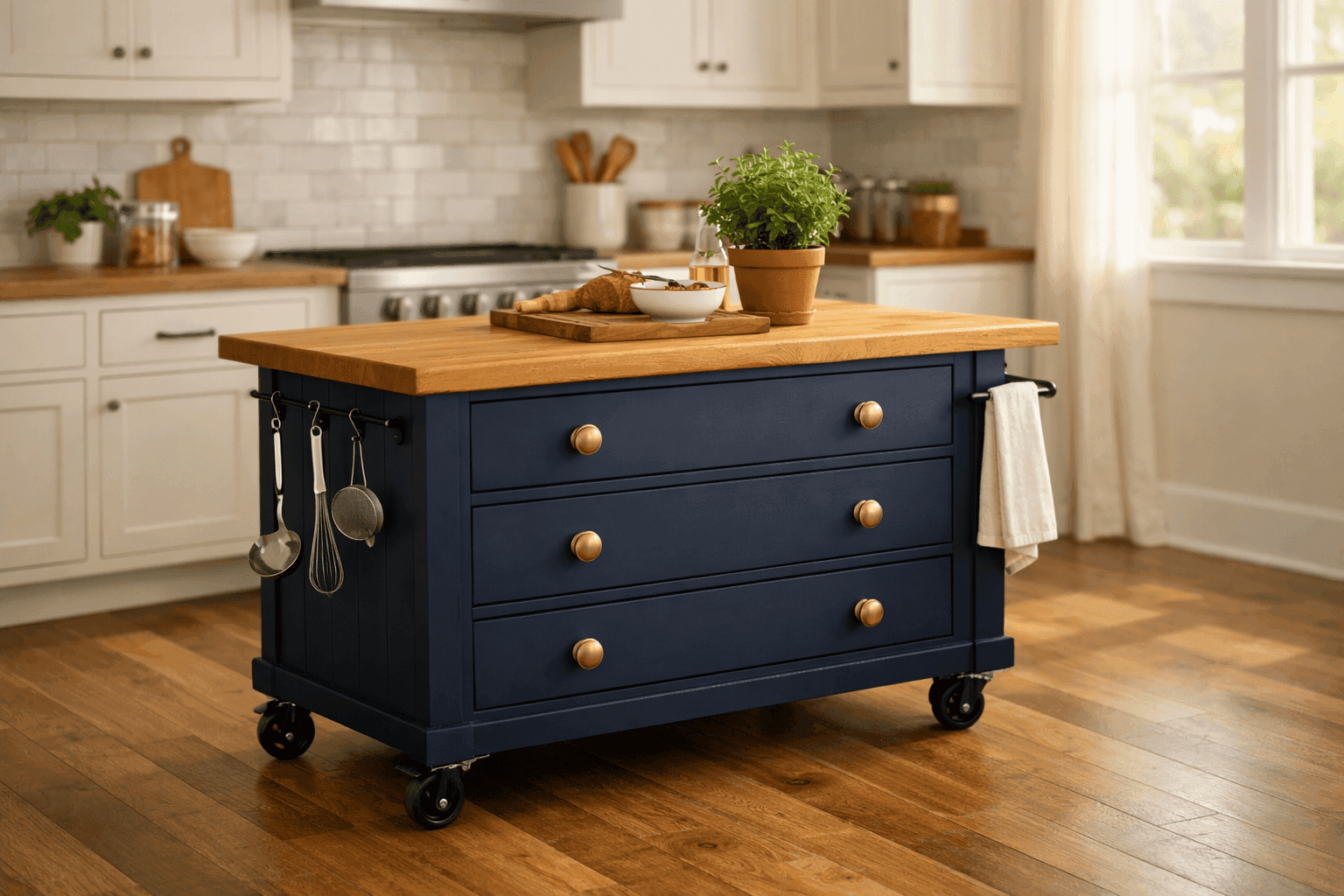
A kitchen island is one of the most requested upgrades in any home — more counter space, more storage, more surface for cooking and gathering — and the store-bought versions that look good enough to want start at $400 and climb steeply from there. A solid wood dresser from a thrift store, estate sale, or your own spare bedroom does everything a purpose-built island does for $60–$100 total, and it does it with the kind of genuine character that flat-pack furniture simply cannot replicate. The conversion is more straightforward than it looks: sand and paint the dresser body, add locking casters for mobility, secure a butcher block top with L-brackets from underneath, and finish with a few functional hardware additions — hooks for dish towels, a towel bar on the side, new drawer pulls that suit the kitchen aesthetic. The existing drawers become dedicated storage for utensils, linens, and small tools. The whole transformation takes a weekend and produces a piece that looks genuinely custom, costs a fraction of the retail alternative, and brings both counter space and personality to a kitchen that needed more of both.
What You'll Need
- The Dresser
- A solid wood dresser at or near 36 inches tall — standard kitchen counter height — sourced from a thrift store, Facebook Marketplace, or estate sale for ~$20–$60. Measure before buying; a dresser that comes in at 32–34 inches gets corrected to counter height by the caster addition
- Confirm all drawers open and close smoothly before buying — a drawer that sticks in a bedroom is a drawer that will still stick in the kitchen, and fixing drawer slides after the full conversion is significantly more work than choosing a better-functioning piece at the outset
- Solid wood construction only — MDF and particleboard dresser bodies don't hold screws reliably for caster attachment under the weight and movement stress of a kitchen island, and they don't sand and paint to a furniture-quality finish
- Three to four drawers is the ideal configuration — enough storage to be genuinely useful without a drawer bank so deep the island becomes too wide for most kitchens
- The Butcher Block Top
- A pre-cut butcher block countertop section from a home improvement store — IKEA's Numerar or similar sections run ~$40–$80 depending on size, or look for offcuts at lumber yards and countertop shops for significantly less
- Size the top to overhang the dresser body by 2–3 inches on all sides — this overhang is what gives the finished island its furniture-quality proportion and creates comfortable knee clearance for bar stools if you want seating on one side
- Food-safe butcher block oil or mineral oil for finishing the top before use — ~$8–$12 per bottle, applied in multiple coats before the island goes into service in the kitchen
- Four L-brackets with screws for securing the top to the dresser body from underneath — ~$4–$8 for a pack
- Casters & Hardware
- Four heavy-duty swivel casters with locking mechanisms rated for at least 75 lbs each — ~$20–$30 for a quality set of four. A loaded kitchen island with a butcher block top weighs 80–120 lbs and needs casters rated for that load plus whatever is sitting on top
- Confirm at minimum two casters lock — all four locking is better for a kitchen where the island gets leaned on and pushed during cooking
- New drawer pulls in a finish that suits your kitchen — brushed brass, matte black, or brushed nickel all look intentional against a painted dresser body — ~$3–$8 per pull, budget for all drawers
- A towel bar for one side panel — ~$8–$15 for a simple bar in a matching finish
- Three to four S-hooks or cup hooks for hanging utensils on one end — ~$3–$5
- Paint & Prep
- 120 and 220-grit sandpaper for surface prep and between-coat sanding
- Shellac-based or oil-based primer for any dresser with stain bleed-through risk — ~$12–$18 per can. Standard latex primer is insufficient on old wood furniture that has been stained or has tannin-rich grain
- Cabinet-grade latex paint in your chosen color — semi-gloss or satin finish for kitchen durability and easy wipe-down — one quart covers a full dresser with two coats — ~$18–$25
- A small foam roller for flat surfaces and a 2-inch angled brush for edges and drawer faces
How to Transform It
- Source and assess the dresser before committing to the project — pull every drawer fully out, check the drawer slide hardware for smooth operation, press on every corner joint to confirm structural rigidity, and look at the top surface to assess whether removal is straightforward or involves attached decorative molding. A dresser that needs $30 in new drawer slides and 30 minutes of joint re-gluing is still worth doing; one with a warped carcass that rocks on a flat floor or drawers that are fundamentally broken is not the right candidate regardless of how good it looks.
- Remove the original top by locating the fasteners from inside the top drawer cavity — most dresser tops are secured with screws driven up through corner blocks inside the carcass, and removing these allows the top to lift cleanly away. Save the original top as a workbench surface during the painting process or as a template for sizing the butcher block replacement, and remove any decorative applied molding from the dresser body that would look out of place in a kitchen context.
- Sand the entire dresser body starting with 120-grit to scuff the existing finish and any remaining surface imperfections, then finishing with 220-grit for the smooth surface that separates furniture-quality painted finishes from brush-mark-heavy ones. Remove all drawer pulls before sanding and keep them together in a labeled bag — reinstalling pulls on the wrong drawers creates a subtle visual inconsistency that is harder to identify than you'd expect and more obvious than you'd like once the finished piece is in the kitchen.
- Prime every surface that will be painted with shellac-based or oil-based primer — paying particular attention to the drawer faces, which are the highest-touch surfaces on the finished island and the most likely to show wear at the edges if the paint isn't properly anchored. Two thin coats of primer with a light 220-grit sand between coats produces a surface that accepts the topcoat so evenly it looks like factory-sprayed furniture rather than brush-painted thrift store rescue.
- Paint in thin, even coats using a foam roller on flat panel surfaces and an angled brush for edges, drawer faces, and the interior drawer cavity edges that are visible when drawers are open — two coats minimum with a full 24-hour dry time between coats and a very light 320-grit sand between coats for a finish smooth enough to wipe down with a damp cloth daily in kitchen use without the paint scuffing or lifting. The drawer faces deserve extra care since they're handled constantly — three thin coats on drawer faces is not excessive for an island that gets daily kitchen use.
- Attach the casters to the bottom four corners of the dresser before adding the top — the dresser is significantly lighter and easier to flip and maneuver without the butcher block weight on top. Position each caster plate flush with the corner, mark screw holes, drill pilot holes to prevent splitting the base rail, and drive mounting screws firmly. Flip the dresser upright on its new casters and confirm all four roll smoothly and that the locking mechanisms engage and release cleanly before proceeding.
- Size and finish the butcher block top by measuring the dresser footprint and adding 2–3 inches of overhang on all four sides, marking the cut line clearly, and cutting with a circular saw guided by a straightedge clamp for a clean, square edge. Sand all edges to a smooth, slightly rounded profile that won't catch on arms and clothing during kitchen use, then apply three to four coats of food-safe butcher block oil with a clean cloth, letting each coat absorb fully before the next — the oil is what protects the wood from moisture, staining, and the general abuse of kitchen counter use.
- Secure the top and install all hardware by positioning the butcher block centered on the dresser body, reaching inside the top drawer cavity to attach four L-brackets that pull the top down firmly onto the dresser with no gaps or rocking. Install new drawer pulls at consistent heights, mount the towel bar on the side panel, add S-hooks or cup hooks on one end for hanging utensils, and roll the finished island into its kitchen position — lock all four casters, load the drawers with their designated contents, and hang a dish towel on the bar. Step back and acknowledge that this piece, which cost $60–$100 and a weekend of work, looks genuinely better than anything at that price point in any furniture store.
Interior designers who specialize in kitchen renovations use a color strategy for painted kitchen islands that most DIYers miss — and it's the detail that determines whether a repurposed piece looks deliberately designed or accidentally placed. The island color should either directly complement or directly contrast the existing kitchen cabinetry, never match it. An island that matches the cabinets disappears visually into the kitchen and loses the focal point quality that makes it worth having; one that contrasts — navy against white cabinets, sage green against natural wood, matte black against cream — reads as an intentional design choice that looks like a professional made it. The second detail that separates a designer result from a DIY result is the hardware finish: choose a single metal finish for every piece of hardware on the island — pulls, towel bar, hooks, and caster stems if visible — and make sure it either matches or deliberately contrasts with the existing kitchen hardware. A single unified hardware finish on the island makes the whole piece read as considered and complete rather than assembled from whatever was available, which is the line between furniture and furniture-quality furniture.