Rise Up: Build a Garden Trellis Arch This Weekend
Beans, cucumbers, and peas growing overhead on a handbuilt arch — the garden structure that doubles your growing space and looks stunning doing it
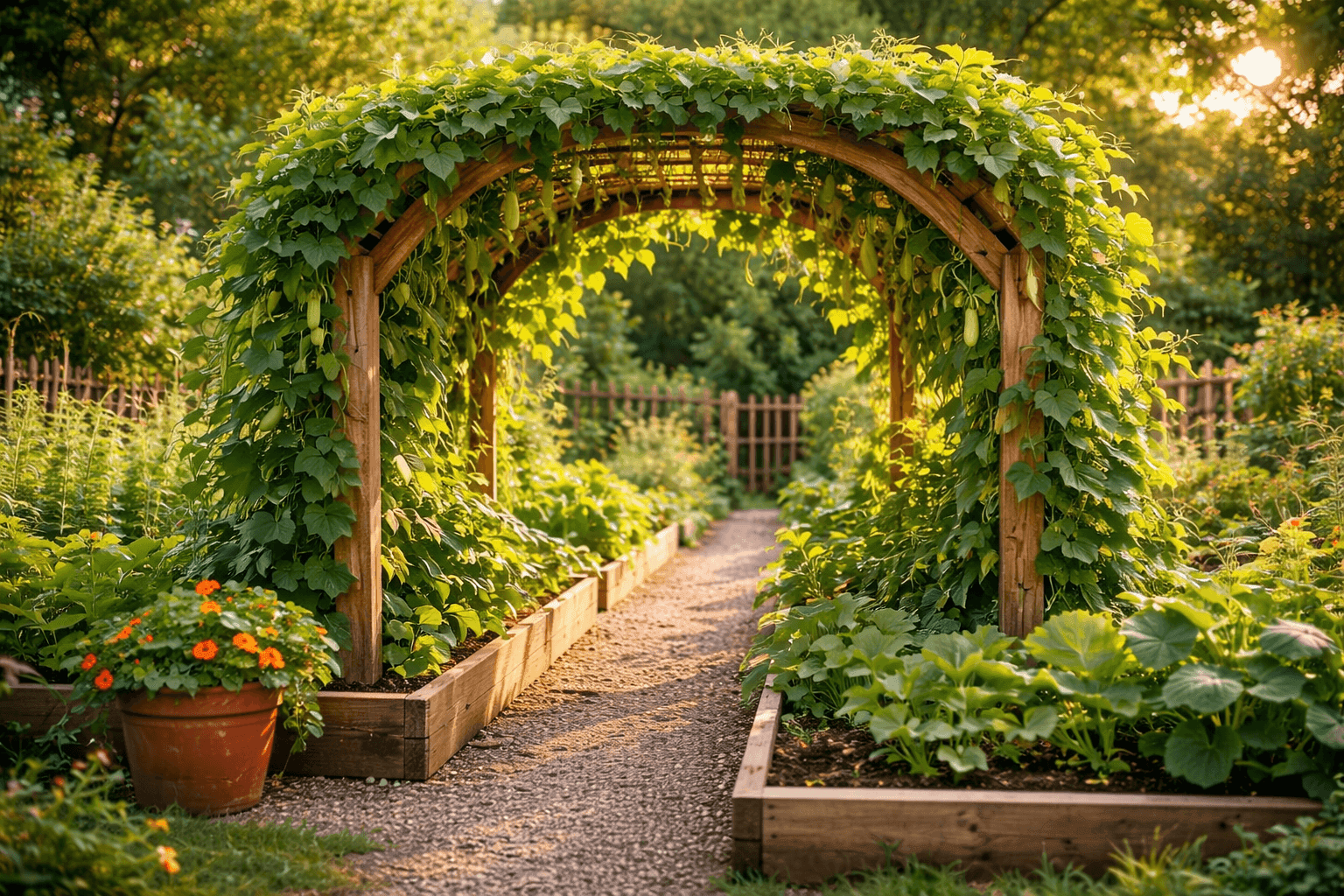
A garden without vertical structure is a garden leaving half its potential completely untapped — and a trellis arch is the most dramatic, most functional, and most visually rewarding way to start growing up instead of just out. Beans, cucumbers, peas, and squash all produce more prolifically when trained vertically, their fruit hangs straight and unblemished rather than resting on damp soil, and harvesting becomes a simple walk along the path beneath the arch rather than a crouching hunt through ground-level foliage. The arch itself becomes a genuine garden feature — a living tunnel of green in midsummer that makes even a modest backyard feel intentionally designed and abundantly productive. Built from cedar or pressure-treated lumber with a cattle panel or wire mesh arched between the uprights, this trellis costs $40–$70 in materials and goes together in a solid afternoon with basic tools. It will outlast multiple growing seasons, support serious vine weight without flexing, and make your vegetable garden look like it belongs on a magazine cover every single July.
What You'll Need
- Lumber
- Four 2x4x8 cedar or pressure-treated boards for the vertical uprights and horizontal top rails — ~$5–$7 each (~$20–$28 total)
- Two 2x2x8 cedar boards for the lower side rails that connect the upright pairs — ~$3–$4 each (~$6–$8 total)
- Cedar is the premium choice for its natural rot resistance and clean appearance; pressure-treated lumber costs less and lasts just as long but has a slightly rougher look that weathers over time
- Arch Material — Choose One
- A 16-foot cattle panel (also called a hog panel) — the single best arch material available for this project, incredibly strong, bends into a natural arch under its own flexibility, and costs ~$25–$30 at farm supply stores like Tractor Supply
- OR welded wire garden fencing in 4-foot width, cut to length and shaped into an arch — ~$15–$20 for a 10-foot section, less rigid than cattle panel but easier to work with for beginners
- OR bamboo poles lashed in a grid pattern for a more rustic, natural aesthetic — ~$10–$15 for a bundle, though bamboo arches need replacing every 2–3 seasons
- Hardware & Fasteners
- 2½-inch exterior deck screws — one pound box covers the full build — ~$6–$8
- Heavy-duty U-staples or fence staples for securing the cattle panel or wire mesh to the wood frame — ~$4–$6 for a box
- Four 12-inch metal ground stakes or rebar sections for anchoring the upright legs into the soil — ~$8–$12 for a set, or cut your own from ½-inch rebar
- Eight carriage bolts with nuts and washers (¼ x 2½ inch) for the most critical frame joints — ~$4–$6 for a pack
- Tools
- Circular saw or miter saw for lumber cuts
- Drill/driver with Phillips bit and ¼-inch drill bit for carriage bolt holes
- Wire cutters or bolt cutters for trimming cattle panel to length
- Heavy leather gloves for handling cattle panel — the cut wire ends are sharp
- Tape measure, speed square, and level
- Post pounder or sledgehammer for driving ground stakes
How to Build It
- Plan your arch dimensions before cutting anything — a standard trellis arch works best at 6 feet tall at the peak (enough clearance to walk under comfortably when loaded with vines), 4 feet wide between the upright pairs (wide enough for two planting rows on each side), and 8 feet long from front post to back post (long enough to give climbing plants meaningful run without making the arch feel like a tunnel). Mark all four post positions in your garden bed with stakes and confirm you're happy with the footprint before cutting a single board.
- Cut your lumber to length in one session — four upright posts at your chosen height minus the depth they'll be buried (typically 60 inches above ground plus 12 inches below), two top rails at 48 inches to span the width, and two lower side rails at 96 inches to connect the front and back uprights on each side. Label each cut piece with painter's tape so assembly doesn't require re-measuring every joint.
- Build the two end frames first by laying one pair of uprights parallel on a flat surface, positioning the 48-inch top rail flush across the top connecting them, and drilling carriage bolt holes through the rail and into each upright top before assembling with bolts, washers, and nuts tightened firmly with a wrench. Carriage bolts at these critical joints are what keeps the arch from racking sideways under the considerable weight of a fully loaded vine canopy in midsummer wind.
- Connect the two end frames with your lower side rails by standing both end assemblies upright at your planned spacing, clamping the 96-inch side rails along the inside lower edge of each upright pair, confirming everything is square and level, and fastening with two exterior screws at each joint. The side rails serve double duty — they connect the two end frames into a rigid structure and provide a lower anchor point for the cattle panel ends before they curve up into the arch.
- Drive your ground stakes at each post position using a post pounder or sledgehammer, leaving 6 inches of stake above ground to slide inside or alongside each wooden upright as a soil anchor. The stakes prevent the arch from being slowly pushed out of plumb by vine weight and wind load over the season — an arch that starts vertical in May and leans noticeably by August is almost always one that wasn't properly anchored at installation.
- Set the frame into position by placing each upright post over or alongside its ground stake, confirming all four legs are plumb with a level, and securing each post to its stake with two exterior screws driven through the post into the stake. Stand back and sight down the length of the arch from both ends to confirm the frame sits square and symmetrical before adding the cattle panel — a frame that looks slightly off at this stage will look significantly off once covered in vines.
- Arch the cattle panel by positioning one end of the 16-foot panel against the base of one side rail, bending it up and over the top of the arch frame, and bringing the other end down to the base of the opposite side rail — cattle panel has just enough natural flexibility to hold a graceful arch without kinking if you work with two people, one on each end. Secure each end firmly to the side rails with at least four heavy U-staples driven through the panel grid and into the wood, and add additional staples along the top rail where the panel crosses it.
- Plant and train your vines by sowing or transplanting your chosen climbing crops directly at the base of each upright on both sides — two to three plants per post gives good coverage without overcrowding. Guide the first few inches of each vine toward the cattle panel mesh with a loose tie of garden twine, and after that the tendrils will find their own way up and across the arch with minimal intervention. By midsummer you'll be harvesting beans and cucumbers by simply walking beneath the arch and reaching up — which is the exact moment this project goes from satisfying build to genuinely life-changing garden upgrade.
Experienced kitchen gardeners who grow for maximum productivity use a planting strategy called companion arch planting that turns the trellis arch into one of the most space-efficient structures in the entire garden. On the sunny south-facing side of the arch they plant their heaviest producers — pole beans and cucumbers that need full sun and climb aggressively. On the shadier north-facing side they plant crops that actually benefit from the dappled shade the arch canopy creates by midsummer — lettuce, spinach, and cilantro that would otherwise bolt in the heat. The arch essentially creates two distinct microclimates in the footprint of one garden bed, doubling the variety of crops you can grow in a single space and extending the season of cool-weather crops by several weeks. Add a single row of annual flowers like sweet peas or nasturtiums at the base of each upright and the arch becomes simultaneously a food producer, a pollinator attractor, and the most beautiful feature in your entire garden from June through September.