Hang It Up: Build a Wall-Mounted Herb Drying Rack
A backboard, some dowels drilled at a slight upward angle, and an hour of building — the wall-mounted rack that preserves your herb harvest and looks beautiful doing it
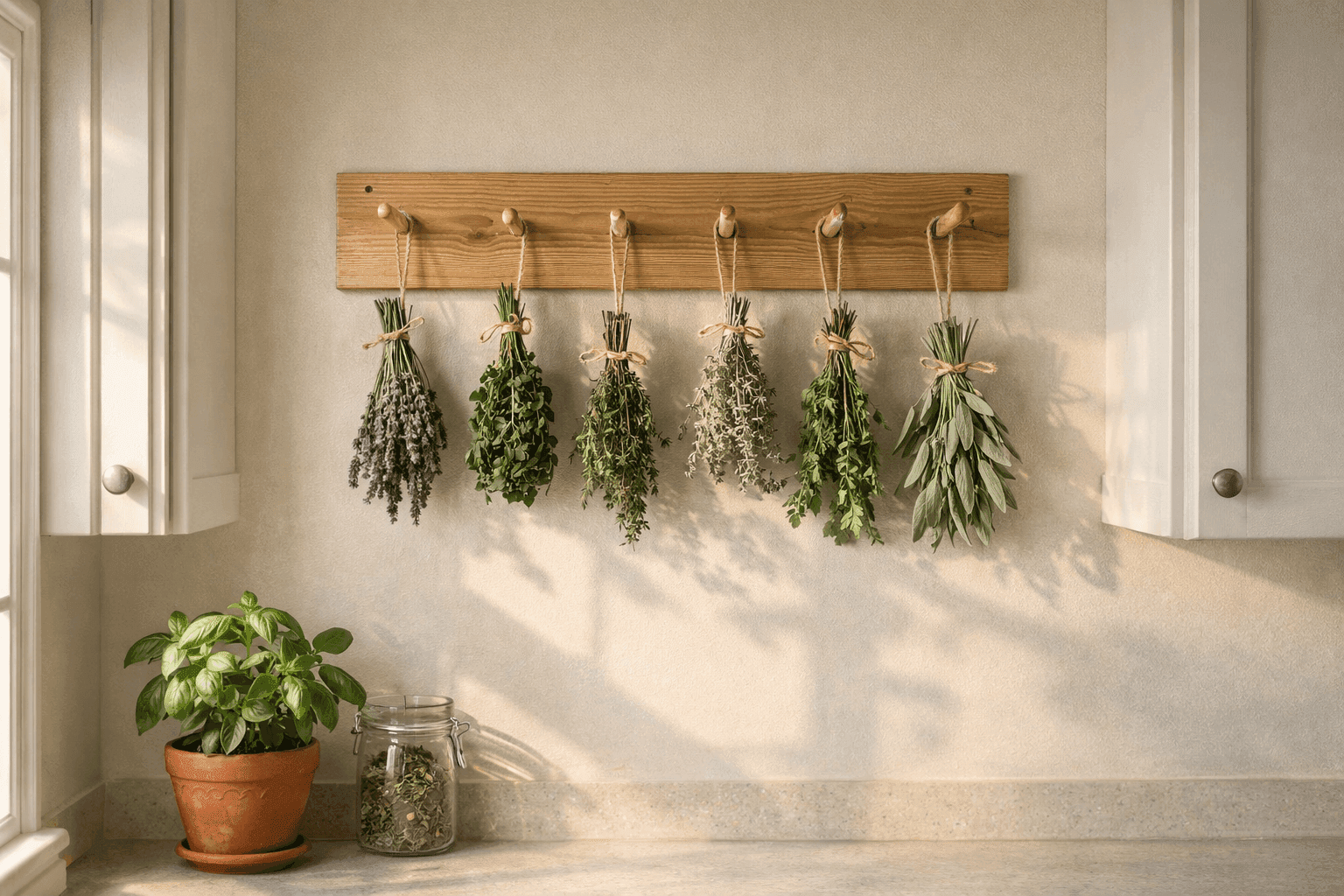
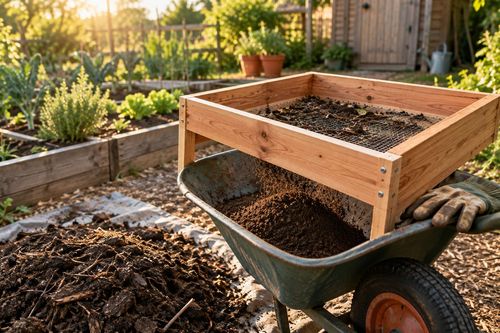
The classic method of drying herbs by hanging bundles from a nail or a hook works fine until you have more than one or two bundles drying at a time — and any gardener with a productive herb patch in midsummer knows exactly what it feels like to run out of hanging space while the harvest pile keeps growing. A wall-mounted drying rack with angled dowels solves this completely: each dowel holds multiple herb bundles simultaneously, the slight upward angle keeps bundles from sliding off without any additional fastening, and the open construction allows the airflow around every bundle that fast, effective drying requires. Built from a single 1x6 board and a handful of half-inch dowel rods, the whole project costs $8–$12 in materials and takes about an hour — and the finished rack is genuinely beautiful hanging in a kitchen, pantry, or mudroom, which makes it simultaneously a functional tool and a piece of rustic wall décor. Hang it near a sunny window, load it with the first basil harvest of the season, and watch your kitchen start to smell like an Italian countryside.
What You'll Need
- Lumber & Dowels
- One 1x6 board, 24 inches long, for the backboard — pine, poplar, or cedar all work well. Cedar adds a pleasant natural scent and resists moisture particularly well for a rack that may be mounted in a humid kitchen environment — ~$3–$5 for a short cut from the lumber aisle or ask for a free offcut
- One ½-inch diameter hardwood dowel rod, 48 inches long — cut into four to six individual dowels at 10–12 inches each. Hardwood dowels (oak or birch) hold the angled glue joint more reliably than softwood dowels under the repeated weight and leverage of loaded herb bundles — ~$3–$4 per 48-inch dowel rod at any hardware store
- A scrap of wood at the correct angle for a drilling guide — cutting a small wedge at 10–15 degrees from a scrap piece and clamping it to the backboard face during drilling is the most reliable way to maintain consistent dowel angle across all holes without a drill press
- Hardware
- Two keyhole hangers or D-ring picture hangers for wall mounting — keyhole hangers allow the rack to be lifted on and off the wall without tools, which is convenient when cleaning or relocating the rack — ~$3–$5 for a small pack
- Two wall screws appropriate for your wall type — wood screws into studs, or drywall anchors rated for at least 5 lbs for plaster or drywall mounting
- Wood glue — standard PVA or Titebond for the dowel-to-backboard joint. The angled joint relies entirely on the glue bond for strength since no screw can reinforce an angled dowel from the front without being visible
- Finish
- Food-safe mineral oil for finishing — rub it into all surfaces of the completed rack with a clean cloth and let it absorb for 20 minutes before wiping off the excess. Mineral oil is the correct food-contact finish for any surface near herbs and food — it seals the wood against moisture without any chemical compounds that could off-gas onto drying herbs in the way that varnish, polyurethane, and many paint products can
- OR leave completely unfinished for a raw natural look — bare wood is food-safe by definition and the unfinished surface gives the rack a genuine farmhouse character that a finished surface doesn't quite replicate
- Optional: exterior wood stain or chalk paint on the backboard only, leaving the dowels natural — this two-tone treatment looks intentional and adds visual interest without compromising the food-safe quality of the dowel surfaces that herbs actually contact
- Tools
- Drill/driver with a ½-inch spade bit or Forstner bit for the dowel holes — Forstner bits produce cleaner, more precise holes than spade bits and are worth the slight premium for a project where hole quality directly affects the strength of the angled glue joint
- Miter saw or hand saw for cutting the backboard to length and the dowels to consistent length
- Tape measure, pencil, and a small protractor or angle gauge for marking the angled hole positions
- 120 and 220-grit sandpaper for smoothing all surfaces and rounding the dowel tips
- Clamps for holding the backboard stable during drilling
How to Build It
- Cut all pieces before drilling anything — cut the backboard to 18–24 inches depending on your wall space, then cut four to six dowel sections to a consistent 10–12 inch length from the dowel rod. Cutting all pieces first lets you lay out the full rack and confirm the proportions look right before committing to drilling — a backboard that's too short for the number of dowels you want, or dowels that are too short to hold multiple herb bundles at once, are much easier to correct at the cutting stage than after the holes are drilled.
- Sand the backboard before drilling — 120-grit on all faces and edges, then 220-grit for a smooth final surface. Sanding the backboard completely before drilling is significantly easier than sanding around six installed dowels, and the dowel holes will be cleaner-edged going into already-smooth wood than into rough lumber. Round all four edges and corners of the backboard slightly with the sandpaper so no sharp edges remain on a piece that will be handled regularly when loading and unloading herb bundles.
- Mark the dowel hole positions along the face of the backboard — space holes 3–4 inches apart starting about 2 inches from each end, centering the row of holes vertically on the 5½-inch face of the 1x6. Mark each hole position with a pencil cross and use a small protractor or angle gauge to draw a 10–15 degree angled guide line through each mark showing the direction the drill bit needs to travel — this angled guide line is the reference you'll follow during drilling to keep all holes at a consistent upward angle.
- Drill the dowel holes at the correct angle — this is the most critical and most technically demanding step in the build. Clamp a small wedge cut at 10–15 degrees to the face of the backboard directly below each hole mark so the drill rests on the angled wedge surface automatically rather than requiring you to judge the angle freehand during drilling. Drill to a depth of 1–1¼ inches — deep enough for a strong glue bond but not so deep that the bit punches through the backboard, which is only ¾ inch thick. Drill slowly and check the angle by eye from the side after each hole before moving to the next.
- Test-fit all dowels dry before gluing — tap each cut dowel into its hole by hand and confirm it seats firmly with the angled orientation pointing upward. A dowel that falls into the hole loosely needs a slightly larger bead of glue to compensate for the fit; one that doesn't seat without a mallet may need the hole enlarged very slightly with a round file. All six dowels should be seated at the same upward angle, pointing consistently in the same direction when viewed from the front — inconsistent angles look unintentional and affect how herb bundles hang on the finished rack.
- Glue all dowels in one session — apply a generous bead of wood glue around the circumference of each dowel end, tap it firmly into its hole until fully seated, and wipe away any glue squeeze-out from the backboard face immediately before it cures into an unsightly lump. Set the backboard flat on a workbench with the dowels pointing upward and let the glue cure undisturbed for a full 24 hours — the angled joint has no mechanical reinforcement beyond the glue bond, and moving or loading the rack before full cure risks loosening a dowel that will never bond as strongly again after being disturbed.
- Sand the dowels and round their tips after the glue has fully cured — sand the full length of each dowel with 220-grit paper, paying particular attention to rounding the exposed tip of each dowel to a smooth dome rather than a flat cut end. A rounded dowel tip allows herb bundles to slide on and off the dowel easily without catching; a flat sharp cut end catches on twine and can split dried herb stems during removal. Test the smoothness by running your palm along each dowel — the finished surface should feel like a piece of polished furniture, not a hardware store dowel rod.
- Apply finish and mount the rack — rub mineral oil into all surfaces, let it absorb, wipe off the excess, and attach keyhole or D-ring hangers