Set in Stone: Make Handprint Stepping Stones with Kids
A mold, a bag of concrete, and one small hand pressed into wet mix — the $15 garden project that becomes one of your most treasured possessions
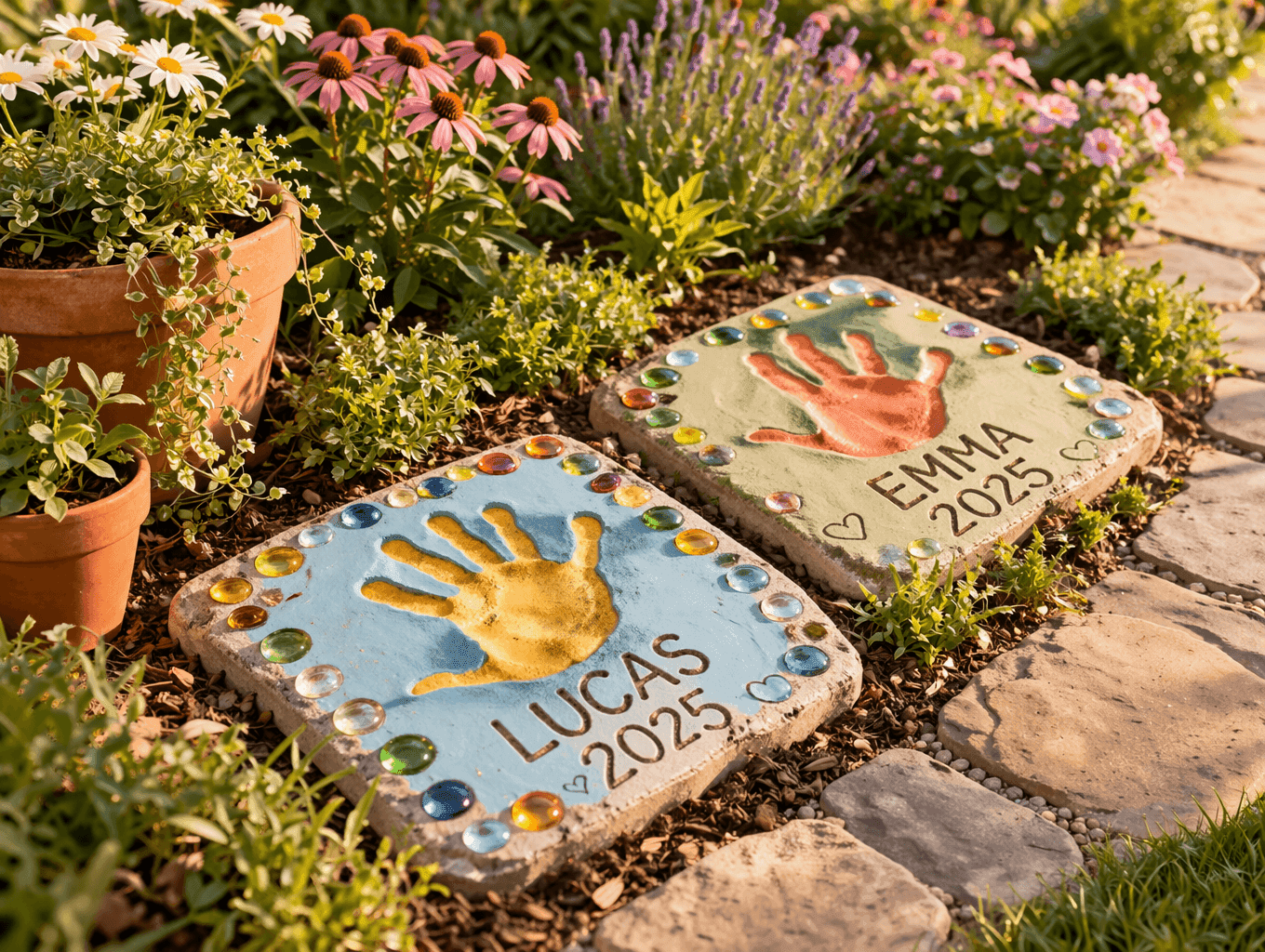
Some DIY projects are about the finished object. This one is about something else entirely. A handprint stepping stone is the kind of project that costs under $15 and takes 45 minutes, but produces something you will genuinely never throw away — a permanent record of exactly how small your child's hand was on one specific afternoon, pressed into concrete in your backyard while they giggled about getting messy. The stone itself is beautiful in the garden. The date scratched beside the handprint is the part that gets you four years later when you walk past it on the way to water the tomatoes. Making one each spring to mark another year of growth turns a simple craft into an annual ritual that tells a story across years — the kind of story that can't be captured in a photo and can't be bought anywhere. This is the project for this weekend, this spring, with whatever small hands are available and willing. Do it before those hands get any bigger.
What You'll Need
- The Mold
- A stepping stone mold — available at craft stores, garden centers, and online for ~$4–$8. Round molds at 11–12 inches diameter are the most versatile size, fitting comfortably in a garden path and giving enough surface area for a small handprint plus name and date without crowding
- A cake pan, pie dish, or plastic plant saucer works as a free alternative mold — just confirm it's at least 1½ inches deep so the finished stone has enough thickness to survive outdoor use without cracking
- Spray the interior of any mold with cooking spray or wipe with petroleum jelly before pouring concrete — this release agent is what allows the finished stone to pop out cleanly rather than bonding permanently to the mold
- Concrete
- One bag of quick-setting concrete mix or stepping stone mix — ~$5–$8 at any hardware store or craft store. One standard bag fills two to three 11-inch round molds depending on depth
- Stepping stone mix sold at craft stores like Michaels is slightly finer-textured than standard concrete and produces a smoother surface that takes handprints and lettering more crisply — worth the slight premium for a project where surface detail matters
- A disposable mixing container — an old bucket, a cardboard box lined with a plastic bag, or a large disposable aluminum roasting pan all work and eliminate cleanup
- A disposable stir stick or old trowel for mixing
- Impression Tools
- A wooden skewer, chopstick, or pencil for writing names, dates, and any words or simple drawings into the wet concrete surface
- Letter stamps or cookie cutters pressed into the wet surface as an alternative to handwriting for younger children who want to add their own name
- Small decorative elements to press into the wet concrete before it sets — glass gems, smooth pebbles, shells, marbles, or tile pieces create beautiful mosaic-style borders around the handprint
- Finishing & Color
- Outdoor acrylic craft paint in your chosen colors for painting the cured stone — ~$2–$3 per bottle, and one or two colors is all you need for a beautiful result
- Small paintbrushes — a wide flat brush for base coating and a fine detail brush for filling in the handprint impression and lettering with a contrasting color
- Clear outdoor sealer or polyurethane spray for weather protection — ~$6–$8 per can, one can covers many stones
- Work gloves for the adult handling concrete — concrete is alkaline and causes skin irritation with prolonged contact. Children's hands are in the concrete only briefly for the impression and should be rinsed immediately after
How to Make It
- Set up before mixing anything — have your mold prepared and release-sprayed, your skewer and any decorative elements within arm's reach, a bowl of warm soapy water standing by for immediate hand rinsing, and your child positioned and ready before you add water to the concrete. Once the mix is wet you have a limited working window, and scrambling to find the date to write or rinse a child's hands while the concrete firms up is how the most important details get missed or rushed.
- Mix the concrete according to package directions — typically adding water gradually to the dry mix and stirring until it reaches the consistency of thick peanut butter with no dry pockets remaining. The right consistency is critical for crisp handprints: too wet and the impression closes back in after you lift the hand, too stiff and the concrete tears and crumbles rather than capturing the fine details of small fingers. Test the consistency by pressing your gloved thumb in — it should hold a clean, sharp impression without the sides collapsing inward.
- Pour and smooth the concrete into the prepared mold, filling to about ½ inch below the rim and smoothing the surface with a gloved hand or trowel until it's relatively even — it doesn't need to be perfectly flat, just smooth enough that the handprint will register clearly against the background surface. Tap the mold gently on a flat surface a few times to release any air bubbles that would create voids in the finished surface.
- Press the hand firmly and steadily — position the child's hand flat over the center of the mold, press down with even pressure across the entire palm and all fingers simultaneously, hold for a full five seconds without any wiggling or adjusting, then lift straight up in one clean motion. Wiggling during the press or a crooked lift are the two things that blur the impression, so talk the child through it beforehand — "flat hand, press down, count to five, lift straight up" — and do one practice run in the air before the real press.
- Rinse the child's hands immediately in the warm soapy water you prepared before mixing — concrete's alkalinity is mild but causes skin irritation with extended contact, and rinsing within thirty seconds of the impression keeps the experience entirely pleasant. This is also the moment children transition from nervous to delighted as they see the perfect impression left behind, which is usually followed immediately by wanting to press the other hand in too — have a plan for whether that's happening before you're in the moment.
- Add the name and date using your skewer while the concrete is still wet — write with firm, deliberate strokes rather than light scratching, going about ¼ inch deep so the lettering remains legible once the stone is painted and placed in the garden. The date is the detail that matters most in ten years — include the full year, not just the month and day — and adding the child's age beside it takes three extra seconds and turns a beautiful stone into an irreplaceable document of a specific moment in time.
- Press in any decorative elements now while the concrete is still workable — glass gems, pebbles, or shells pressed halfway into the surface around the handprint border create a mosaic effect that makes the finished stone look genuinely handcrafted rather than just poured. Press each element firmly enough that it's anchored below the concrete surface — elements that sit on top rather than embedded in will pop off after the first winter freeze-thaw cycle.
- Cure, paint, and seal — leave the stone undisturbed in the mold for at least 24 hours before unmolding, then allow a full 48–72 hours of additional cure time before painting. Apply outdoor acrylic paint in a base color over the entire surface, let dry, then use a fine brush and contrasting color to fill the handprint impression and lettering so every detail pops vividly against the background. Finish with two coats of clear outdoor sealer, place in the garden, and plan to do this again next spring — you'll want the record of how much the hand has grown.
Garden designers who create memorial and keepsake garden features recommend a display strategy for handprint stone collections that builds meaning year over year: place each annual stone in chronological order along a garden path or border, oldest closest to the house and newest furthest out, so the path itself tells the story of growth in a single glance. A row of five stones from the same child's hand, each slightly larger than the last, is one of the most quietly powerful things a garden can contain — and the effect is only possible if the stones are placed as a deliberate sequence rather than scattered throughout the garden. For the most vibrant, long-lasting painted finish, professional concrete artists always apply paint to fully dry concrete that has been lightly sanded with 220-grit paper first — the fine surface texture created by sanding gives outdoor acrylic paint something to grip, dramatically reducing peeling and fading compared to paint applied directly to a smooth-poured surface. Two thin coats of paint plus two coats of sealer, with 24 hours between each layer, produces a finish that holds up through years of outdoor exposure and still looks intentional rather than weathered.