Fan Favorite: Clean Your Ceiling Fan in 15 Minutes
An old pillowcase slipped over each blade traps all the dust inside — the ceiling fan cleaning trick that takes 15 minutes and doesn't scatter allergens everywhere
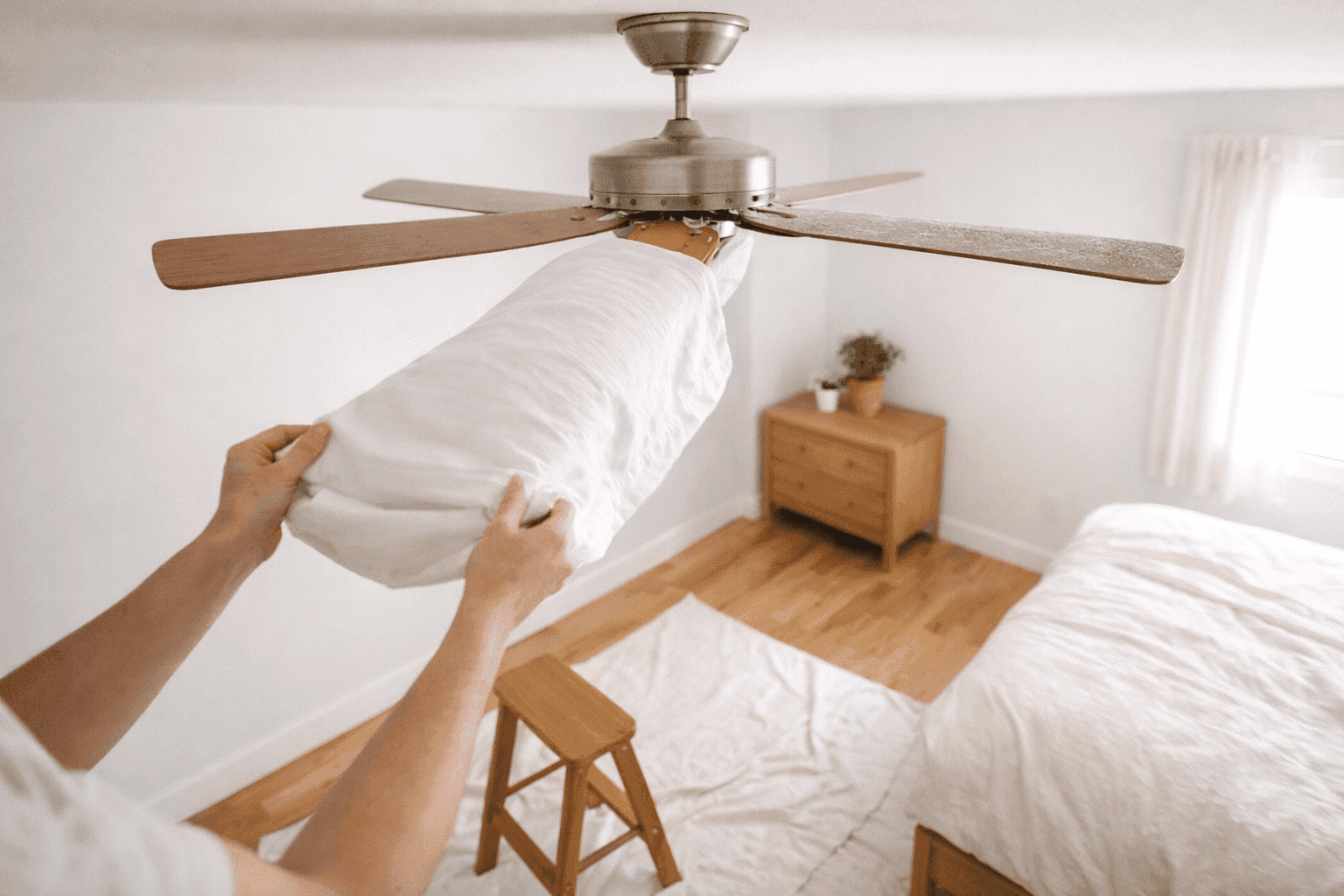
Ceiling fan blades are one of the most reliably neglected surfaces in any home — out of sight, accumulating a thick ridge of dust along the top edge that sits there quietly until the fan is switched on and distributes it as a fine allergen cloud across the entire room. The standard cleaning approach of wiping blades with a damp cloth sends most of that dust drifting down onto the floor, furniture, and anyone standing below. The pillowcase method eliminates that entirely: slip an old pillowcase over each blade, pull it back slowly toward you, and every gram of accumulated dust stays trapped inside the pillowcase rather than becoming airborne. The whole process takes fifteen minutes including wiping down the motor housing and light fixture, costs nothing if you already own an old pillowcase, and should happen twice a year — once in spring before you switch the fan to cooling mode, and once in fall before you reverse it for winter. Do this once the right way and you'll never go back to the cloth-and-dust-cloud method.
What You'll Need
- The Pillowcase Method
- One old pillowcase per fan — standard queen or king size works for most residential ceiling fan blades, which typically run 18–22 inches long. A pillowcase that's too small to slip fully over the blade won't trap the dust at the far end where it accumulates most heavily
- For stubborn grime or grease-coated blades in kitchen fans, spray the interior of the pillowcase lightly with all-purpose cleaner before slipping it over the blade — the damp interior loosens stuck-on buildup while still trapping everything inside as you pull back
- Dedicate one or two old pillowcases specifically to fan cleaning so they can be washed after each use without concern about cleaning product residue on sleeping pillowcases — mark them with a permanent marker on the inside hem so they don't get mixed with regular bedding
- Alternative Tools
- An extendable microfiber duster with a flexible head — the best alternative for fans too high to reach comfortably from a step stool, or for fans where the blade spacing is too narrow for a pillowcase to slide on easily — ~$15–$25 for a quality extendable model that reaches 8–12 foot ceilings from floor level
- A microfiber flat mop head on an extendable handle also works well for wide fan blades and captures dust in the microfiber fibers rather than scattering it
- A vacuum with a soft brush attachment for fans with significant buildup that a dry pillowcase alone won't remove — run the vacuum brush along the top of each blade before the pillowcase pass to collect the loose top layer, then use the pillowcase for the remaining fine dust
- Surface Cleaning Supplies
- All-purpose cleaner spray — standard household formula for wiping the motor housing, light fixture globe, and ceiling immediately around the fan mounting bracket where dust accumulates in a visible ring
- Two microfiber cloths — one slightly damp for wiping hard surfaces and one dry for buffing — microfiber picks up dust and grime without scratching the painted or plastic fan housing surfaces the way paper towels can
- Glass cleaner for any glass light fixture globes — all-purpose cleaner can leave a slight haze on glass that glass cleaner removes cleanly
- Replacement light bulbs in the correct wattage for your fan fixture — checking bulb condition while the fan is being cleaned and replacing any burned-out ones in the same session keeps the task contained to a single trip up the ladder
- Safety & Access
- A sturdy step stool or ladder tall enough to reach the fan comfortably without stretching — working at a height where you can reach the blades with both hands without straining is both safer and more effective than over-reaching from a lower surface
- A drop cloth, old sheet, or newspaper spread on the floor directly below the fan — even the pillowcase method releases a small amount of fine dust particles during the pull-back motion, and a drop cloth catches any debris that falls during the motor housing and ceiling wipe-down
- Turn the fan off at the wall switch and wait for blades to stop completely before cleaning — this is obvious but worth stating because a fan that's switched off at the remote but still has power can be accidentally triggered during cleaning
How to Do It
- Turn the fan off and let it stop completely before positioning the step stool or ladder — fans switched off at the remote rather than the wall switch may still have power and can be inadvertently triggered during cleaning. Switch off at the wall and confirm all blades are fully stationary before climbing up, since a blade that begins moving while a pillowcase is on it is both startling and potentially damaging to the fan motor.
- Lay your drop cloth on the floor directly beneath the fan to catch any debris that falls during the cleaning process — even the most careful pillowcase technique releases a small amount of fine particulate during the pull-back, and the motor housing wipe-down often dislodges accumulated dust from the housing vents that falls straight down. Spreading a drop cloth before climbing takes thirty seconds and eliminates the need to vacuum the area below the fan after cleaning.
- Slip the pillowcase over the first blade by holding the open end wide and sliding it along the full length of the blade from the motor hub end to the blade tip — you want the pillowcase to enclose the entire blade including the far end where dust accumulates most heavily in a thick ridge. Once the pillowcase is fully over the blade, press gently on the top and bottom of the pillowcase so the fabric makes firm contact with both faces of the blade before beginning the pull-back.
- Pull the pillowcase back slowly and firmly toward you in one continuous motion — the dust that was sitting on the top of the blade transfers to the inside of the pillowcase as the fabric slides back across both surfaces simultaneously. Pull all the way to the blade tip and off the end completely before releasing your grip, which keeps all the collected dust inside the pillowcase rather than releasing it back into the air at the blade tip. Repeat for every blade, shaking the pillowcase gently between blades to settle the collected dust toward the closed end away from the opening.
- Wipe the motor housing and canopy with a slightly damp microfiber cloth — the cylindrical motor housing accumulates a layer of fine dust that the pillowcase can't reach, and the canopy plate where the fan mounts to the ceiling typically has a visible ring of dust around its perimeter that contributes to the general air quality impact of a dirty fan. Wipe in circular motions and use a dry cloth to buff any moisture before it sits on painted surfaces or seeps into the motor housing vents.
- Clean the light fixture by wiping the exterior of each globe with a damp cloth and glass cleaner — remove glass globes if they detach easily for a more thorough clean, checking for any accumulated insect debris inside the globes that accumulates over months of use. Check each bulb while the globes are accessible, confirm they're seated securely and not loose in their sockets, and replace any burned-out bulbs with the correct wattage for the fixture before replacing the globes.
- Wipe the ceiling around the fan mounting using a slightly damp cloth on an extendable handle or from the step stool — the ceiling in a 12-inch radius around any ceiling fan accumulates a visible dust ring from the airflow patterns the fan creates, and wiping this area as part of the fan cleaning session produces a noticeably cleaner overall result than stopping at the fan body itself. This ceiling wipe takes about ninety seconds and makes the difference between a fan that looks clean and a fan in a setting that looks clean.
- Take the drop cloth outside to shake out before folding and storing it, and put the dirty pillowcase directly in the laundry — washing the pillowcase after each use removes the accumulated dust and any cleaning product residue so it's ready for the next seasonal cleaning session. Turn the fan back on at low speed for a few minutes while standing below it to confirm no dust is released from surfaces you may have missed, which also confirms the blades are balanced and the mot