Clean Your Dryer Vent in 20 Minutes for Under $15
The twice-a-year task that cuts your energy bill, speeds up drying time, and keeps your home safe
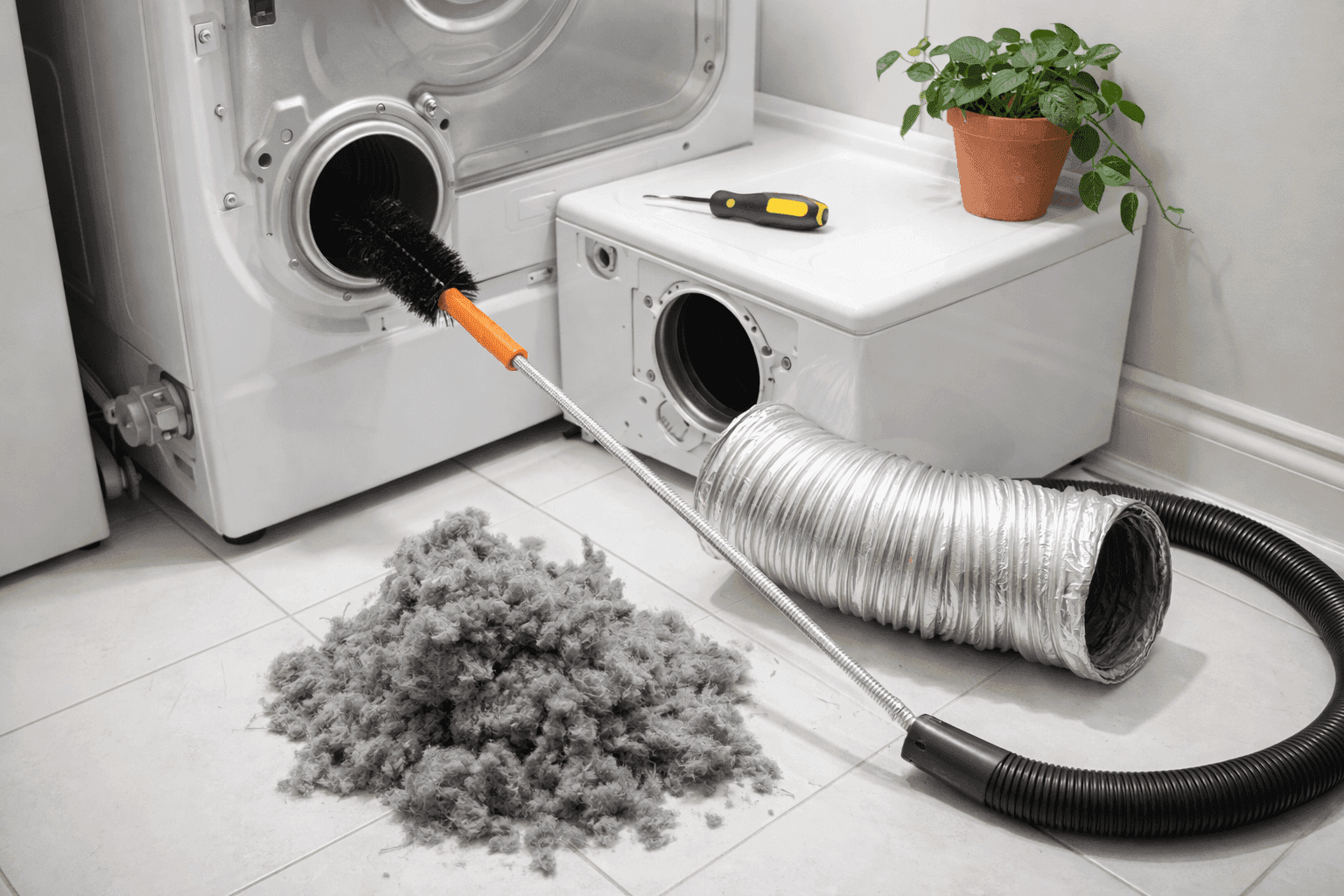
If your dryer has been taking two cycles to dry a single load lately, the problem almost certainly isn't the dryer — it's a vent hose packed with lint that's been quietly accumulating since the last time anyone thought to clean it. A clogged dryer vent forces your machine to work twice as hard to move hot air through a restricted passage, which means longer drying times, higher energy bills, and a dramatically elevated fire risk from the heat buildup that results. Dryer fires account for tens of thousands of house fires annually in the United States, and a clogged vent is the leading cause. A $10 flexible cleaning brush, twenty minutes of straightforward work, and access to the back of your dryer is all it takes to clear the vent completely, restore full drying efficiency, and remove that fire risk from your home for the next six months. This is the Sunday task that genuinely earns its keep in safety and savings every single time you do it.
What You Need
- Dryer vent cleaning brush kit — a long flexible rod brush designed specifically for dryer vent diameter (typically 4 inches); kits with multiple rod sections reach vents up to 12 feet long (~$10–15)
- Vacuum cleaner with hose attachment — for removing dislodged lint from inside the vent hose, the lint trap housing, and the area behind the dryer
- Flathead screwdriver — for loosening the hose clamps that secure the vent hose to the dryer and the wall fitting
- Microfiber cloth or damp rag — for wiping down the exterior vent cover and the area around the dryer connection point
- Flashlight or phone torch — for inspecting inside the lint trap housing and the wall vent opening after cleaning
- Foil duct tape — not standard cloth duct tape — for resealing any vent hose connections that show gaps or separation when you reattach; foil tape is rated for dryer heat, cloth tape is not (~$6–8)
How to Do It
- Unplug the dryer completely from the wall outlet before touching anything — for gas dryers, turn off the gas supply valve as well. Pulling a dryer away from the wall with it still energized is a safety risk that the twenty seconds it takes to confirm it's unplugged eliminates entirely.
- Pull the dryer straight out from the wall far enough to access the vent hose connection at the back — typically eighteen to twenty-four inches of clearance is sufficient. Move slowly and watch that the vent hose doesn't snag and tear on the dryer's rear panel as it shifts.
- Loosen the hose clamp at the dryer connection point with a flathead screwdriver and slide the vent hose free from the dryer exhaust port. Then go to the exterior wall and disconnect the other end of the hose from the wall fitting the same way, so the entire hose section is free in your hands.
- Insert the flexible cleaning brush into one open end of the disconnected hose and work it through in sections, rotating as you push to dislodge lint from the interior walls. The volume of lint that comes out of a vent that has never been cleaned is genuinely startling — have your vacuum ready to collect it immediately so it doesn't redistribute across the laundry room floor.
- Vacuum deep inside the lint trap housing — the slot where you normally remove the lint screen — using your narrowest hose attachment. Shine a flashlight in before and after to confirm you've cleared the full depth of the housing, which extends several inches below the screen slot and accumulates a surprising amount of escaped lint over time.
- Go outside and clear the exterior vent cover by removing any lint buildup from the flap and the surrounding hood, and check for bird nests or debris packed inside the vent opening — this is more common than most homeowners expect, particularly in spring. A blocked exterior vent is the single most common reason a freshly cleaned interior vent still underperforms.
- Inspect the vent hose itself before reattaching it — look for kinks, crushing, tears, or sections that have separated at the seams. A damaged hose leaks hot moist air directly into the wall cavity behind your dryer, which creates a persistent moisture and mold risk that no amount of vent cleaning will resolve. Replace a damaged hose rather than reinstalling it.
- Reattach the vent hose to both the dryer exhaust port and the wall fitting, tightening the clamps firmly and sealing any visible gaps with foil duct tape — never standard cloth duct tape, which degrades rapidly under dryer heat and eventually releases the connection it was meant to hold. Push the dryer back leaving three to four inches between the back panel and the wall so the hose maintains a gentle curve rather than a sharp kink, then plug in and run a short test cycle to confirm full airflow.
HVAC technicians who service residential laundry systems always check the exterior vent cover flap for free movement before and after cleaning — the flap should open fully with minimal resistance when the dryer runs and close completely when it stops. A flap that sticks open allows cold outside air and pests into the vent system year-round, while a flap that doesn't open fully under airflow pressure signals a restriction somewhere in the vent run that the brush cleaning may not have fully cleared. They also recommend switching from flexible plastic accordion-style vent hose to rigid or semi-rigid aluminum duct wherever possible, since smooth interior walls accumulate lint far more slowly than the ridged interior of flexible plastic hose and are significantly more resistant to crushing behind the dryer.