Organize Your Refrigerator with Clear Bins for $30
One Sunday hour, thirty dollars, and you will never lose a lime to the back of the fridge again
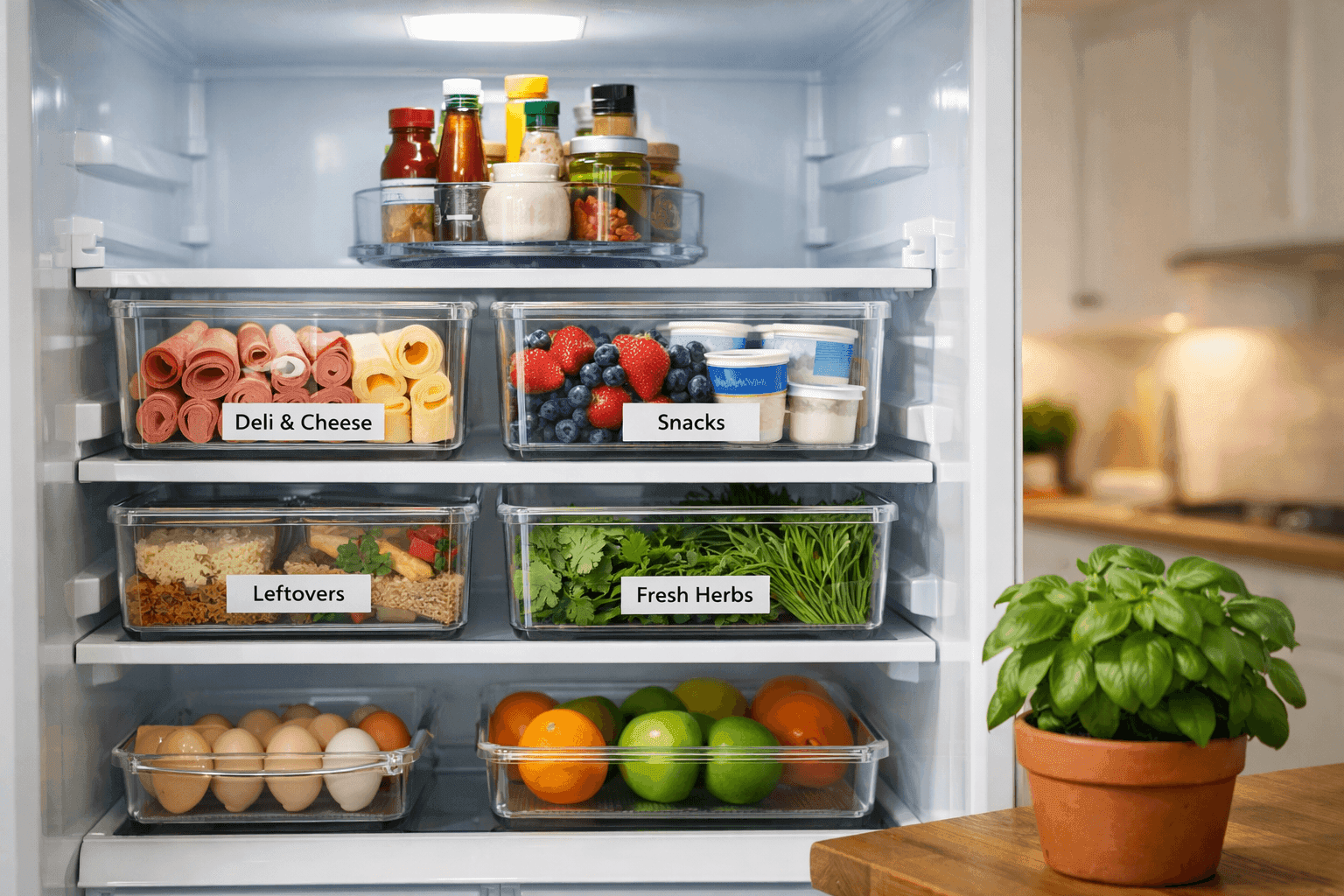
If you have ever thrown away a bag of wilted herbs you could have sworn you just bought, or paid for groceries you already had hiding somewhere in the back of the fridge, this is the project that ends that particular brand of weekly frustration for good. A refrigerator without a bin system isn't just disorganized — it's actively costing you money every single month in forgotten produce and expired leftovers that never made it to the front. Clear stackable bins from the dollar store or a big box retailer run about $30 total, take an hour to set up, and create a system so visually obvious that you can assess your entire fridge contents at a glance without moving a single thing. The result is less food waste, faster grocery shopping, and the quietly revolutionary experience of actually enjoying opening your refrigerator. One Sunday morning investment that pays you back every single week for years.
What You Need
- Clear stackable bins in two or three sizes — measure your fridge shelf depth and width before shopping; a mix of full-shelf-width bins and half-width bins gives the most flexibility (~$20–25 for a set)
- Clear lazy Susan turntable, small — optional but transformative for condiments; eliminates the reaching-past-everything problem entirely (~$5–8)
- Label maker or adhesive labels and a marker — labels are what make the system self-maintaining for everyone in the household (~$10–15 for a basic label maker, or free with a marker)
- Paper towels or thin shelf liners — for lining produce bins to absorb moisture and extend the life of herbs and berries
- All-purpose cleaner and microfiber cloth — for wiping down shelves and drawers completely before the new system goes in
- Measuring tape — shelf dimensions vary significantly between fridge models; measure twice before buying bins
How to Set It Up
- Empty the entire refrigerator completely before you do anything else — pull every item out onto the counter and toss anything expired, questionable, or unidentifiable. Starting with a full fridge and trying to work around the contents is the approach that leads to a half-finished system that never quite works.
- Clean every shelf, drawer, and wall surface with an all-purpose cleaner and a damp cloth while the fridge is empty. A fresh system installed over old spills and crumbs will feel dirty immediately and undermine the motivation to maintain it.
- Map your categories before placing a single bin — decide which zones serve which functions based on how your household actually uses the fridge. Common groupings that work well include: deli meats and cheeses, snacks and grab-and-go items, condiments, beverages, leftovers, and a dedicated produce bin for herbs and small fruits.
- Assign shelf positions by food safety zone: raw meats belong on the lowest shelf where drips can't contaminate anything below, ready-to-eat items like deli meats and cheeses go in the middle, and beverages and condiments work well on the door and upper shelves where temperature fluctuates most.
- Place your bins and test the layout before labeling anything — slide them in and out, check that they clear the shelf above with enough room for comfortable removal, and confirm that nothing blocks the airflow vents at the back of the fridge. Blocked vents are the most common reason organized fridges still have cold spots and produce that wilts faster than it should.
- Line your produce bin with a folded paper towel before adding herbs, berries, or leafy items. The paper towel absorbs excess moisture that would otherwise accelerate spoilage — replace it weekly when you do your grocery rotation and your fresh produce will consistently last several days longer.
- Label every bin clearly on the front face so the category is visible without pulling the bin out. Labels are the step that makes the system work for everyone in the household rather than just the person who set it up — an unlabeled bin becomes a catch-all within a week.
- Reload your fridge with the items that passed the expiration check, placing everything into its designated bin and positioning items with the nearest expiration dates at the front. This front-to-back rotation is what prevents the back-of-fridge graveyard from forming again — make it a two-minute habit every time you grocery shop.
Professional home organizers who specialize in kitchen systems always designate one bin specifically as an "eat first" bin — a clearly labeled container that holds every leftover, open package, and item approaching its use-by date. Rather than tracking expiration dates across every shelf, the household rule becomes simple: check the eat-first bin before reaching for anything new. It creates a visual priority queue that requires zero mental effort to maintain, and professional organizers consistently identify it as the single intervention that most dramatically reduces food waste in the households they work with.