Grain Expectations: Polish Stainless Steel for Under $5
A damp microfiber cloth, a tiny amount of mineral oil, and fifteen minutes — the streak-free stainless steel finish that commercial sprays have been promising and failing to deliver for years
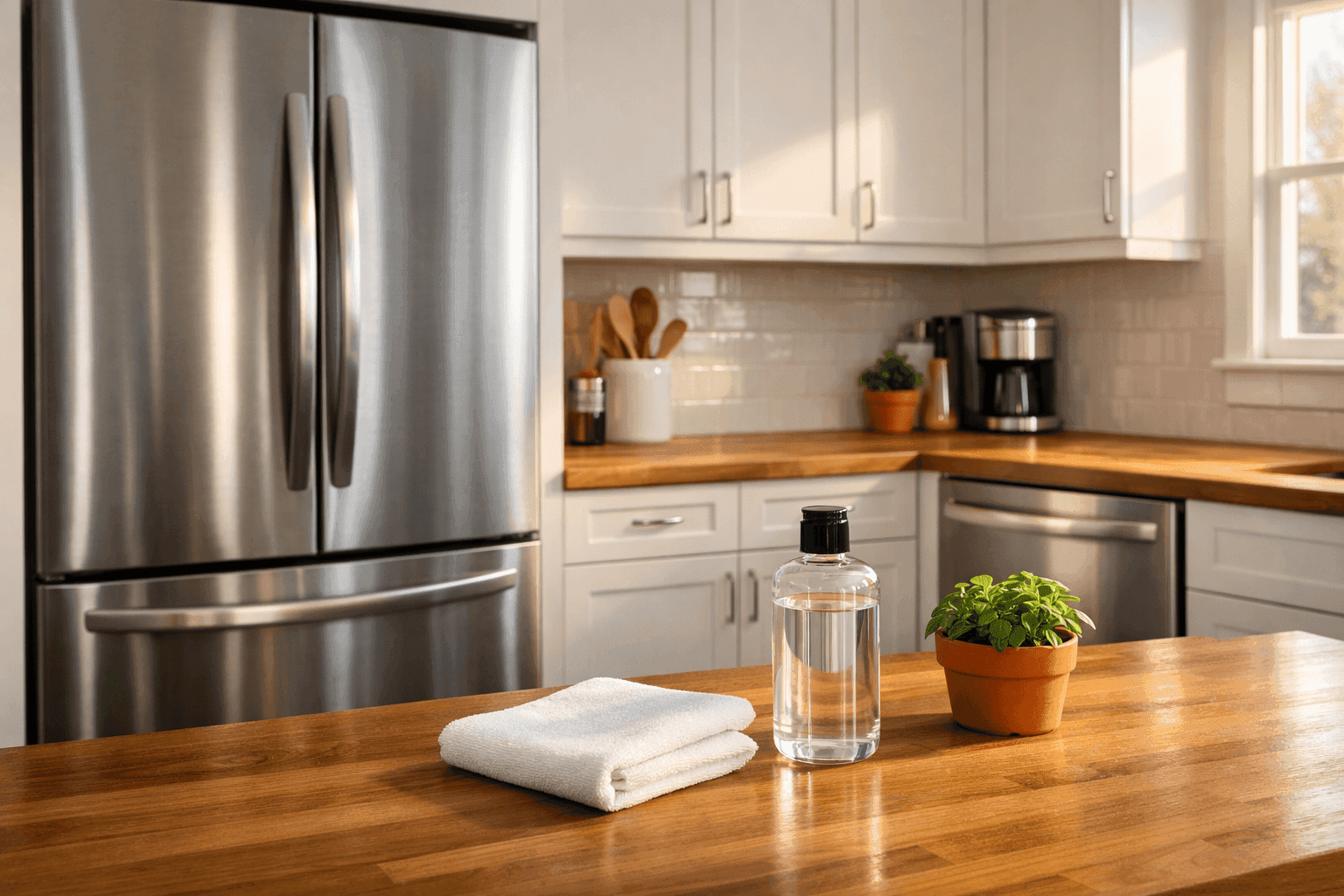
The stainless steel appliance fingerprint problem has spawned an entire category of specialty cleaning products — sprays, wipes, foams, and polishes — most of which leave streaks that are marginally better than the fingerprints they replaced, require repeated applications that add up to real money over time, and include surfactant residues that actually attract more fingerprints between cleanings. The actual solution costs about $3, is almost certainly already in your medicine cabinet, and works so dramatically better than any commercial product that discovering it feels like learning a secret that someone should have told you years ago. Mineral oil applied with a microfiber cloth in the direction of the steel's grain cleans, polishes, and protects stainless steel in a single pass — buffing to a beautiful low shine that repels fingerprints for days and leaves the surface looking better than it did when the appliances were new. Fifteen minutes to do every stainless steel appliance in the kitchen. Under $5 in materials. Done.
What You'll Need
- Mineral Oil
- Food-grade or pharmaceutical-grade mineral oil — the exact product sold as a laxative or wood conditioner at any pharmacy or grocery store for ~$3–$4 per bottle. The same bottle used for wood cutting board conditioning is ideal for stainless steel polishing and lasts essentially indefinitely since the quantity used per cleaning session is minimal
- Baby oil (which is mineral oil with fragrance added) works identically and produces the same results — the fragrance doesn't affect the polish or the protective coating, though some people prefer the unscented version near food preparation surfaces
- Olive oil and coconut oil are frequently suggested as alternatives but both go rancid on metal surfaces within days, producing an unpleasant smell and a sticky residue that attracts more fingerprints and debris than an unpolished surface. Use mineral oil specifically — it doesn't oxidize or go rancid regardless of how long it sits on the metal surface
- The quantity used is genuinely tiny — two to three drops per appliance face is sufficient for a full polish. A $3 bottle of mineral oil lasts years of regular appliance polishing at this application rate
- Microfiber Cloths
- Two microfiber cloths per cleaning session — one slightly damp for the initial wipe-down and one completely dry for the oil buffing. Microfiber's split-fiber construction lifts and traps fingerprint oils and smudges rather than redistributing them across the surface the way cotton cloths and paper towels do, which is why microfiber produces a streak-free result on the wipe step that cotton and paper cannot reliably achieve
- The buffing cloth for the mineral oil step must be completely dry and clean — even slightly damp fibers dilute the mineral oil and produce a streaky rather than polished result. Keep a dedicated set of microfiber cloths specifically for stainless steel polishing rather than using the same cloths for general kitchen cleaning where they accumulate soap, grease, and food residue
- Wash microfiber cloths without fabric softener — fabric softener coats the split microfiber structure and dramatically reduces its cleaning and lifting effectiveness within a few washes. A microfiber cloth washed with softener smears rather than lifts surface debris and produces a streaky result regardless of technique
- Understanding the Grain
- Stainless steel has a visible brushed grain — fine parallel lines running in a single direction across the surface. On most refrigerators, dishwashers, and range hoods the grain runs horizontally; on most ranges and ovens it runs vertically. Look closely at the surface in raking light to identify the grain direction before making the first stroke
- Always wipe, clean, and buff in the direction of the grain — strokes that cross the grain push debris into the grain channels and create micro-scratches that dull the finish over repeated cleanings. The grain direction is the single most important technique variable in stainless steel care and the one most commonly ignored by people who clean with commercial sprays that don't mention it
- Test the grain direction on a small, inconspicuous section first if uncertain — a stroke in the correct grain direction feels smooth and produces a uniform surface; a cross-grain stroke has a slightly different feel and produces a visible difference in how the surface reflects light
- Optional Supplies
- White vinegar in a spray bottle for removing hard water spots, calcium deposits, and dried food residue that a damp microfiber cloth alone won't lift — spray lightly, let dwell for 30 seconds, wipe with the grain, and dry completely before applying mineral oil. Never use vinegar on stainless steel without drying completely before the mineral oil step — oil over a vinegar-wet surface produces a blotchy, uneven polish
- A soft-bristle toothbrush for cleaning around handle hardware, hinges, and trim pieces where microfiber can't reach cleanly — clean these detail areas before the main surface polish so any displaced debris can be wiped away during the primary surface cleaning
How to Do It
- Identify the grain direction before touching the surface — look at the appliance face in natural or raking light and find the fine parallel brushed lines that run across the stainless steel surface. On refrigerators and dishwashers this is almost always horizontal; on ranges and microwaves it varies by manufacturer and model. Every subsequent wipe, clean, and buff stroke must follow this direction — commit to it before you start and maintain it through every step of the process.
- Wipe the surface with a slightly damp microfiber cloth in long, even strokes following the grain — the damp cloth removes loose fingerprints, surface dust, and light smudges without scratching. Use overlapping parallel strokes that cover the full appliance surface methodically rather than wiping in circles or random directions, and use light pressure — pressing too firmly while debris is still on the surface pushes it into the grain rather than lifting it away.
- Address any stubborn spots with a light spray of white vinegar before drying — hard water spots, dried food splatter, and greasy smudge deposits that the damp cloth didn't fully remove respond well to a brief vinegar dwell. Spray lightly, wait 30 seconds, and wipe with the grain using a clean section of the damp cloth. The acid in the vinegar dissolves the mineral deposits and emulsifies the grease that simple water can't lift, and it leaves no residue that interferes with the mineral oil step as long as the surface is dried completely afterward.
- Dry the surface completely with a clean dry microfiber cloth before applying any mineral oil — this is the step most people skip in their eagerness to get to the polishing stage, and it's the step that determines whether the final result is streak-free or streaky. Any moisture remaining on the surface when the mineral oil is applied dilutes the oil, prevents even distribution, and produces the same streaky, blotchy result that commercial stainless steel sprays reliably deliver. Dry thoroughly, confirm with your palm that no cool damp patches remain, and then open the mineral oil.
- Apply two to three drops of mineral oil to a clean dry microfiber cloth — not to the appliance surface directly. Applying oil to the cloth rather than the surface prevents excess pooling and gives you control over distribution before the oil contacts the metal. The quantity is genuinely tiny — two drops for a dishwasher face, three for a full refrigerator door. More oil does not produce a better result; it produces a greasy surface that requires additional buffing to remove the excess and can leave visible oil spots if over-applied.
- Buff the oil into the surface in long, firm strokes following the grain — the buffing motion distributes the oil in a microscopically thin, even film that fills and seals the grain channels rather than sitting on the surface. Work from the top of the appliance downward so any oil displaced by the buffing strokes moves toward sections that haven't been buffed yet rather than over already-completed sections. The surface should begin developing a beautiful, even low sheen within the first few strokes — not a high gloss, but a rich, warm, finger-print-resistant glow that looks genuinely different from an unpolished stainless surface.
- Buff away any excess oil with a final pass of the clean side of the cloth — if any area looks slightly oily or shows rainbow-like sheen in raking light, it has slightly too much oil and needs one more light buffing pass to distribute the excess into the surrounding area or absorb it into the cloth. A correctly polished stainless surface looks subtly richer and more uniform than an unpolished one but shows no visible oiliness, smearing, or color variation across the surface.
- Repeat on every stainless surface in the kitchen while the technique is fresh and the materials are out — refrigerator, dishwasher, range hood, microwave face, and any stainless trim pieces all benefit from the same treatment in the same session, and doing everything at once ensures a consistent finish across all appliances rather than a visible difference between the polished refrigerator and the unpolished dishwasher beside it. The fingerprint-repelling protective coating the mineral oil provides lasts approximately one to two weeks of normal kitchen use before the next polishing session is needed — a significantly longer maintenance interval than any commercial stainless steel spray product.
Professional kitchen designers and appliance installation specialists who work with high-end stainless steel packages consistently advise their clients on one specific maintenance distinction that most homeowners discover only after inadvertently damaging a finish: not all stainless steel is the same grade, and the cleaning approach that works perfectly on 304-grade stainless (the most common residential appliance grade) can damage lower-grade or coated stainless finishes. True brushed 304-grade stainless responds beautifully to mineral oil polishing; smudge-proof or fingerprint-resistant coated stainless — increasingly common on mid-range appliances — has a factory-applied coating that mineral oil can displace, producing a patchy, uneven appearance that looks worse than fingerprints. To identify which type you have, look for the words "smudge-proof" or "fingerprint-resistant" in the appliance documentation or on the manufacturer's website. If your appliances are marketed with either term, clean with a barely damp microfiber cloth only and nothing else — the coating does the fingerprint-repelling work without any additional product, and any cleaning product including mineral oil can compromise the coating's effectiveness. This distinction takes one minute to check and potentially saves an expensive appliance finish from treatment it wasn't designed for.