Post Haste: Fix a Wobbly Fence Post Before It Falls
A slightly wobbly post today is a leaning fence panel and a costly repair bill tomorrow — here's how to fix it in two hours for $20
A fence post that rocks even slightly when you push it is not a minor annoyance — it's a structural failure in progress. Every storm, every strong wind, and every season of freeze-thaw cycling makes it worse, and what starts as a slight wobble becomes a leaning post, which becomes a sagging fence panel, which becomes a full replacement job that costs ten times what the original repair would have. The fix is genuinely straightforward: dig out the loose soil around the base, pour in fast-setting concrete, brace the post plumb, add water, and walk away. The whole process takes about two hours including cure time, costs around $20 in materials, and produces a post that is more solidly anchored than it was the day it was originally installed. This is the definition of a repair that is embarrassingly easy to do and surprisingly expensive to keep ignoring — and if you've got a post that moves when you push it, this weekend is exactly the right time to deal with it.
What You'll Need
- Concrete
- Quikrete Fast-Setting Concrete Mix or equivalent — one 50-pound bag handles one to two posts depending on hole size — ~$8–$10 per bag at any hardware store
- Fast-setting mix is the only product worth using for this repair — it requires no mixing bowl or mixing at all, sets firm enough to release bracing in 4 hours, and reaches full strength within 24 hours
- Standard concrete mix requires mixing, takes longer to set, and offers no meaningful advantage over fast-setting for a post repair — skip it
- Digging Tools
- A digging bar or long pry bar for breaking up compacted soil and old concrete around the post base — ~$25–$35 to buy, or borrow one — this is the right tool for the job and nothing else substitutes well
- A clamshell post hole digger or narrow spade for removing loosened soil from the hole — ~$20–$30 to buy, essential for getting soil out of a narrow hole cleanly
- A trowel or old putty knife for scraping soil away from the post base right at the surface
- Bracing Supplies
- Two 2x4 scraps at least 4 feet long for bracing the post plumb during concrete cure — one brace per side, positioned at 90 degrees to each other
- Deck screws for attaching braces temporarily to the post — drive them at an angle so they pull out cleanly after the concrete sets without damaging the post face
- Two stakes for anchoring the braces to the ground — cut 2x2 scrap at a diagonal point or use metal garden stakes
- Checking & Measuring
- A 4-foot level — longer is better for confirming a fence post is truly plumb rather than just approximately straight
- A garden hose with a steady flow for activating the fast-setting concrete after pouring
- Work gloves — concrete is caustic and extended skin contact causes burns even through minor surface moisture
- Safety glasses for digging around old concrete that can chip and send fragments unexpectedly
- For Rotted Post Bases
- A Simpson Strong-Tie E-Z Mender or equivalent post repair bracket — ~$15–$20 — for posts where the base has rotted below ground but the above-ground portion is still structurally sound. These steel brackets are concreted into the hole and the existing post bolts to the bracket, saving the cost of a full post replacement
- Carriage bolts and nuts for attaching the existing post to a repair bracket
How to Fix It
- Test every post in the fence run before digging anything — push each post firmly from multiple directions and note which ones move and how much. A post that rocks even a half inch is worth repairing now; one that shows zero movement is fine. Identifying all your problem posts before starting means you can buy the right amount of concrete in a single hardware store trip and tackle the full repair in one session rather than discovering a second wobbly post after you've already cleaned up.
- Dig out around the post base using your digging bar to break up the soil and any old concrete collar, working in a circle around the post to a depth of at least 6 inches below the existing concrete or soil line — you need to get below the zone of loosened soil that's causing the wobble and into firm, undisturbed ground. Use the clamshell digger or a trowel to remove loosened material from the hole as you go, keeping the hole as narrow as possible so the new concrete fills tightly against both the post and the hole walls.
- Inspect the post base carefully once it's exposed — press your thumb firmly into the wood at and below the soil line to check for soft, spongy, or punky wood that indicates rot. A post base that feels solid and resists thumb pressure is worth repairing with concrete; one that your thumb pushes into easily has rotted through and needs either a full replacement or a steel repair bracket. Pouring concrete around a rotted post base just delays the inevitable by one season — don't skip this check.
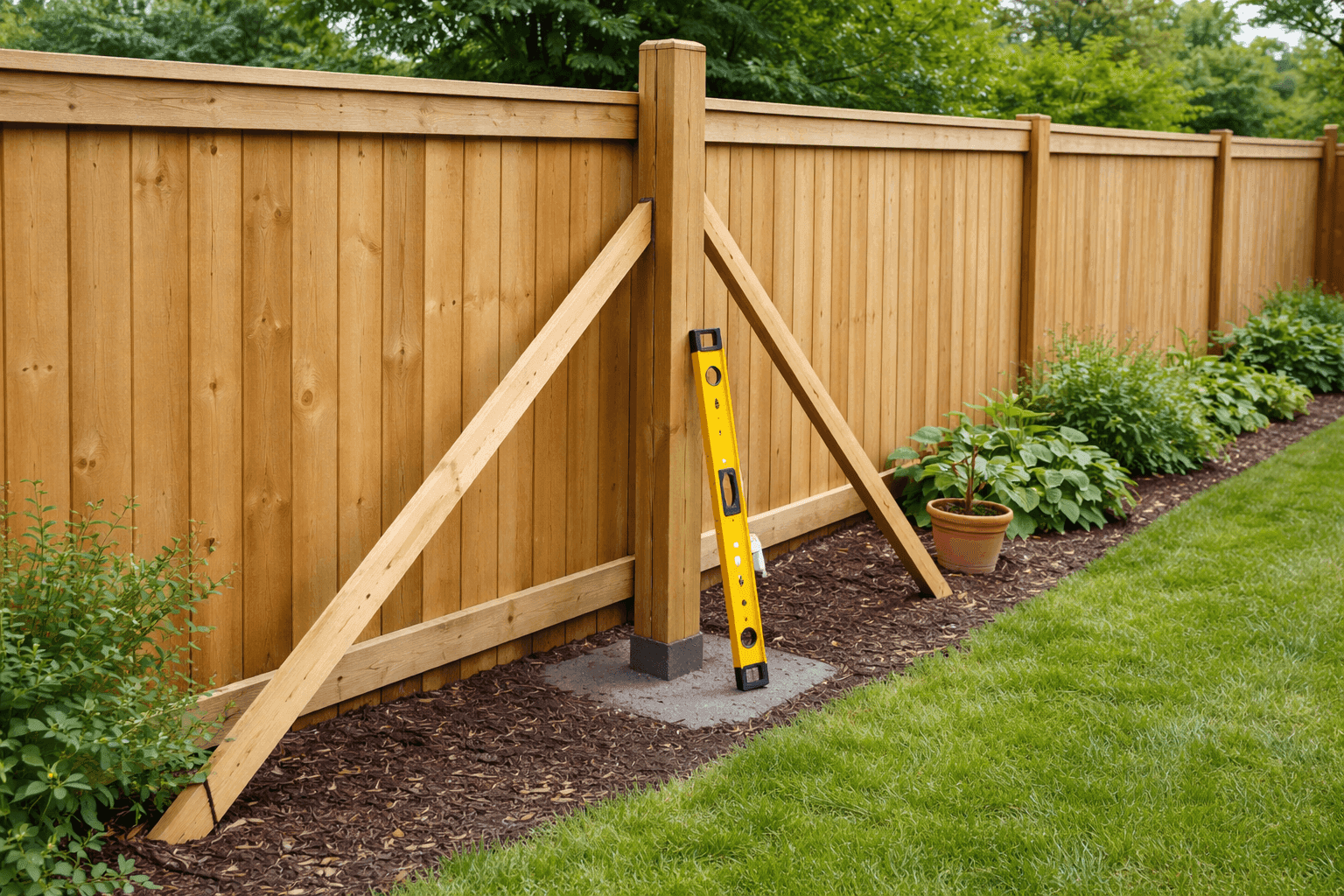
- Straighten and brace the post plumb before any concrete goes in — hold your level against two adjacent faces of the post, push or pull the post until the bubble centers on both faces simultaneously, then screw your 2x4 braces diagonally from the post face to ground stakes at 90 degrees to each other to lock it in position. Check the level one more time after attaching the braces, because driving screws into the brace almost always nudges the post slightly — adjust and confirm before the concrete goes in.
- Pour the dry concrete mix directly into the hole around the post from the bag — no mixing required — filling to about 3–4 inches below ground level and leaving a slight slope away from the post at the top surface so rain drains away from the wood rather than pooling against it. This sloped surface is the single most important detail for post longevity after the repair — a flat or concave concrete collar funnels water directly against the post base every time it rains, which is exactly how posts rot in the first place.
- Add water slowly and evenly over the entire dry concrete surface using your garden hose on a gentle flow — you're looking for the concrete to absorb the water and darken evenly across the surface, which typically takes about a gallon of water per 50-pound bag applied over 30–60 seconds. Do not flood the hole with water or pour water directly onto the post — excess water washes the concrete mix away from the post base and creates voids that undermine the repair. After watering, check the level one final time and make any small post adjustments immediately before the concrete begins its initial set.
- Leave the braces in place for a minimum of four hours — fast-setting concrete reaches handling strength quickly but it needs that full window undisturbed to develop the grip that makes the repair permanent. If you're doing multiple posts in a single session, move to the next post immediately after watering the first so the cure time runs concurrently rather than sequentially — this is what allows a three-post repair to take two hours rather than six.
- Remove braces and backfill once the concrete has set firm — pull the brace screws, remove the 2x4s, and fill the remaining gap between the concrete collar and the ground surface with the excavated soil, tamping it firmly in layers rather than dumping it all in at once. Push the post firmly from several directions one final time to confirm it doesn't move, and do this same push test again after the first heavy rain, when the soil has had a chance to settle fully against the new concrete collar. A post that passes both tests is a post that will stand straight through years of weather without complaint.
Experienced fence contractors have one universal observation about post failures that most homeowners never hear until they're already dealing with a leaning fence: the majority of wobbly posts aren't caused by concrete failure — they're caused by posts that were never set deep enough in the first place. The industry standard for post depth is one-third of the total post length below grade, which means a 6-foot fence post needs to be buried 2 feet deep to hold reliably through seasons of frost heave and soil movement. Posts set at 12 or 18 inches — which is what happens when the installer hits difficult soil or rock and calls it close enough — are the ones that start wobbling within three to five years regardless of how well they were concreted. When you're repairing a wobbly post, use a tape measure to check actual burial depth before backfilling — if the post is significantly shallower than one-third its length, extending the hole deeper before pouring new concrete is the repair that actually lasts, versus a repair that just resets the clock on the same failure.