Don't Gutter Up: Fix Sagging Gutters for $12
A pack of hidden hangers, a drill, and two hours — the repair that stops a sagging gutter from becoming a foundation problem before the next heavy rain
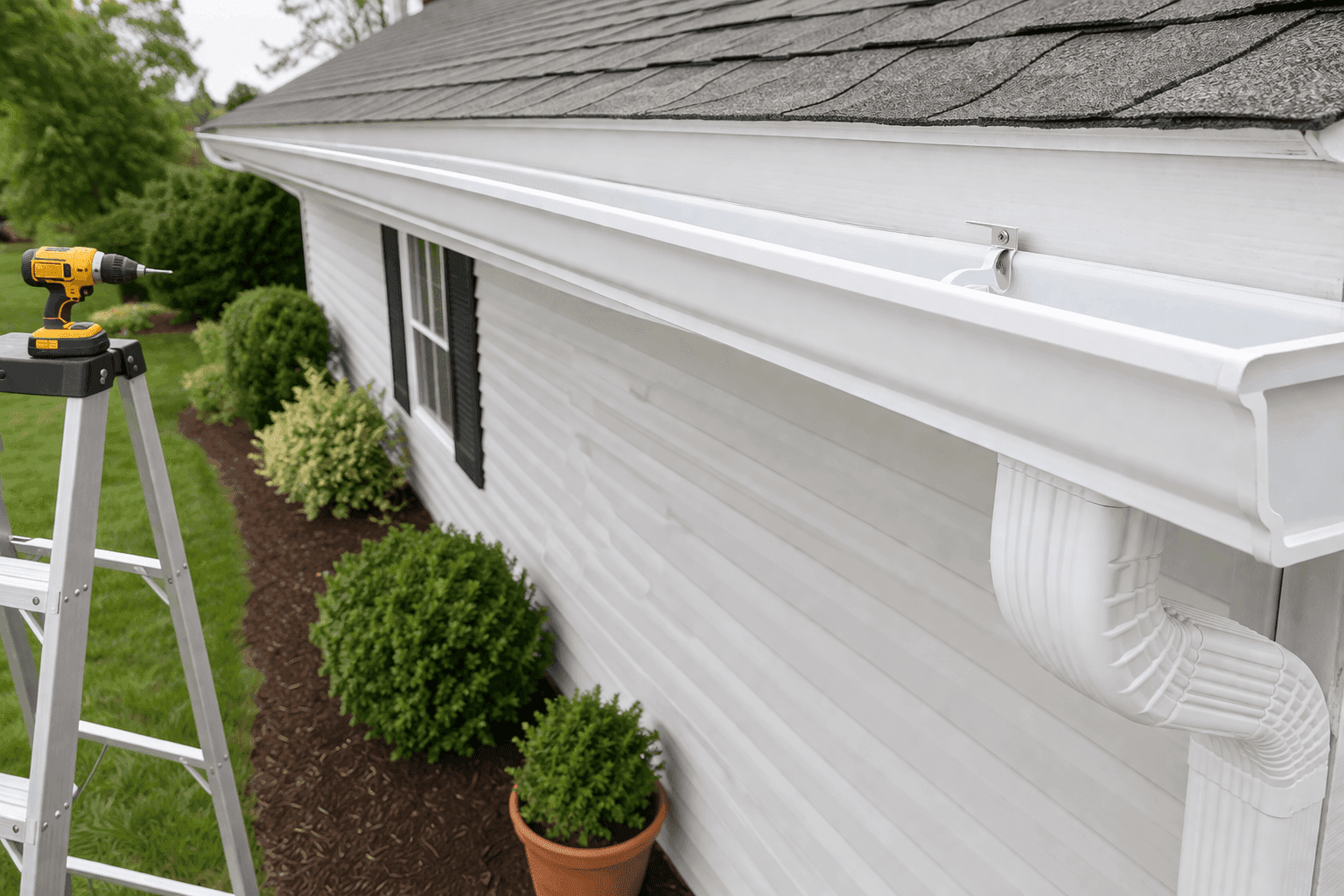
A sagging gutter is one of those home maintenance problems that announces itself slowly and politely — a slight visible dip in the gutter line, a small pool of standing water after rain, a minor overflow from the low point — before it stops being polite entirely and starts sending a steady stream of water down your foundation wall every time it rains. The repair that prevents that outcome costs $12 in hidden gutter hangers, takes two hours with a drill and a ladder, and produces a gutter system that is significantly more secure than the original spike-and-ferrule installation that most older gutters rely on. Old-style spikes work themselves loose from the fascia board over years of thermal expansion, contraction, and ice loading until they simply can't be reset — hidden hangers that screw directly into the fascia create a mechanical connection that stays tight through years of weather without requiring any follow-up. Do this repair before the next heavy rain season and it's a two-hour Saturday morning project. Wait until the sag becomes a waterfall and the conversation changes from hangers to foundation drainage and the costs follow accordingly.
What You'll Need
- The Hangers
- Hidden gutter hangers — also called snap-lock hangers or clip hangers — sized to match your gutter profile. The most common residential size is 5-inch K-style gutter, and hangers are specifically sized to that profile — confirm your gutter width before buying — ~$12–$16 for a pack of 25, which covers a full standard gutter run with extras
- Hidden hangers clip inside the gutter channel and screw through the back of the gutter into the fascia board — completely invisible from ground level and dramatically more secure than the spike-through-gutter-tube installation they replace
- Stainless steel or coated exterior screws included with most hanger packs — confirm the screw length is appropriate for your fascia board thickness, typically 1½-inch screws for standard 1x6 fascia boards
- Buy at least 25 percent more hangers than you think you need — spacing new hangers every 24 inches along the full gutter run while replacing every old spike means you'll use more than a simple count of the existing attachment points suggests
- Tools
- A cordless drill/driver with a Phillips bit — hidden hanger installation requires driving screws at an angle through the back of the gutter into the fascia, and a cordless drill gives the maneuverability needed to work in the confined space inside the gutter channel from a ladder
- A 4-foot level for checking and correcting gutter slope across the full run — gutters need to slope ¼ inch per 10 feet toward the downspout for proper drainage, and a level is the only reliable way to set that slope consistently across multiple hanger positions
- A pry bar or flat screwdriver for removing old spike-and-ferrule hardware — old spikes pull out with firm prying pressure in most cases, though some require a hammer claw to grip and extract fully
- A hammer for tapping stubborn old spike ferrule tubes out of the gutter after the spikes are removed
- A tape measure for spacing new hangers at consistent 24-inch intervals
- Safety Equipment
- A sturdy extension ladder rated for your weight plus tools — position it on firm, level ground and confirm it extends at least 3 feet above the gutter line so you can work without leaning over the top rung
- Ladder stabilizer arms (ladder standoffs) that hold the ladder away from the gutter — leaning a ladder directly against aluminum gutters dents and misaligns the gutter you're trying to fix — ~$30–$45 as an add-on, or borrow from a neighbor
- Work gloves — gutter edges are sharp, old spikes are rusty, and aluminum gutter metal has edges that cut through inattention
- Safety glasses for working overhead where debris and drill chips fall directly toward your face
- Sealing Supplies
- Gutter sealant or silicone caulk for sealing the holes left by removed spike fasteners — old spike holes in the gutter back allow water to seep behind the gutter and onto the fascia, which is exactly the wood rot problem you're repairing the gutter to prevent — ~$5–$8 per tube
- Gutter patch material or gutter repair tape for any cracks or holes discovered during the repair — inspecting the full gutter interior while you're working is the efficiency move that handles multiple problems in a single ladder session
How to Fix It
- Assess the full gutter run from the ground before climbing a ladder — sight along the gutter from each end and note every visible sag, every section that appears to pull away from the fascia, and the location of every downspout that should be the lowest point of the slope. Taking a photo of the gutter line from the ground before starting gives you a clear before reference and helps you verify from the ground that the slope correction you made from the ladder actually looks right before you pack everything up.
- Set up the ladder safely with standoff arms that hold it away from the gutter face — a ladder leaned directly against an aluminum gutter concentrates the full ladder load on a two-inch wide strip of aluminum that dents immediately and permanently under that pressure, and a dented gutter at the ladder contact point is an alignment problem you've created while trying to fix one. Position the ladder so you can reach comfortably into the gutter interior without leaning, and move it frequently rather than reaching further than a comfortable arm's length in any direction.
- Remove the old spike-and-ferrule hardware from the sagging sections first — use a pry bar or hammer claw to pull each spike out of the fascia board, working it back and forth if it's corroded into the wood. Once the spike is out, slide the cylindrical ferrule tube out of the gutter from the front or push it out from the back with a screwdriver. Old spikes that have been in place for decades often bring fascia wood fibers with them when extracted — that crumbling wood around the old spike hole is what made the original hardware loose and is why the old spike can never be properly reset by simply driving it back in.
- Seal the old spike holes immediately after removing each ferrule — apply a small amount of gutter sealant or exterior caulk to each hole from inside the gutter before moving to the next section. A hole through the back of the gutter that isn't sealed channels water behind the gutter onto the fascia board every time it rains, and fascia rot from unsealed gutter holes is a significantly more expensive repair than the gutter sag that brought you up the ladder in the first place.
- Establish the correct slope before installing any new hangers — place your 4-foot level on the gutter floor and measure the existing slope, which should run ¼ inch downward per 10 feet of gutter run toward the downspout. On a standard 20-foot gutter run, the downspout end should sit ½ inch lower than the far end. Temporarily clip a hanger at each end of the run, set the slope correctly by eye and level, and use those two anchor hangers as the reference points for setting the height of every hanger between them.
- Install new hidden hangers starting from the downspout end and working toward the high end of the run — snap each hanger inside the gutter channel with the front clip over the outer gutter edge and the back tab positioned against the back of the gutter, then drive the included screw through the hanger and through the back of the gutter into the fascia board. The screw should bite firmly into solid wood — if it turns without resistance or pulls through easily, you've hit a gap between framing members and need to shift the hanger 2–3 inches in either direction to find solid fascia backing.
- Space hangers every 24 inches across the full gutter run — not just at the sagging sections but along the entire length while you have the ladder out. Gutters with hangers spaced at 24-inch intervals handle the weight of water, ice, and debris loads significantly better than gutters with hangers only at the original installation points, which are often spaced at 36 inches or more. The additional hangers in a full re-hanger are the difference between a gutter that stays properly sloped for five to ten years and one that starts developing new sags within a season or two.
- Check the slope and drainage from the ground after completing the installation by running water through the gutter with a garden hose inserted at the high end — water should flow steadily and continuously toward the downspout without pooling at any point along the run. Any section where water pools indicates a low point in the slope that needs one hanger adjusted slightly higher — a small slope correction while the ladder is still out takes three minutes, while a section of pooled water sitting in the gutter after every rainstorm accelerates rust, promotes mosquito breeding, and adds weight that will eventually create the next sag.
Professional gutter installers who service residential homes consistently make one observation about gutter maintenance that reframes the whole repair from a reactive problem to a preventative system: the fascia board condition is the real variable that determines how long any gutter hanger installation will last, and inspecting the fascia thoroughly while you have the gutters off their original hangers is the most valuable thing you can do during this repair regardless of what you find. Fascia boards that have been protected by properly functioning gutters for years are typically solid and will hold new hanger screws firmly for another decade or more. Fascia boards that have been exposed to water from improperly sealed spike holes, overflow from clogged gutters, or ice dam damage often look fine from the outside while being significantly softened internally — a condition that causes new screws to strip out under load within a single season no matter how carefully they're installed. Press a screwdriver firmly into the fascia at several points along the run before installing new hangers, and any spot where the blade penetrates without resistance indicates rot that needs to be addressed with an epoxy wood consolidant and filler before the new hangers go in. A two-hour gutter repair built on solid fascia lasts ten years; the same repair installed into rotted wood lasts one rainstorm.