Clean Grimy Window Tracks in 20 Minutes for Free
Baking soda, white vinegar, an old toothbrush — and your windows slide like new before the first spring breeze
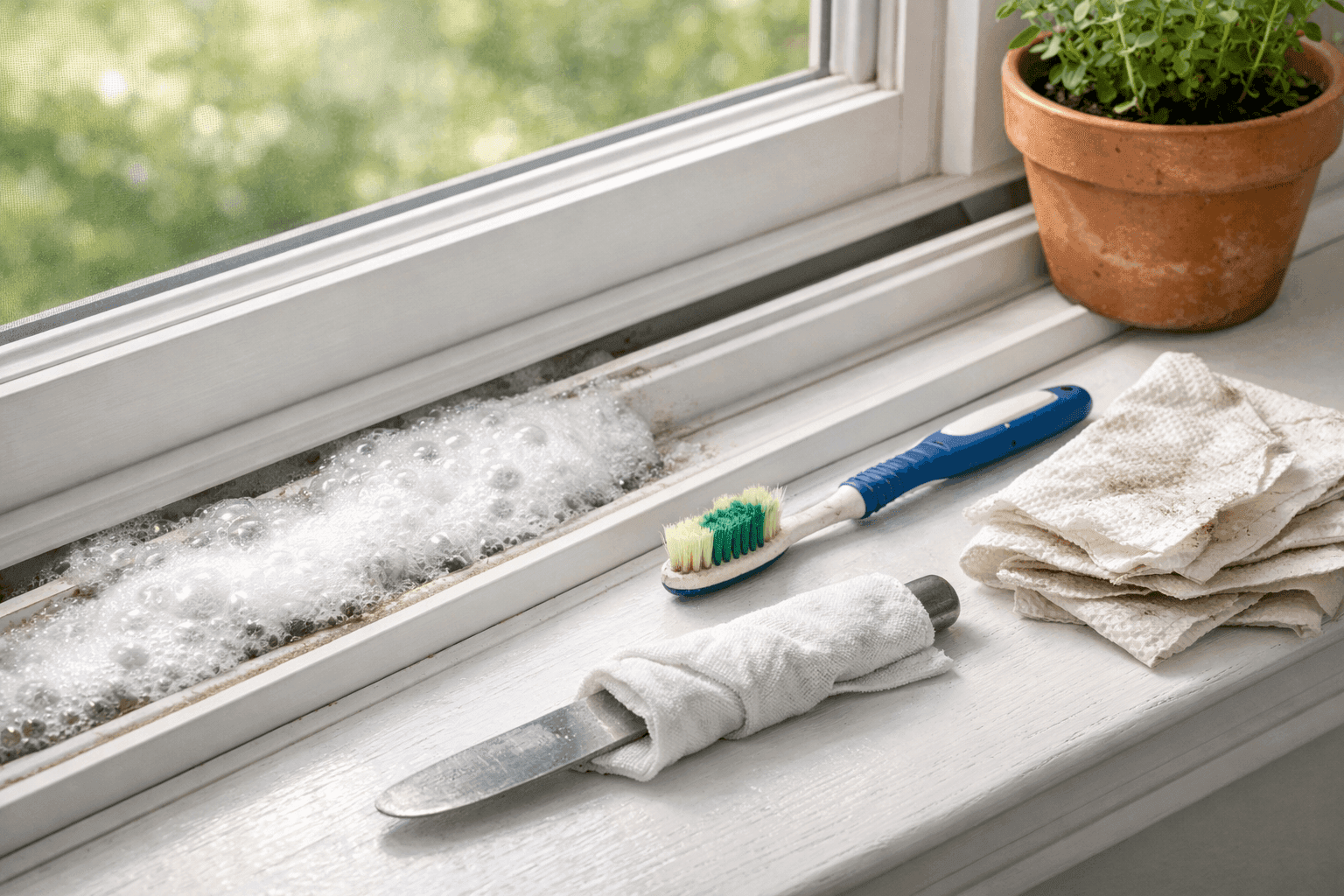
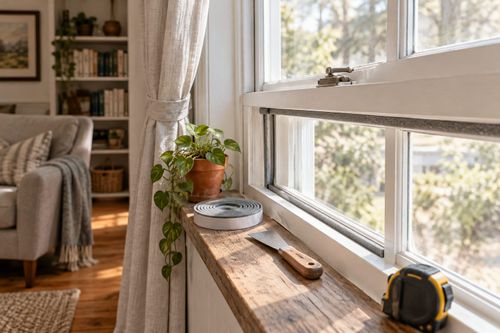
Window tracks are the home cleaning task that nobody thinks about until the moment they try to slide a window open for the first warm breeze of spring and feel it drag and grind through a channel packed with a winter's worth of dust, dead insects, and compacted grime that has been quietly accumulating since the last time anyone looked down. The cleaning method that actually works — not a spray wipe that pushes debris around but a genuine deep clean that restores smooth gliding operation — costs nothing beyond baking soda and white vinegar you almost certainly already have under your kitchen sink. Twenty minutes of fizzing, scrubbing, and wiping transforms tracks that looked permanently stained into channels that slide freely and look clean every time you glance down at the sill. Do every accessible window in a single session and the whole house feels fresher before you have opened a single one.
What You Need
- Baking soda — the abrasive base that lifts compacted grime from the track channel walls and corners; standard grocery store box, nothing special required
- White vinegar — reacts with the baking soda to fizz and loosen embedded debris; the acid also cuts through the greasy film that builds up in tracks from humidity and airborne dust over time
- Old toothbrush — the essential scrubbing tool for track channels and corners; the angled head reaches into the channel corners that no cloth or sponge can access directly
- Butter knife wrapped in a cleaning cloth — for the straight channel walls where even a toothbrush head is too wide to fit flat against the surface
- Cotton swabs — for the tightest corners, screw holes, and drainage slots that accumulate compacted grime that a toothbrush bristle can't dislodge
- Handheld vacuum or vacuum with brush attachment — for removing loosened debris from the track before the wet cleaning phase; vacuuming first prevents loose grit from turning into abrasive mud when vinegar is added
- Paper towels and damp cloths — for the wipe-out phase after scrubbing
- All-purpose cleaner spray — for the final pass that removes any remaining baking soda residue and leaves tracks genuinely clean rather than just less dirty
How to Do It
- Vacuum all window tracks first with a handheld vacuum or brush attachment before introducing any moisture — removing the loose surface debris, dead insects, and dry grit before the wet phase prevents that material from turning into a muddy paste when the vinegar hits, which is harder to remove than either the dry debris or the embedded grime separately.
- Sprinkle baking soda generously into every track channel, covering the full length of both the horizontal bottom channel and the vertical side channels if your windows have them. Don't be sparse — a thin dusting doesn't have enough volume to react meaningfully with the vinegar and lift embedded grime; you want a visible coating that fills the channel to about a quarter of its depth.
- Pour white vinegar slowly over the baking soda in each track and watch the fizzing reaction begin immediately — this is the effervescence mechanically lifting compacted dirt particles away from the track surface in a way that no spray cleaner and wiping motion replicates. The fizzing looks dramatic but settles within thirty seconds; let the reaction work for five to ten minutes before touching the tracks.
- Scrub each track thoroughly with the toothbrush once the fizzing has subsided, working the bristles into every corner and along both channel walls with short back-and-forth strokes. The corners where the horizontal and vertical channels meet are where the most compacted grime accumulates and where the toothbrush head needs the most focused attention — this scrubbing phase is the single step that determines how clean the tracks actually end up.
- Work the channel walls with a butter knife wrapped tightly in a cleaning cloth, sliding it along each straight wall section to wipe away the grime loosened by the baking soda reaction and toothbrush scrubbing. The cloth-wrapped knife reaches the flat wall surfaces between corners in a way that a toothbrush head, angled toward the center of the channel, cannot quite reach flush against the wall.
- Address drainage slots and screw holes with cotton swabs, pressing the swab tip into each small opening and rotating to pull out the compacted debris inside. These small openings are where window tracks drain condensation water, and blocked drainage slots are the primary reason tracks develop the damp, musty smell that makes opening windows in spring feel less refreshing than it should.
- Wipe all loosened material out of the tracks using damp paper towels folded to fit the channel width, running them the full length of each track section in one direction rather than back and forth — a single-direction wipe removes material from the track, while back-and-forth motion just redistributes it. Repeat with fresh paper towels until they come out without visible grime transfer.
- Finish with a spray of all-purpose cleaner across the full track and a final cloth wipe to remove any remaining baking soda residue — dried baking soda left in the track creates a white powdery deposit that looks unclean and can actually impede smooth window sliding if it accumulates in the channel corners over subsequent cleanings. The final spray wipe is what takes the tracks from visibly cleaner to genuinely finished.
Professional home stagers who prepare properties for sale always finish window track cleaning with a light application of dry silicone spray lubricant along the track channels once they're fully clean and dry — silicone spray is colorless, non-greasy, and doesn't attract the dust and debris that petroleum-based lubricants pull into the channel within days of application. A single light pass of silicone spray after cleaning makes windows slide with a smoothness that feels like a hardware upgrade rather than a maintenance task, and it forms a slick surface that significantly slows the rate at which dust and grime re-accumulate in the track between cleanings. A small can costs about $6 at any hardware store and treats every window in the house multiple times over.