Repair Loose Deck Boards Before Summer for $8
A box of deck screws and an hour of honest work makes your deck safe, solid, and barefoot-ready before the season starts
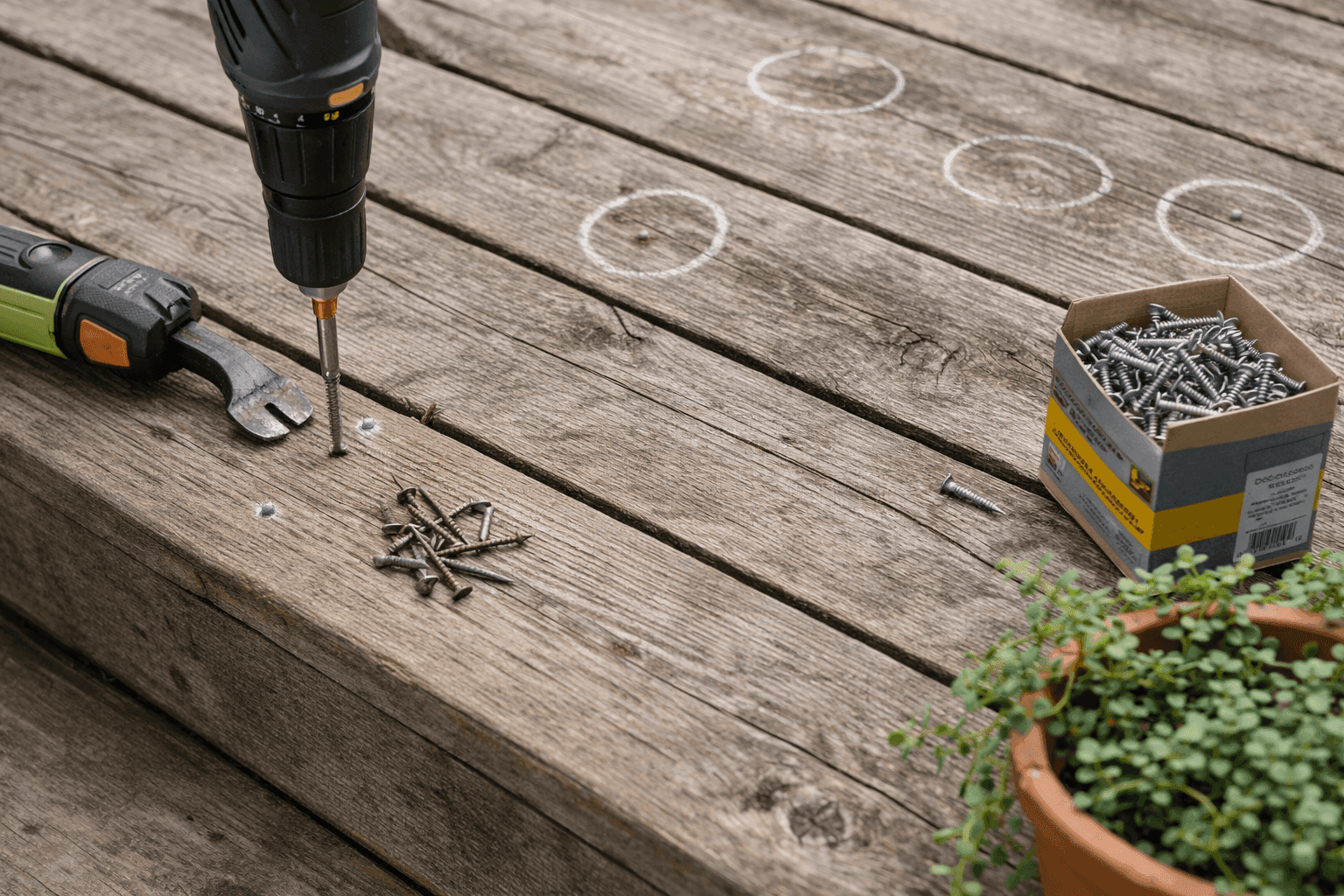
Every deck develops loose boards, popped nails, and flex points over time — it's not a sign of neglect, it's just what wood does through years of seasonal expansion and contraction. What separates a well-maintained deck from a liability is catching those loose boards before bare feet and summer entertaining find them in the worst possible way. A slow walk across your deck with a marking pen and a critical eye takes five minutes, and everything your walk identifies can be secured with a single box of exterior deck screws and an hour of straightforward work for about $8 total. Screws hold wood to joists with a mechanical grip that nails simply cannot match after a few seasons of weather cycling, which is why this fix is permanent rather than temporary — you're not just hammering the nail back down, you're replacing a connection that was always going to fail again with one that won't. Get this done now, before the first barefoot evening on the deck reminds you that you meant to do it last fall.
What You Need
- Exterior-grade deck screws, 2½" or 3" — not standard wood screws; deck screws have a coating that resists the corrosion that causes regular screws to bleed rust stains into the wood surface within a season (~$6–10 for a 1 lb box that covers a full deck inspection)
- Drill with driver bit — for driving screws and countersinking heads just below the wood surface
- Countersink drill bit — creates the shallow recess that lets screw heads sit flush or just below the deck surface rather than proud of it, where they catch feet and accelerate board splitting (~$4–6)
- Pry bar or cat's paw nail puller — for extracting popped nails completely before replacing with screws; trying to drive a screw into a hole with a nail still in it produces neither a secure nail nor a secure screw
- Hammer — for tapping the pry bar under stubborn nail heads and for setting any remaining nails that don't need replacing
- Marking pen or chalk — for flagging every problem board during your initial walk-through so nothing gets missed during the repair pass
- Flashlight — for inspecting the joist structure visible through any deck board gaps, looking for rot, insect damage, or joist separation
- Knee pads — optional but genuinely appreciated during an hour of close work at deck level
How to Fix It
- Walk the entire deck slowly and systematically, pressing down firmly on each board with your full weight and marking any board that flexes noticeably, squeaks under pressure, shows a raised nail head, or has visible surface splintering. Do this inspection pass completely before starting any repairs so you have a full picture of the work scope and don't miss problem areas by jumping between assessment and fixing.
- Pull every popped nail completely using a pry bar or cat's paw rather than hammering it back down — a nail that has worked loose once will work loose again, usually faster the second time as the surrounding wood fiber has already compressed and lost its grip. Removing it entirely and replacing it with a screw one inch from the old hole puts fresh wood fiber in contact with the fastener and creates a connection that will outlast the board itself.
- Locate the joist beneath each repair point before drilling — screws driven into decking between joists hold nothing and create a false sense of security. Joists are typically spaced 16 inches apart and are visible as the darker lines running perpendicular to the deck boards when you look through the gaps between boards; a quick probe with a thin nail or the tip of your pry bar confirms solid wood beneath before you commit a screw.
- Pre-drill a pilot hole at every single fastener location using a bit slightly narrower than your screw shank, then follow with the countersink bit to create the shallow recess for the screw head. Pre-drilling on weathered deck boards is the step that prevents the surface splitting that turns a cosmetic repair into a board replacement — dry, seasoned outdoor wood splits under screw pressure far more readily than fresh lumber, and a split board through the repair point means starting over.
- Drive deck screws firmly until the head sits just below the wood surface in the countersink recess — not flush, and not so deep that the screw pulls through the wood fiber above the joist. A properly countersunk deck screw is protected from standing water pooling around the head, which is the primary mechanism by which screw corrosion begins even on coated exterior fasteners.
- Address boards that flex along their length by adding additional screws at every joist crossing along the board's full run, not just at the point where the flex is most obvious. A board that flexes at the center is typically unsecured at one or more intermediate joists — securing only the obvious flex point leaves the adjacent unsecured spans to develop the same problem within a season.
- Probe any board that shows surface splintering, discoloration, or soft spots with a screwdriver tip pressed firmly into the wood — sound wood resists penetration, while rot allows the tip to sink in with little resistance. A board that fails this test needs full replacement rather than fastener repair; securing a rotted board to the joist structure only delays the inevitable while concealing the deterioration from view.
- Inspect the joist structure visible beneath the deck boards using a flashlight shone through the board gaps, looking specifically for joists that show discoloration, surface softening, or separation from the beam they connect to. Joist issues identified now during a cosmetic repair pass are straightforward to address; joist issues discovered when a board gives way underfoot during a summer party are a significantly more urgent and expensive conversation.
Professional deck builders always complete fastener repairs before any cleaning, staining, or sealing work rather than after — fresh deck screws driven into cleaned and stained wood disrupt the finish around each entry point and leave raw wood exposed at every countersink recess, which becomes the first place moisture penetrates and accelerates the deterioration the stain was applied to prevent. Doing the structural work first, then cleaning and refinishing the entire surface as a single subsequent step, produces a finished deck where every fastener point is sealed into the surrounding finish rather than sitting as an unprotected hole through it. It also means you only handle the deck surface once rather than twice, which matters when you're working on your hands and knees for an hour across a full deck.