Down the Drain: Clean Your Garbage Disposal Right
Baking soda, vinegar, ice cubes, and a citrus peel — the 20-minute maintenance routine that eliminates odors, clears jams, and keeps your disposal running for years
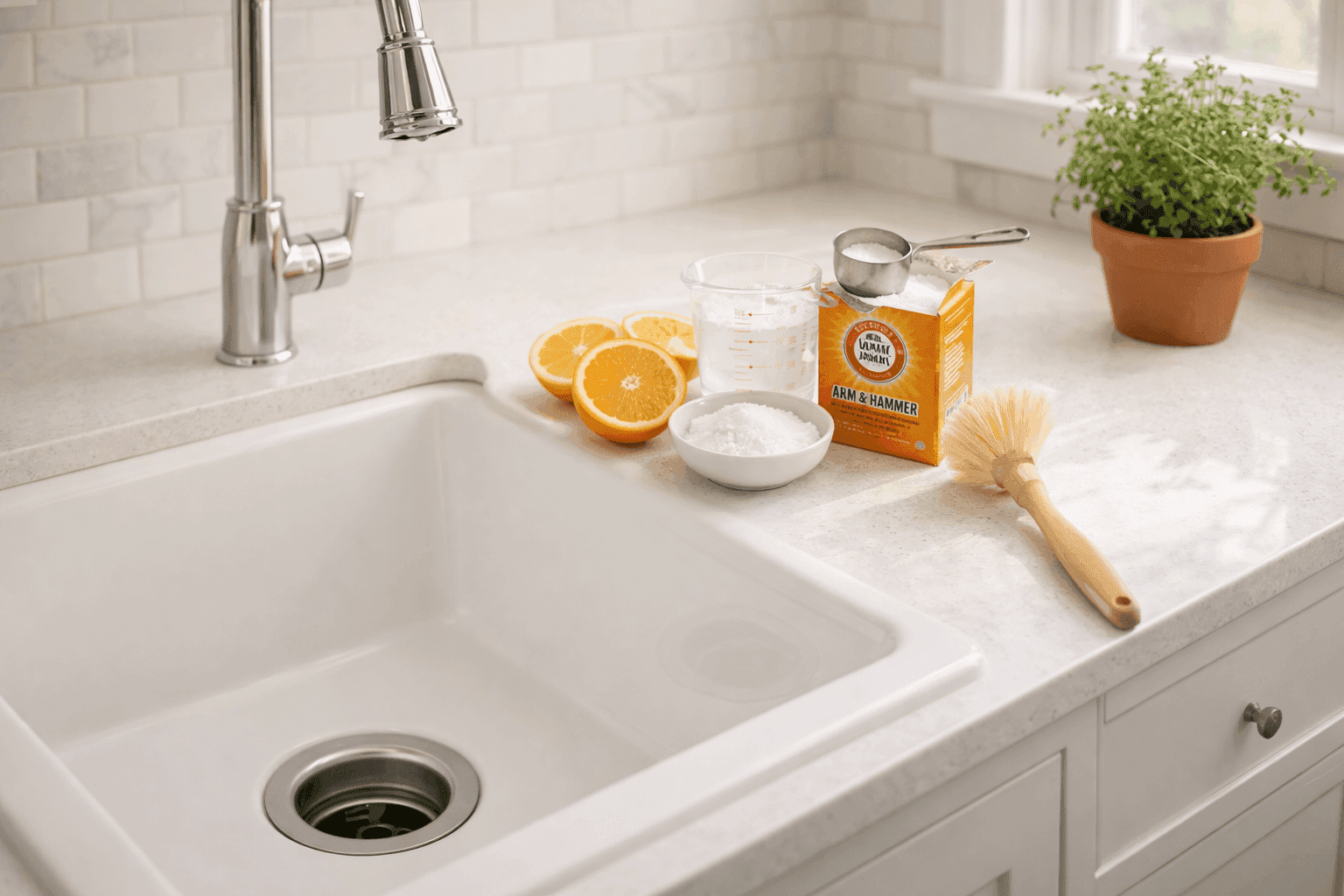
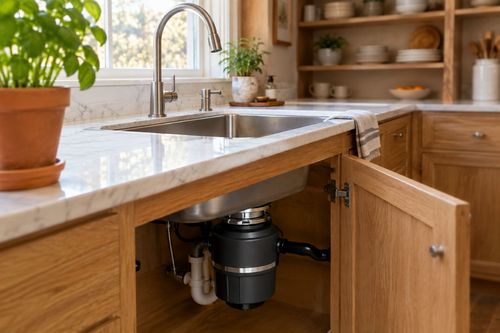
A garbage disposal that smells like something died in it is one of those kitchen problems that's easy to ignore until you have company, and then suddenly you're very aware of it. The smell isn't the disposal itself — it's the buildup of food residue on the grinding components, the splash guard, and the interior walls that sit in warm, moist conditions between every use. The good news is that eliminating that smell, clearing a jammed disposal, and restoring smooth, strong performance takes about twenty minutes and nothing more exotic than baking soda, vinegar, ice cubes, coarse salt, and a citrus peel. This Fix-It Friday covers both the routine cleaning that should happen monthly and the jam-clearing procedure that most people either attempt incorrectly or immediately call a plumber for — a fix that genuinely takes three minutes with a quarter-inch Allen wrench that probably lives in your toolbox already. Do this today and your kitchen will smell noticeably better by dinner.
What You'll Need
- For the Baking Soda & Vinegar Clean
- ½ cup baking soda — standard box from the pantry, no special type needed
- 1 cup white distilled vinegar — the fizzing reaction between these two dislodges buildup from the grinding components and interior walls that water alone can't reach
- Boiling or very hot tap water for the final flush — hot water mobilizes loosened grease and debris so it drains away rather than re-settling in the disposal
- For the Ice & Salt Scrub
- One to two cups of ice cubes — the grinding action of ice against the disposal components physically scrubs accumulated buildup from the grinding plate and impeller blades that the baking soda treatment can't reach mechanically
- ¼ cup coarse kosher salt or rock salt — adds abrasive scrubbing action to the ice treatment and helps dislodge mineral deposits from the grinding components
- For the vinegar ice cube variation: freeze white vinegar in ice cube trays for a treatment that combines mechanical scrubbing with ongoing deodorizing as the ice melts — make a tray and keep them in the freezer for monthly maintenance
- For Deodorizing
- Fresh citrus peels — lemon, orange, lime, or grapefruit — the essential oils released during grinding cut through grease residue and leave a genuinely clean citrus scent rather than the masking-agent quality of chemical deodorizers
- A stiff-bristled dish brush — the narrow kind with a long handle — for scrubbing the rubber splash guard on the drain opening, which is where the most concentrated food residue and odor-causing buildup lives and is almost never cleaned
- Dish soap for scrubbing the splash guard — a few drops on the brush, then scrub the underside of the rubber flaps thoroughly while the disposal is off
- For Clearing a Jam
- A ¼-inch hex Allen wrench — most disposals ship with one taped to the bottom of the unit, or find it in any standard Allen wrench set. This is the only tool needed for the vast majority of disposal jams
- A flashlight for looking into the disposal after clearing the jam to confirm the obstruction has been removed before restoring power
- Needle-nose pliers or tongs for retrieving any foreign object that caused the jam — never use fingers, and never put a hand inside the disposal under any circumstances even with the power off
How to Do It
- Clean the splash guard first — lift the rubber flaps of the drain opening and scrub the underside thoroughly with a dish brush and a few drops of dish soap. This is the step that most people skip entirely and it's the primary source of disposal odor in most kitchens — the underside of the splash guard collects a film of food residue that sits at warm room temperature between every use and produces the smell that seems to come from deep in the disposal but is actually right at the surface within easy reach of a brush.
- Pour the baking soda directly down the drain — the full ½ cup, followed immediately by the full cup of white vinegar poured slowly and steadily over the baking soda. The fizzing reaction you hear and see is exactly what you want — it's mechanical agitation happening inside the disposal that dislodges buildup from surfaces the water stream never reaches. Place the drain stopper or a folded cloth over the opening to force the fizzing action downward into the disposal rather than back up through the drain opening.
- Wait the full ten minutes before flushing — the dwell time is what allows the baking soda and vinegar reaction to work its way into the accumulated grease and food film rather than just fizzing at the top of the drain opening. Use those ten minutes to wipe down the visible surfaces around the drain, clean the sink, or prep the ice and salt for the next step so the full cleaning sequence runs continuously without downtime between treatments.
- Flush with very hot water for a full 60 seconds — run the hot tap as hot as it goes and let it run while the loosened buildup drains away completely. Turn the disposal on during the last 30 seconds of the hot water flush to run any loosened debris through the grinding mechanism and down the drain rather than leaving it sitting in the bottom of the disposal housing where it will just restart the odor cycle.
- Run the ice and salt scrub by dropping the ice cubes directly into the disposal, pouring the coarse salt over the ice, turning the cold water on to a medium flow, and running the disposal until all the ice is processed. Cold water is essential during the ice scrub — hot water melts the ice before it can do its mechanical scrubbing work and turns the whole treatment into just running water through the drain. The grinding sound during this step is normal and intentional — the ice is physically scraping accumulated film from the grinding components in a way that no liquid treatment alone achieves.
- Finish with citrus peels by dropping two or three fresh peels into the running disposal with the cold water flowing — process them completely and let the disposal run for an additional 30 seconds after the last peel is ground. The essential oils released during grinding coat the interior surfaces of the disposal with a genuinely clean scent rather than just masking odors, and the citrus acid provides a final light antibacterial treatment to the grinding components.
- Clear a humming jam safely by following this exact sequence — turn the disposal off at the wall switch, then turn the power off at the breaker as a secondary safety step. Insert the ¼-inch Allen wrench into the hex socket on the exact center bottom of the disposal unit and work it back and forth in both directions until the resistance releases and the wrench turns freely through a full rotation. Shine your flashlight into the drain opening and use needle-nose pliers or tongs to remove whatever caused the jam — a fruit pit, a bottle cap, a small utensil — before restoring power and pressing the red reset button on the bottom of the unit.
- Test and establish a maintenance schedule — run the disposal with cold water for 30 seconds to confirm normal operation, then commit to the full baking soda and vinegar treatment once a month and the ice scrub every two weeks as standard kitchen maintenance. A disposal that gets this treatment regularly never develops the deep odor buildup that requires emergency intervention, never jams from accumulated grease hardening around the grinding plate, and runs noticeably stronger and quieter than one that only gets attention when something goes wrong.
Professional plumbers who service residential kitchens consistently identify the same three things that end garbage disposal life prematurely — and none of them are covered in the disposal manual that nobody reads. The first is grinding fibrous vegetables like celery, artichoke leaves, and corn husks, which wrap around the grinding components rather than shredding and gradually reduce rotation until the motor overheats. The second is pouring cooking grease or oil down the disposal even with hot water running — the grease solidifies further down the drain where the water has cooled and creates blockages that are expensive to clear and impossible to reach with home treatments. The third is running the disposal without water, which is the fastest way to overheat the motor and burn out the bearings that grinding with proper cold water flow would have kept lubricated and cool. The single habit change that extends disposal life most significantly is always running cold water for 15 seconds before turning the disposal on and continuing to run it for 15 seconds after turning the disposal off — this flush cycle clears the grinding chamber completely and prevents the food residue accumulation that causes both odors and premature motor wear.