Repair a Dripping Outdoor Spigot for Under $5
A $2 rubber washer and thirty minutes stops hundreds of gallons of water waste before summer even starts
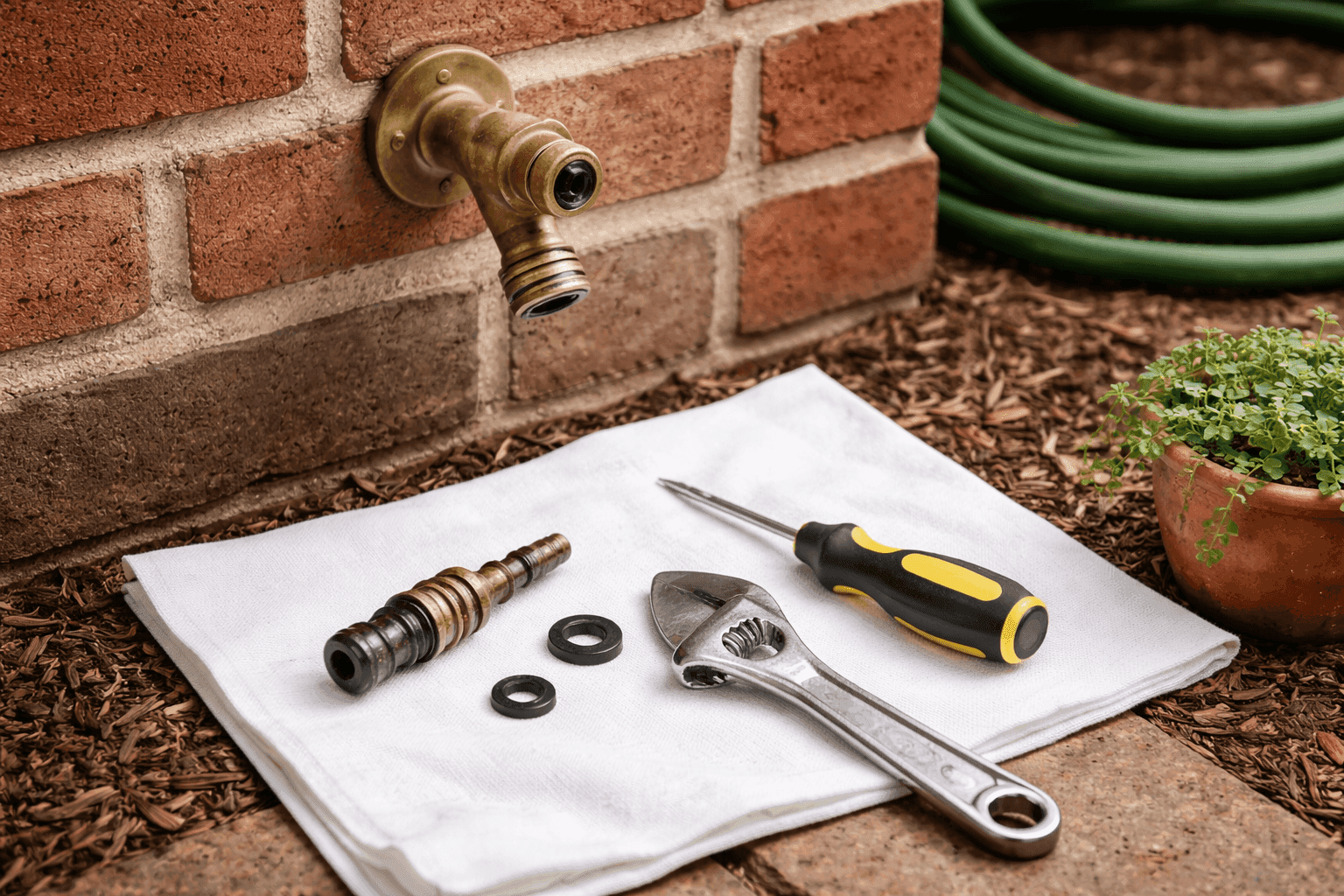
That slow, steady drip from your outdoor spigot is not a minor inconvenience — it is hundreds of gallons of water running straight into the ground every single month, and it is costing you money on every water bill from now until you fix it. The good news is that the overwhelming majority of dripping outdoor faucets share exactly the same cause: a worn rubber washer at the bottom of the valve stem that costs about $2 to replace and takes thirty minutes to swap out with nothing more than an adjustable wrench and a flathead screwdriver. No plumber, no soldering, no mystery. This is one of those repairs that feels genuinely empowering the first time you do it — the kind where you turn the water back on, watch the drip stop, and think: I should have done this two years ago. Before outdoor watering season puts that spigot into daily use, this is the thirty minutes that earns its keep all summer long.
What You Need
- Adjustable wrench — for loosening and tightening the packing nut behind the faucet handle
- Flathead screwdriver — for prying the old washer from its seat at the base of the valve stem
- Phillips screwdriver — for removing the handle screw that holds the faucet handle in place
- Replacement rubber washers, assorted pack — bring the old washer to the hardware store for an exact size match, or buy an assorted pack that covers all common sizes (~$2–3)
- Replacement O-ring — inspect the one on your stem shaft and replace if cracked, flattened, or visibly worn; again, match by size (~$1–2)
- Plumber's grease — a small amount applied to the new washer and O-ring before reassembly extends their lifespan significantly (~$4 for a tub that lasts indefinitely)
- Bucket or towel — for catching residual water when you open the valve stem after draining
- Slip-joint pliers — optional backup if the packing nut is too corroded for the wrench alone
How to Fix It
- Locate the interior shutoff valve that controls water supply to your outdoor spigot — typically found in the basement, crawl space, or utility room on the wall closest to the exterior faucet — and turn it fully clockwise to close. Never attempt to disassemble a faucet without confirming the supply is off; a valve stem removed under pressure sends water across the room in an instant.
- Open the outdoor faucet handle fully to drain any water remaining in the supply line between the shutoff and the spigot. Hold a towel or small bucket beneath the spigot head as you work — even a well-drained line holds a surprising amount of residual water in the valve body.
- Remove the faucet handle by locating and unscrewing the handle screw, which is usually found under a decorative cap on the top or front of the handle. Set the handle and screw somewhere they won't roll away — a small bowl or magnetic parts tray is ideal for a repair this size.
- Loosen the packing nut — the hexagonal nut directly behind where the handle sat — by turning it counterclockwise with your adjustable wrench. This nut may be stiff if the faucet hasn't been serviced before; apply steady pressure rather than sudden force to avoid rounding the nut faces.
- Extract the entire valve stem by turning it counterclockwise by hand once the packing nut is removed — it will unthread from the faucet body and slide out completely. Lay it on a clean surface where you can examine both ends clearly in good light.
- Replace the rubber washer at the threaded base of the stem by prying out the old one with a flathead screwdriver and pressing the correctly sized new washer firmly into the seat. A washer that is even slightly too small will not seal and the drip will return within days — size matching is the single most important detail in this entire repair.
- Inspect the O-ring encircling the stem shaft and replace it if it shows any cracking, flattening, or surface deterioration. Apply a thin coat of plumber's grease to both the new washer and the new O-ring before reassembly — lubricated rubber seats properly, compresses evenly, and lasts significantly longer than dry rubber under repeated use.
- Reassemble in reverse order: thread the stem clockwise back into the faucet body, tighten the packing nut snugly with the wrench without overtightening, and replace the handle and handle screw. Return to the interior shutoff and open it slowly, then test the outdoor faucet — close it fully and watch for thirty seconds to confirm the drip is gone.
Licensed plumbers always photograph the valve stem assembly with their phone before disassembly — a quick snapshot of how the packing nut, stem, washer, and O-ring relate to each other takes three seconds and eliminates any reassembly confusion entirely, especially on older faucets where component positions aren't immediately intuitive. They also keep the old washer in hand until the repair is confirmed leak-free rather than discarding it immediately, so an exact hardware store match is always possible if the first replacement washer turns out to be a slightly different profile than expected. Both habits cost nothing and routinely save a second trip to the hardware store.