Weed It and Reap: Make Natural Weed Killer for $5
White vinegar, salt, and dish soap mixed in five minutes — the $5 gallon batch that kills patio and driveway weeds as fast as anything from the store
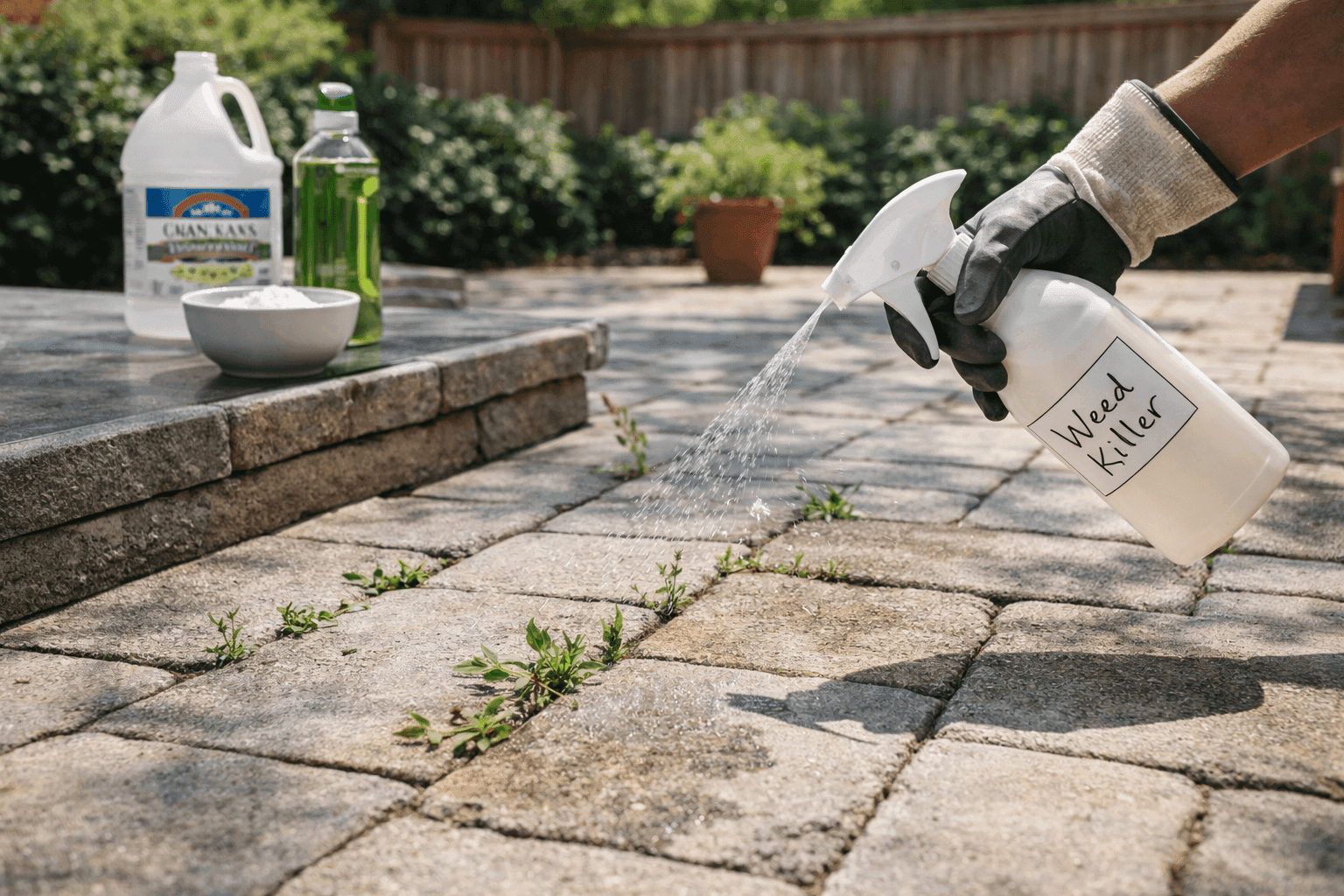
The commercial weed killers that most people buy at the garden center cost $15–$25 per bottle, contain chemicals that linger in the soil for weeks, and require careful handling to avoid contact with skin and pets. The homemade version costs about $5 for a full gallon batch, mixes in five minutes from supplies most people already have in the kitchen, and kills patio and driveway weeds just as effectively — often visibly wilting within hours of a sunny-day application and completely dead within 24. The formula works through a combination of mechanisms: the acetic acid in white vinegar burns through plant cell walls and desiccates the foliage, the dish soap acts as a surfactant that helps the mixture cling to waxy leaf surfaces rather than beading off harmlessly, and the salt disrupts the soil conditions that allow regrowth. The critical caveat — and it matters enough to lead with it — is that this mixture is completely non-selective. It kills whatever it contacts, and salt in soil persists and prevents growth of desirable plants too. Keep it strictly on hardscape surfaces like driveways, patios, gravel paths, and sidewalk cracks, and never spray it near garden beds, lawn edges, or any soil where you want plants to grow. Used correctly, it's the most effective and least expensive weed management tool your outdoor space has.
What You'll Need
- The Ingredients
- One gallon of plain white distilled vinegar — standard 5% acidity from the grocery store works for most weeds; horticultural vinegar at 20–30% acidity is significantly more powerful for established deep-rooted weeds and available at garden centers for ~$15–$20 per gallon but requires extra caution as it causes skin and eye burns on contact
- One cup of table salt or rock salt — the sodium disrupts the osmotic balance in plant roots and creates soil conditions that inhibit regrowth in treated cracks and joints. Use standard table salt for the basic formula; rock salt dissolves more slowly and can be sprinkled dry directly into deep pavement cracks as a follow-up treatment after the spray application
- One tablespoon of dish soap — any standard dish soap works as the surfactant that helps the acidic mixture cling to and penetrate waxy leaf surfaces rather than rolling off. Dawn is the most commonly cited choice but the brand is irrelevant — any dish soap with degreasing action works identically
- Optional: one tablespoon of citrus essential oil — orange or lemon — which adds additional limonene acid that enhances penetration through waxy leaf cuticles and leaves a pleasant scent rather than the vinegar smell that lingers briefly after application
- Equipment
- A large funnel for transferring the mixture into spray bottles without spills — the gallon batch needs to be divided into manageable spray bottle portions for precise application that avoids overspray onto desirable plants
- One or two 32-ounce spray bottles with an adjustable nozzle — the stream setting for targeted application in narrow cracks, the spray setting for larger weed patches in gravel areas — ~$3–$5 each at a hardware or dollar store
- A large mixing container or use the vinegar jug directly — add the salt and dish soap to the gallon jug, cap it, and shake vigorously rather than mixing in a separate container
- Labels — mark every spray bottle clearly with the contents, date, and a note that it is not safe near garden beds or lawn — homemade weed killer in an unlabeled spray bottle is an accident waiting to happen in a garage or shed where multiple spray bottles live
- Application Conditions
- A sunny, dry day with no rain forecast for at least 24 hours — the acetic acid needs to remain on the leaf surface long enough to desiccate the plant tissue, and rain within a few hours of application washes it off before it can do its work
- Midday application on a hot sunny day produces the fastest results — the combination of the acid and direct sun heat accelerates the desiccation process and produces visible wilting within hours rather than overnight
- Low-wind conditions for precise application that doesn't drift onto nearby desirable plants — even a light breeze can carry fine spray droplets several feet from the target
- Safety Supplies
- Safety glasses — vinegar spray in the eyes is painful, and the stream nozzle setting on a spray bottle can direct a surprisingly forceful stream unexpectedly
- Gloves — standard kitchen or garden gloves for the standard 5% formula; nitrile chemical-resistant gloves for horticultural vinegar which causes real skin burns
- Keep pets off treated areas until fully dry — the salt and vinegar formula is an irritant to paws and should not be ingested in concentration
How to Make and Use It
- Mix the formula directly in the vinegar jug by adding one cup of salt and one tablespoon of dish soap to the gallon of white vinegar, capping the jug tightly, and shaking vigorously for 30 seconds until the salt is fully dissolved and the soap is evenly distributed. The salt dissolves more readily in room-temperature vinegar than cold — if you're working with refrigerated vinegar, let it come to room temperature before mixing for a fully dissolved solution. A partially dissolved salt mixture applies unevenly and leaves gritty residue in the spray bottle nozzle that clogs it mid-application.
- Fill your spray bottles and label them immediately — use a funnel to transfer the mixed solution into 32-ounce spray bottles, fill each one to within an inch of the top to allow for the pressure that builds during a warm day, and label each bottle with the contents, the date, and a clear warning that it is not safe near lawn or garden beds before you set them down anywhere. The label step feels optional until a family member mistakes it for water or plain vinegar and uses it near your vegetable garden.
- Survey every target area before spraying — walk your driveway, patio, gravel paths, and sidewalk cracks and identify every weed you intend to treat, noting any that are growing within 12 inches of desirable plants, lawn edges, or soil that drains toward garden beds. Mark any boundary areas with small flags or rocks so you have a visual reminder of where the safe spray zone ends during application — it's very easy to get into a rhythm while spraying and inadvertently treat areas you intended to protect.
- Apply on a hot sunny day using the stream nozzle setting for precise application in narrow pavement cracks and the spray setting for broader weed patches in gravel or open hardscape areas — saturate the foliage of each weed completely rather than misting lightly, ensuring the solution reaches the base of the stem where it contacts the soil surface. A light misting that coats the top leaves only slows the plant without killing it and requires repeated applications; thorough saturation to the stem base kills the plant in a single treatment in most cases.
- Avoid overspray onto hardscape surfaces you care about — the salt in the formula can leave white residue on dark pavers and natural stone that requires scrubbing to remove. Apply carefully in a controlled stream for weeds growing in the joints of decorative pavers or natural stone patio surfaces, and wipe any overspray from the stone face immediately with a damp cloth before it dries and leaves a salt haze on the surface.
- Check results within 24 hours and identify any weeds that are wilting but not fully dead — shallow-rooted annual weeds in cracks typically die completely from a single application in good sunny conditions, while deep-rooted perennial weeds like dandelions and bindweed with established tap roots may need a second application three to five days after the first when new growth emerges from the surviving root. The second application on re-emerging growth from a weakened root is typically more effective than a third application on a fully established plant.
- Apply dry salt as a follow-up treatment in deep pavement joints and gravel areas where persistent weeds keep returning — sprinkle rock salt or table salt directly into the crack after the spray treatment has killed the visible growth, which creates a lasting barrier in the soil that significantly delays regrowth compared to spray treatment alone. This combination of spray to kill and salt to prevent is what makes the formula dramatically more effective at reducing ongoing weed maintenance than commercial spray-only products.
- Store remaining mixture properly in a cool location away from children and pets, clearly labeled, and use within the same season — the salt can eventually corrode plastic spray bottle mechanisms with extended storage, and the dish soap can separate and clog the nozzle if the bottle sits unused for several months. Shake the bottle vigorously before each use to re-emulsify the soap and confirm the nozzle is clear before targeting any weeds near hardscape edges where an unexpectedly wide spray pattern could reach adjacent garden soil.
Permaculture practitioners and professional landscape gardeners who manage large hardscape areas without chemical herbicides use a layered weed prevention strategy that combines the vinegar spray for reactive treatment with two proactive approaches that dramatically reduce the frequency of spray applications needed throughout the season. The first is polymeric sand — a specialized jointing sand that contains a binding agent that hardens slightly when wet and creates a semi-solid joint filler in pavement gaps that physically prevents weed seeds from germinating in the crack. Re-sanding pavement joints every two to three years with polymeric sand after treating existing weeds reduces crack weed emergence by 70–80 percent compared to unsealed joints. The second is a pre-emergent application of corn gluten meal — a completely natural byproduct of corn milling that inhibits seed germination without harming established plants — applied to gravel paths and open hardscape areas in early spring before weed seeds germinate. Used together, the vinegar spray handles established weeds reactively, the polymeric sand prevents crack germination structurally, and the corn gluten meal prevents seed germination proactively — and the combined approach means far fewer spray sessions and a cleaner hardscape maintained with nothing that couldn't theoretically end up in your kitchen.