Break It Down: Build a Slatted Compost Bin for $45
Three sides, removable front slats, and a four-foot footprint — the compost bin that actually works as fast as composting is supposed to work
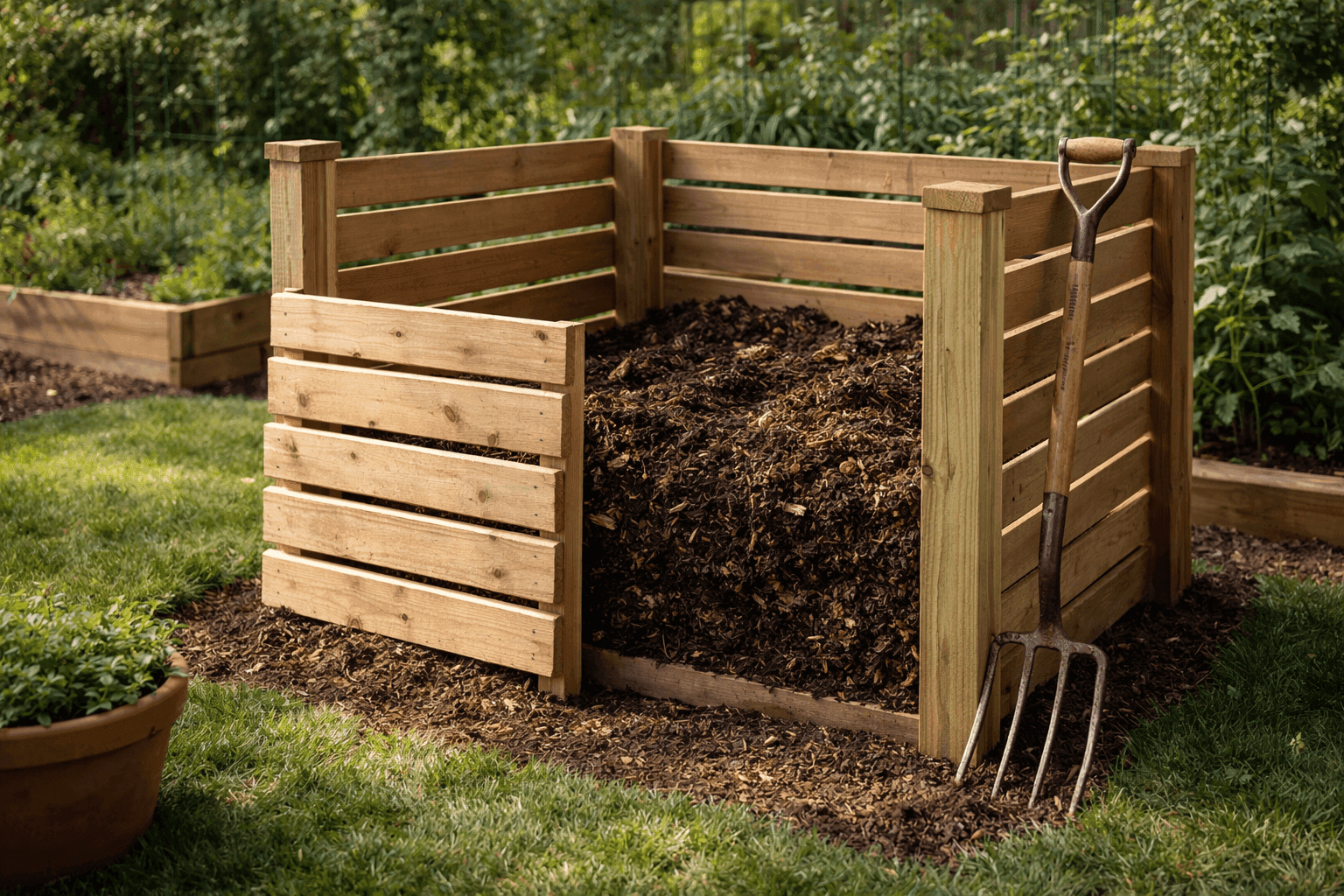
The plastic barrel compost bins that most people start with aren't bad — they're just slow, awkward to turn, and designed in a way that makes harvesting finished compost a genuinely unpleasant wrestling match with a heavy lidded container. A properly built slatted wooden compost bin with removable front boards is a completely different composting experience: open airflow through the slatted sides means the pile heats up faster and breaks down in weeks rather than months, the removable front slats let you turn the pile or harvest finished compost with a pitchfork in minutes rather than an hour of frustration, and the four-foot by four-foot footprint is precisely the minimum size needed to generate the internal heat that separates fast, efficient composting from a pile that just slowly molders. This build costs about $45 in lumber and hardware, takes three hours on a Saturday morning, and will probably become — as it has for many gardeners who make the switch — the most useful thing you have ever built for your garden.
What You'll Need
- Lumber
- Four 4x4x8 pressure-treated posts for the corner uprights — cut to your desired bin height, typically 36–42 inches — ~$8–$10 each (~$32–$40 total). Pressure-treated is essential for the posts since they'll be in direct ground contact in a consistently moist environment
- Eight 1x6x8 cedar or pressure-treated boards for the fixed side and back slats — cedar is ideal for its natural rot resistance and clean appearance — ~$4–$6 each (~$32–$48 total). You can reduce cost by using rough cedar fence pickets at ~$2–$3 each
- Six 1x6x4 boards for the removable front slats — these need to be cut to exactly span the front opening between the two front posts — cut from the same 1x6 stock as the sides
- Total lumber budget: ~$30–$45 depending on wood choice and whether you use dimensional cedar or fence picket stock
- Hardware
- 2½-inch exterior deck screws — one pound box covers the full build — ~$6–$8
- Two 1x2 cedar or pressure-treated guide strips per front post — these create the channel that the removable front slats slide into — cut from 1x2 stock, ~$3–$4 per 8-foot board
- Exterior wood glue for reinforcing the guide strip attachment — standard waterproof formula
- Optional: four post spike anchors for driving the corner posts into the ground without digging — ~$8–$12 each, or simply set posts directly into the soil 12 inches deep
- Tools
- Circular saw or miter saw for crosscuts
- Drill/driver with Phillips bit and ⅛-inch pilot hole bit
- Level for confirming posts are plumb before fastening slats
- Tape measure, pencil, and speed square
- Post pounder or sledgehammer if using post spike anchors
- Clamps for holding guide strips in position during attachment
- Site Prep
- Choose a location with partial shade — full sun dries the pile out too quickly and requires constant watering, while deep shade slows decomposition significantly
- Direct ground contact is intentional — the open bottom allows worms and beneficial microorganisms to migrate freely into the pile from the soil below, which dramatically accelerates decomposition compared to a bin with a solid base
- Allow at least 3 feet of clear working space in front of the bin for pitchfork access when turning the pile
How to Build It
- Mark your four-foot by four-foot footprint in your chosen location before cutting anything — drive a small stake at each corner and confirm the layout is square by measuring diagonally corner to corner in both directions. Equal diagonal measurements confirm a square layout; unequal measurements mean one corner is off and the whole bin will be slightly rhomboid, which affects how cleanly the front slats slide in their guide channels. Squaring the layout takes two minutes and prevents a frustrating assembly problem later.
- Set the four corner posts at your marked positions either by driving post spike anchors into the ground and dropping the posts in, or by digging 12-inch holes and setting the posts directly — confirm each post is plumb on two adjacent faces with your level before moving to the next one. The posts need to be set at exactly the same height above ground for the slat courses to run level across the full bin, so measure and mark each post at your chosen height above grade and cut them all to the same length before setting rather than trying to trim them in place.
- Attach the guide strips to the two front posts before fastening any slats — glue and screw a 1x2 guide strip vertically along the inside face of each front post, leaving exactly 1 inch of clearance between the guide strip and the post face to create a channel that the removable front slats slide into smoothly. The guide strip spacing is the most critical measurement in the entire build — too tight and the slats bind and won't slide freely when the pile is loaded against them, too loose and the slats rattle and allow material to spill out the front gaps.
- Fasten the back slats first by holding each 1x6 board horizontally across the two back posts with a consistent ½-inch gap between each board for airflow, drilling pilot holes through each board end into the post face, and driving two screws per end per board. The ½-inch gap between every slat is the airflow mechanism that makes this bin work so much more effectively than a solid-sided container — maintain that gap consistently across every course using a scrap of ½-inch plywood as a spacer rather than eyeballing it.
- Fasten the two side slat runs using the same method and spacing — hold each board level across the back post and the corresponding front post on each side, confirm it's horizontal with a level before fastening, and use your spacer block consistently between every course. The side slats anchor the entire structure laterally, transforming what were four independent posts into a rigid three-sided box — once the last side slat is fastened you'll feel the whole bin go from slightly wobbly to solidly stable.
- Cut the removable front slats to span the opening between the two front guide channels — measure the interior distance between the guide strip faces precisely before cutting, since a slat that's even ¼ inch too long won't drop into both channels simultaneously and one that's too short will fall forward when the pile pushes against it. Test-fit each slat in the channels before the pile goes in, confirming it drops and lifts freely with one hand — a slat that requires two hands and significant force to remove will feel impossible to extract when there's 200 pounds of active compost pushing against it from the inside.
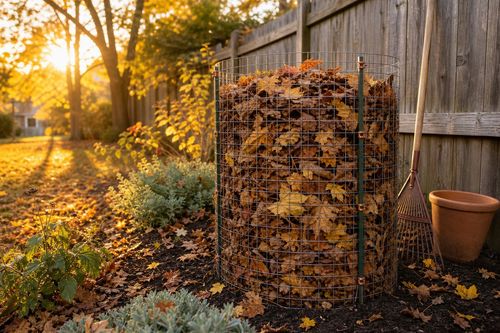
- Load the bin in layers starting with a 4-inch base of coarse brown material — wood chips, straw, or shredded cardboard — directly on the bare soil to encourage worm migration from below and provide the carbon foundation the pile needs to heat up efficiently. Alternate green material (kitchen scraps, fresh grass clippings, green garden waste) with brown material (dry leaves, straw, shredded paper) in roughly equal proportions by volume, and add a shovelful of existing garden soil or finished compost between every few layers to inoculate the pile with the microorganisms that do the actual decomposition work.
- Turn the pile for the first time when the internal temperature peaks and begins to drop — typically one to two weeks after initial loading in warm weather. Slide the front slats out one by one, use a pitchfork to move material from the outside of the pile to the center where temperatures are highest, replace the slats, and water the pile if the interior material feels dry. A four-foot pile that is turned regularly and kept moist produces finished compost in six to eight weeks — compared to six to twelve months for an unturned plastic bin — which is the entire argument for building this instead of buying that.
Experienced permaculture practitioners and market gardeners who compost at scale use a two-bin system that doubles compost output without doubling the footprint or the cost — and it's easy to build as an extension of this exact design. Build a second identical bin immediately beside the first, sharing the center post between them, so the total structure is an 8-foot by 4-foot double bin for about $20 more in additional lumber. The workflow becomes: load the first bin until full, then use the pitchfork to turn the entire contents of the first bin into the second bin in a single turning session that moves all the outside material to the center. The first bin is now empty and ready to receive fresh material while the second bin finishes decomposing undisturbed. The result is a continuous supply of finished compost from the second bin every six to eight weeks while fresh material is always building in the first — which is the difference between a compost system that occasionally produces finished material and one that reliably produces it on a schedule you can actually plan your garden around.