Glass Bottle Hummingbird Feeder for $5
A thrift store bottle, a $4 kit, and your garden gets its most beautiful fixture
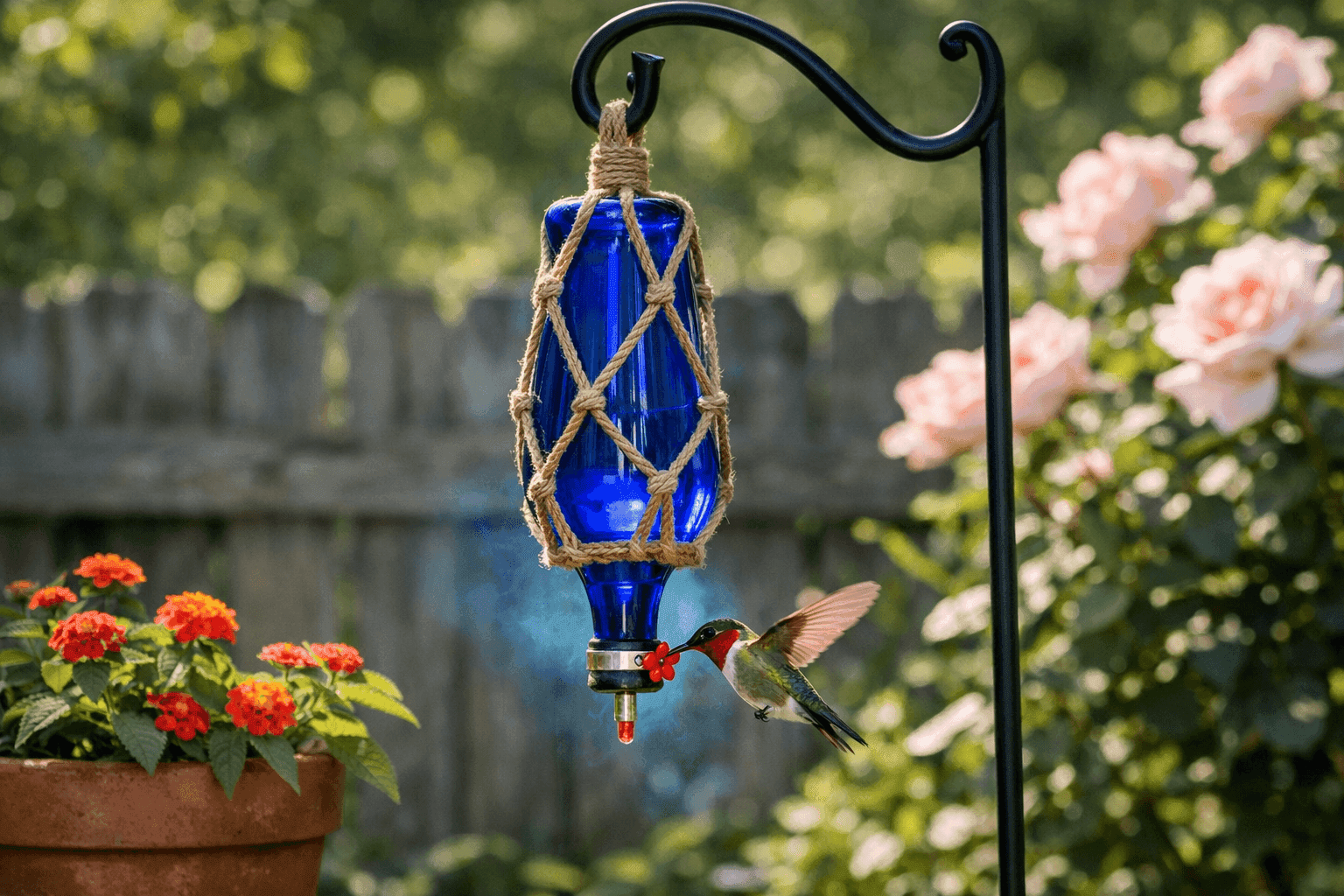
Most hummingbird feeders are functional and completely forgettable — a red plastic reservoir that does the job and disappears into the background of your garden. This one is different. A jewel-toned thrift store bottle paired with a $4 conversion kit from the garden center gives you a feeder that pulls double duty as genuine garden art, catching afternoon light and glinting like stained glass while it keeps your hummingbirds fed all season. The whole project takes fifteen minutes from start to hang, requires zero tools, and costs about $5 total — and once you see what a beautiful bottle looks like hanging from a shepherd's hook, you'll start eyeing every thrift store shelf differently. Hummingbirds are creatures of habit and remarkable memory; give them a reliable food source and they will return to exactly the same spot year after year like old friends who know they're always welcome.
What You Need
- Glass bottle with a standard neck opening — cobalt blue, amber, and green glass catch light beautifully; aim for 8–16 oz capacity (thrift stores, $0.25–$2)
- Hummingbird feeder conversion kit — includes a rubber stopper and feeding tube sized for standard bottle necks; available at most garden centers and online (~$4)
- White granulated sugar — standard table sugar only; do not use honey, brown sugar, or artificial sweeteners
- Water — tap water works fine; boiling is optional but helps sugar dissolve faster
- Macrame hanger, wire hanger, or leather cord — to suspend the inverted bottle (repurposed or ~$3–5 if purchased)
- Shepherd's hook or sturdy garden hook — for hanging near a window, patio, or garden bed
- Small funnel — optional but helpful for filling without spillage
How to Make It
- Clean your glass bottle thoroughly with hot soapy water, rinse completely, and allow it to dry — any soap residue left in the bottle will contaminate the nectar and deter hummingbirds from feeding.
- Mix your nectar by dissolving one part white sugar in four parts water. Warm water speeds dissolving; stir until the solution is completely clear with no visible sugar grains remaining. Never add red dye — it is unnecessary and potentially harmful to hummingbirds.
- Cool the nectar to room temperature before filling if you used warm water. Filling a glass bottle with hot liquid and immediately sealing it can create pressure that makes the stopper difficult to seat properly.
- Fill the bottle with nectar, leaving about an inch of space at the neck. Use a small funnel if your bottle has a narrow opening — a clean fill now means less sticky dripping later when you insert the stopper.
- Insert the rubber stopper firmly into the bottle neck, pressing and twisting gently until it seats snugly with no gaps around the edge. A poorly seated stopper is the single most common reason bottle feeders drip and empty overnight — take an extra moment to confirm it's fully sealed all the way around.
- Thread your bottle into its macrame hanger or wire cradle before flipping — it is much easier to secure the hanger around the bottle while it's still right-side up than to wrestle with it once inverted and full of liquid.
- Flip the bottle upside down in one smooth motion and hang it from your shepherd's hook. A small amount of nectar may drip from the feeding tube immediately after inversion — this is normal and will stop once a vacuum forms inside the bottle.
- Position the feeder in a spot with partial shade and good visibility from a window if possible, then refresh the nectar every three to four days in warm weather — cloudy or fermented nectar is the fastest way to lose your regulars once they find you.
Wildlife garden designers who work with hummingbirds recommend hanging a second feeder out of sight of the first — hummingbirds are intensely territorial and a dominant bird will spend more energy chasing competitors away from a single feeder than actually feeding. Two feeders positioned around a corner or on opposite sides of a structure forces the territory-holder to split their attention, which means more birds feeding successfully and dramatically more activity for you to watch. A second thrift store bottle and kit costs another $5 and can easily double the number of hummingbirds using your garden.