Turn Old Kitchen Chairs into Garden Planters for $10
Thrift store chairs, a can of paint, and trailing petunias — the garden conversation piece that costs almost nothing
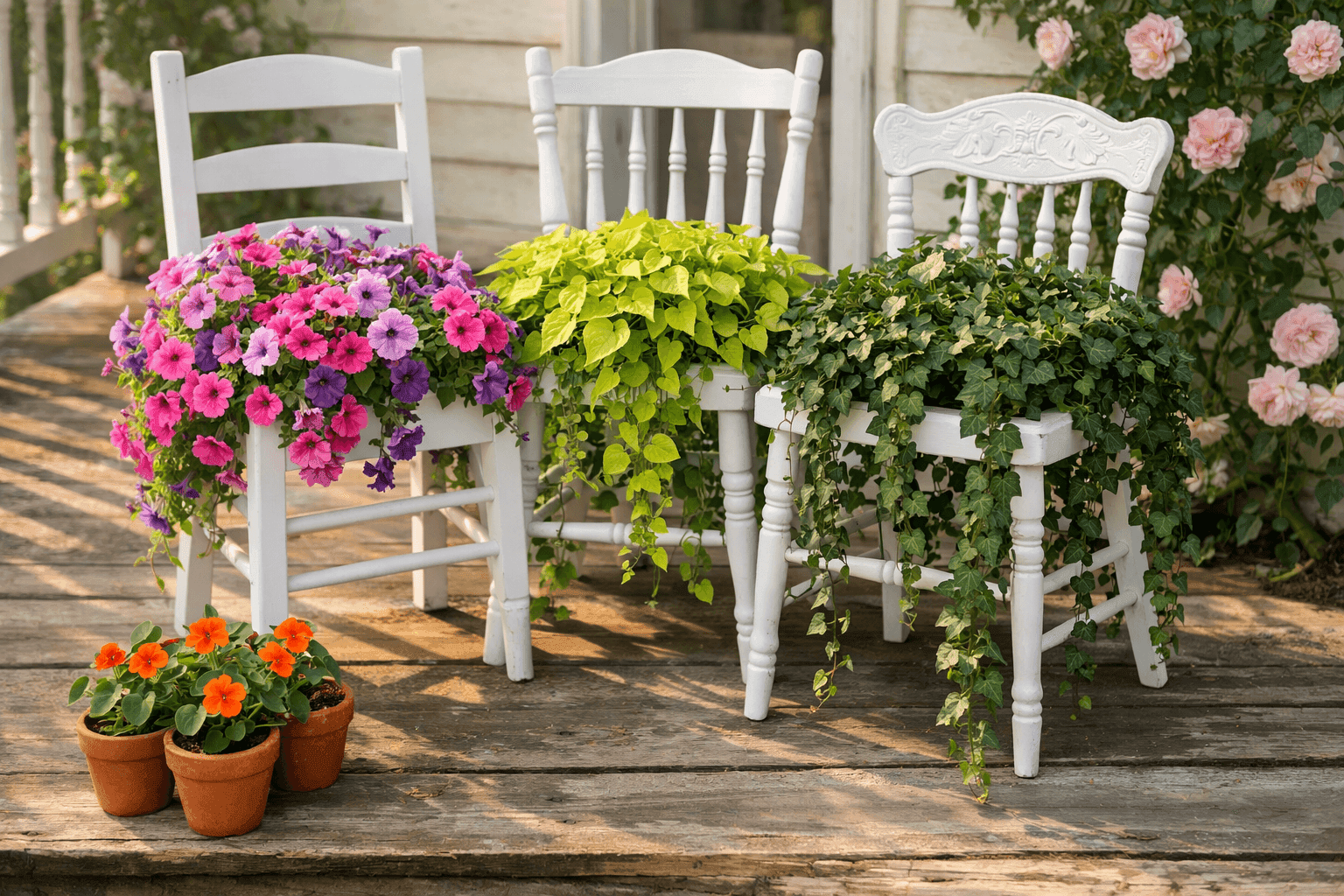
There is a specific kind of garden charm that cannot be purchased at any garden center — the kind that comes from something repurposed so cleverly and so cheerfully that every guest who sees it stops, looks twice, and immediately asks where you found it. A wooden kitchen chair with its seat removed and replaced with a trailing cascade of petunias or sweet potato vine is exactly that kind of thing: whimsical without being precious, personal without being fussy, and so visually engaging that a cluster of three mismatched painted chairs on a porch or in a garden bed creates more personality per dollar than almost any other garden feature you could name. Thrift stores and curbsides are full of sturdy wooden chairs that are structurally sound but cosmetically tired, and a can of outdoor paint plus a fitted plastic liner converts each one into a planter that costs $10 and looks like a genuine design decision. Mismatched is not just acceptable here — mismatched is exactly the point.
What You Need
- Wooden kitchen chairs, qty 1–3 — solid wood construction only; avoid chairs with particle board seats or frames, which won't survive outdoor moisture exposure regardless of how well you paint them (thrift stores and curbsides, $0–5 each)
- Exterior spray paint or outdoor latex paint — bright white, bold turquoise, or soft sage for cottage style; matte black or natural wood stain for a more refined look (~$5–8 per can)
- Exterior primer — one coat on bare or previously painted wood before the color coat dramatically improves adhesion and finish durability outdoors (~$6–8 for a small can)
- Plastic planter liner or nursery pot — sized to fit snugly into the seat opening; a square or round plastic pot that drops into the opening with minimal gap works best (~$2–4)
- Hardware cloth or chicken wire, small piece — alternative to a plastic liner; stretched across the seat opening and lined with coconut coir creates a direct planting surface with better drainage (~$5–8 for a small roll that covers several chairs)
- Coconut coir liner — for the hardware cloth method; holds soil and moisture while allowing drainage through its fiber structure (~$4–6)
- Exterior screws or L-brackets, small — for securing the planter liner to the underside of the seat frame from below (~$3–4)
- Sandpaper, 120-grit — for scuffing the chair surface before priming and smoothing any rough or peeling areas
- Potting mix and trailing annuals — petunias, trailing sweet potato vine, ivy, bacopa, or calibrachoa all spill beautifully over chair sides (~$2–4 per plant)
How to Make It
- Assess your chair carefully before investing any time or paint — press firmly on the legs and joints to confirm the frame is genuinely solid, and check the wood for soft spots that indicate rot already underway. A structurally compromised chair will not survive a season outdoors regardless of how beautifully it's painted, and the ten seconds of assessment saves wasted effort.
- Remove the seat by unscrewing it from the seat rail frame underneath — most wooden kitchen chair seats attach with four screws driven up through the corner blocks into the seat base. If the seat is in good condition, set it aside for another project; if it's damaged or upholstered in fabric that won't survive outdoors, discard it and work with the open frame.
- Sand the entire chair with 120-grit paper, paying particular attention to any peeling paint, rough grain, or splinter-prone areas along the legs and rungs. Outdoor moisture moves aggressively into any surface imperfection under paint, so thorough sanding before priming is what separates a finish that holds for two full seasons from one that blisters and peels by August.
- Prime the entire chair with one even coat of exterior primer and allow it to dry fully before applying your color coat. Bare wood and previously painted surfaces both benefit significantly from primer outdoors — it seals the grain, locks down any remaining old paint, and gives the color coat something to grip that isn't raw wood fiber exposed to morning dew.
- Paint the chair in two thin coats of outdoor latex or exterior spray paint, allowing full drying time between coats. Work the rungs and leg joints carefully — these narrow surfaces catch drips easily and thin, even coverage in tight areas is what gives the finished chair a professional rather than hastily painted look.
- Fit your planter liner into the seat opening — a plastic nursery pot or square planter that drops into the opening with an inch or less of gap on all sides is the simplest and most durable approach. Secure it from underneath by driving two small exterior screws through the seat rail frame into the sides of the liner, or use L-brackets at two corners to hold it level and prevent it from shifting when the pot is full of wet soil.
- Alternatively, stretch hardware cloth across the seat opening and staple it firmly to the underside of the seat rail on all four sides, then cut a coconut coir liner to fit and press it into the hardware cloth cradle. This method gives you better drainage than a solid plastic liner and allows trailing plants to grow through the sides of the coir for an even fuller, more cascading effect.
- Plant with trailing varieties that will spill over the chair sides and through the back spindles — petunias, sweet potato vine, trailing calibrachoa, or ivy all work beautifully and grow quickly enough to create a full cascading effect within two to three weeks of planting. Position the chair in its final garden location before filling with soil, since a planted chair is considerably heavier than an empty one and much harder to reposition without disturbing the planting.
Garden stylists who work with upcycled furniture planters always unify a collection of mismatched chairs through a single shared paint color rather than painting each chair differently — three chairs in wildly different styles painted the same crisp white or the same bold turquoise read as a curated collection, while three chairs each painted a different color read as unrelated objects that happened to end up in the same spot. The style variation between the chairs provides all the visual interest the grouping needs; the shared color is what transforms a random assortment into something that looks deliberately designed. Choose the one color that works best with your existing garden palette and commit to it across every chair in the collection, reserving color variation for the plants rather than the furniture.