Jar of Green: Build a Mason Jar Herb Garden for $20
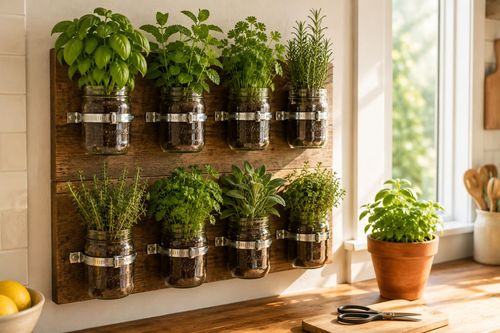
A handful of mason jars, some chalk paint, a pebble drainage layer, and the right herbs — the kitchen windowsill setup that finally makes fresh herbs a daily habit
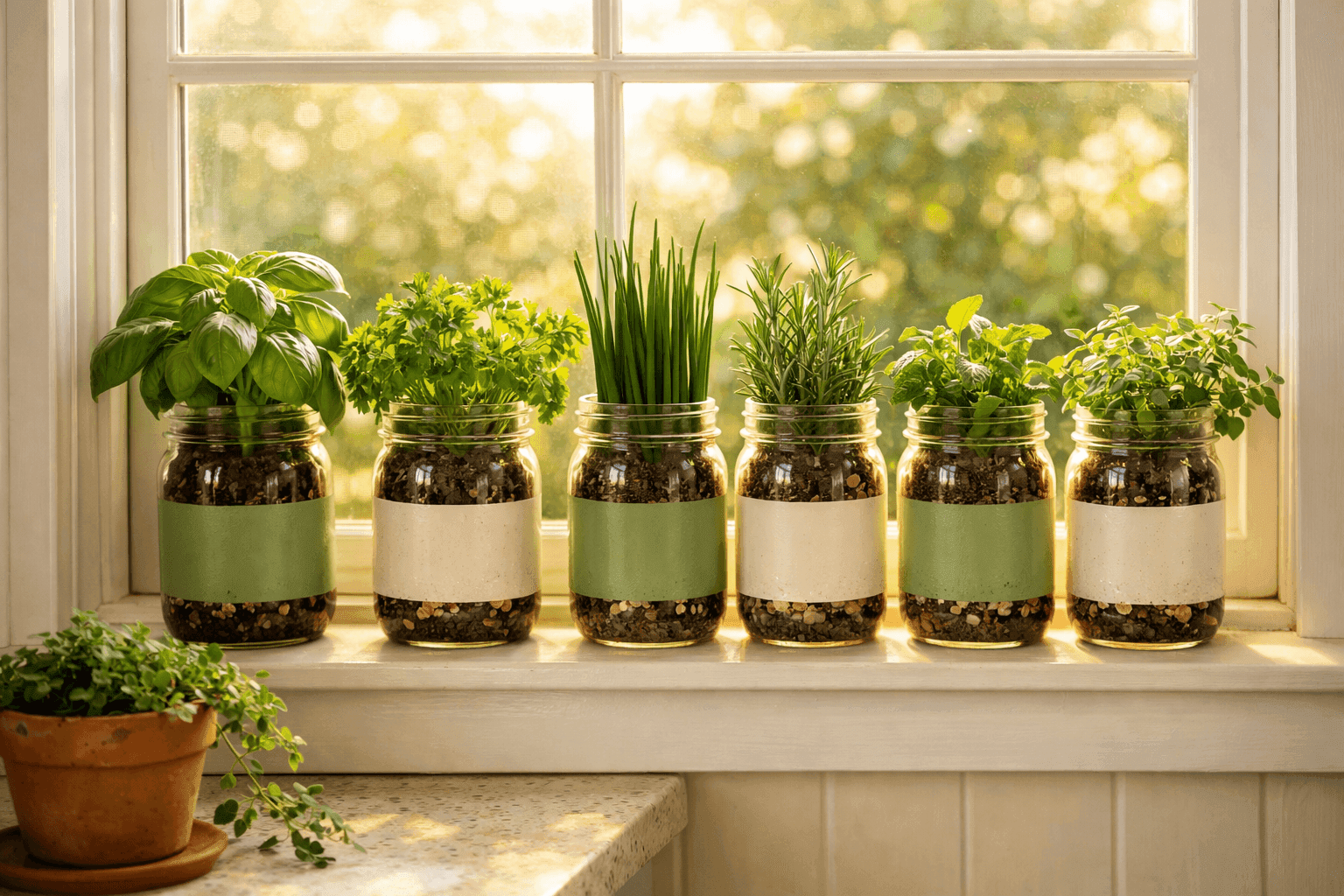
The grocery store herb plants that die on most kitchen counters within two weeks aren't dying because of bad luck or a lack of green thumb — they're dying because they're sitting in the wrong light, in containers with no drainage, in soil that stays either too wet or too dry, far enough from the stove that nobody reaches for them until they're already past saving. A properly set up mason jar herb garden fixes every one of those problems simultaneously. The jars are right on the windowsill where the light is actually good, the pebble drainage layer at the bottom of each jar keeps roots from sitting in standing water, and having the herbs directly in your line of sight while cooking is what transforms them from an intention into a habit. The whole setup costs about $20 in herbs and supplies, takes 45 minutes to paint and plant, and produces a windowsill display that three people will ask you about before the week is out. Once you have fresh basil within arm's reach while you're cooking pasta on a Tuesday night, buying dried herbs in little plastic packets starts feeling genuinely unreasonable.
What You'll Need
- The Jars
- Wide-mouth mason jars in quart size — the wider opening and greater soil volume of a quart jar gives herb roots significantly more room than a pint jar and keeps the soil from drying out within hours of watering — free if you already own them, or ~$10–$12 for a dozen at a grocery or hardware store
- Wide-mouth jars specifically — the wider opening makes planting, watering, and harvesting leaves from the outside edges of the plant dramatically easier than trying to work through the narrower standard-mouth opening
- Pint jars work well for compact herbs like thyme, chives, and small basil varieties if windowsill space is limited — just plan to water more frequently since the smaller soil volume dries out faster
- Paint
- Chalk paint in two to three coordinating colors — soft sage, warm cream, dusty blue, and terracotta all work beautifully on mason jars and complement kitchen herb foliage colors — ~$5–$8 per small bottle, one bottle covers four to six jars per coat
- Chalk paint is the ideal choice for glass surfaces because it adheres without primer, dries to a beautiful matte finish that photographs well in natural light, and creates the softly imperfect coverage that makes painted jars look charming rather than spray-painted
- Paint only the exterior lower half to two-thirds of each jar — leaving the top portion unpainted allows you to see the soil moisture level through the glass, which is the single most useful drainage monitoring tool available in a jar without drainage holes
- A small foam brush for smooth, even coverage without brush strokes on the curved glass surface
- Drainage & Soil
- Small pebbles, aquarium gravel, or coarse sand for a 1-inch drainage layer at the bottom of each jar — free from your yard or garden, or ~$3–$4 for a small bag of aquarium gravel that fills all your jars
- Activated charcoal granules sprinkled over the pebble layer before adding soil — available at pet stores or garden centers for ~$4–$6 — absorbs excess moisture and prevents the sour smell that develops in containers without drainage holes after a few weeks of regular watering
- Quality potting mix — not garden soil, which compacts heavily in a glass jar and drains poorly — a small bag fills all your jars with soil to spare — ~$5–$8
- The Herbs — Best Choices for Windowsill Growing
- Basil — the highest-value culinary herb for most home cooks, grows enthusiastically in a sunny south-facing window, and the act of regularly harvesting the top leaves actually encourages bushier, more productive growth — ~$2–$4 per start
- Parsley — slower growing than basil but extremely productive once established, tolerates slightly less direct sun than basil, and stores well in the jar for weeks between cuttings — ~$2–$3 per start
- Chives — virtually indestructible on a windowsill, regrow rapidly after cutting, and provide ongoing harvests for months from a single start — ~$2–$3 per start
- Mint — grows aggressively in its own dedicated jar and should never share a container with other herbs — ~$2–$3 per start
- Avoid cilantro for windowsill growing unless your window gets very strong direct sun — cilantro bolts to seed quickly in warm indoor conditions and is better grown in short succession plantings outdoors
How to Set It Up
- Paint the jars first so they're fully dry by planting time — apply one to two coats of chalk paint to the exterior lower two-thirds of each jar using a foam brush, letting each coat dry for 20–30 minutes before the next. Leave the top third unpainted so you can see the soil and moisture level through the glass when watering — this visible moisture check is what prevents both overwatering and underwatering, which are the two causes of virtually every windowsill herb death in a jar without drainage holes.
- Label each jar before planting — use a chalk marker directly on the painted surface, a small adhesive label, or a strip of painter's tape with the herb name written in permanent marker. Labeling before planting rather than after means you can set each jar in its final windowsill position with the label facing outward while the plant is still small and easy to handle, rather than trying to rotate a jar of established herb after watering has made it fragile and soil-covered.
- Add the drainage layers to each dry, labeled jar — pour a 1-inch layer of small pebbles into the bottom of each jar, tapping the jar gently on the counter to settle the pebbles into an even layer, then sprinkle a thin coating of activated charcoal granules over the entire pebble surface. The pebble layer keeps roots from sitting in the water that collects at the bottom of a drainage-free container; the charcoal prevents the bacterial growth that turns that collected water foul and eventually stresses the plant roots above it.
- Add potting mix to fill the jar to about 2 inches below the rim — leaving this headspace gives you room to seat the plant root ball at the right depth and water without soil spilling over the jar opening. Do not tamp the soil down firmly before planting — loose soil allows you to create a natural depression for the root ball and settle the plant at the correct depth without breaking roots, and it promotes the drainage through the soil column that the pebble layer underneath depends on to work correctly.
- Prepare each herb plant by removing it from its nursery pot and gently loosening any tightly circling roots with your fingers before placing it in the jar — roots that have been growing in a circular pattern in a small nursery pot will continue growing in circles if planted without loosening, which limits the plant's ability to establish in its new container and reduces productivity. Shake off excess nursery soil so the root ball is compact enough to fit comfortably in the jar with soil covering the roots to the base of the stems.
- Plant each herb at the correct depth by creating a small depression in the jar soil, nestling the root ball into it, and gently firming the surrounding soil so the plant sits upright and stable with the base of its stems just at the soil surface — not buried and not elevated on a visible stem above the soil. The base of the stems sitting at soil level rather than buried below it is the critical planting depth detail that prevents stem rot at the soil line, which is the most common single-point failure in herb jar planting.
- Water each jar carefully using a narrow-spouted watering can or a turkey baster that directs water to the soil surface rather than onto the leaves — pour slowly until you see water beginning to collect at the pebble layer visible through the unpainted glass bottom section, then stop. This visible water line in the pebble layer is your watering gauge for every future session — water again only when the pebble layer appears dry, which in most indoor kitchen environments means every three to five days depending on the season and the amount of direct sun the window receives.
- Position the jars on the windowsill with the most sun-demanding herbs — basil especially — closest to the center of the window where light intensity is highest, and more shade-tolerant herbs like parsley and chives toward the edges where light drops off. Rotate each jar a quarter turn every few days so all sides of the plant receive equal light exposure and the plant grows upright rather than leaning toward the glass — a jar herb garden that gets rotated regularly produces compact, bushy plants that look charming on the sill, while one that never gets rotated produces leggy, leaning plants that look like they're trying to escape.
Professional culinary herb growers who supply restaurants and farmers markets use a harvesting technique called cut-and-come-again that most home gardeners never learn and that doubles the productive lifespan of every herb jar on a kitchen windowsill. For basil specifically: always harvest by pinching the stem just above a leaf node — the point where two leaves branch off the main stem — rather than pulling individual leaves. Pinching above a node signals the plant to send two new shoots from that node rather than one, which means every harvest makes the plant bushier and more productive rather than thinner and weaker. For parsley and chives, always cut from the outermost stems and leaves, leaving the inner growth to continue developing — the inner growth is always the newest and most vigorous, and harvesting from the outside allows the plant to continuously generate fresh inner growth that moves outward as it matures. A basil jar managed with the pinching technique on a sunny windowsill can produce harvests continuously for four to six months before it begins to bolt; one where leaves are plucked randomly typically exhausts itself within six weeks and starts looking sparse and stressed in a way that makes most people assume they've done something wrong when the only thing that's happened is the plant has run out of the structural leaves it needed to support continued growth.