Plant a Textured Sensory Garden Corner for $45
Soft, fragrant, rustling, and alive — the garden corner that makes every visitor stop and reach out to touch something
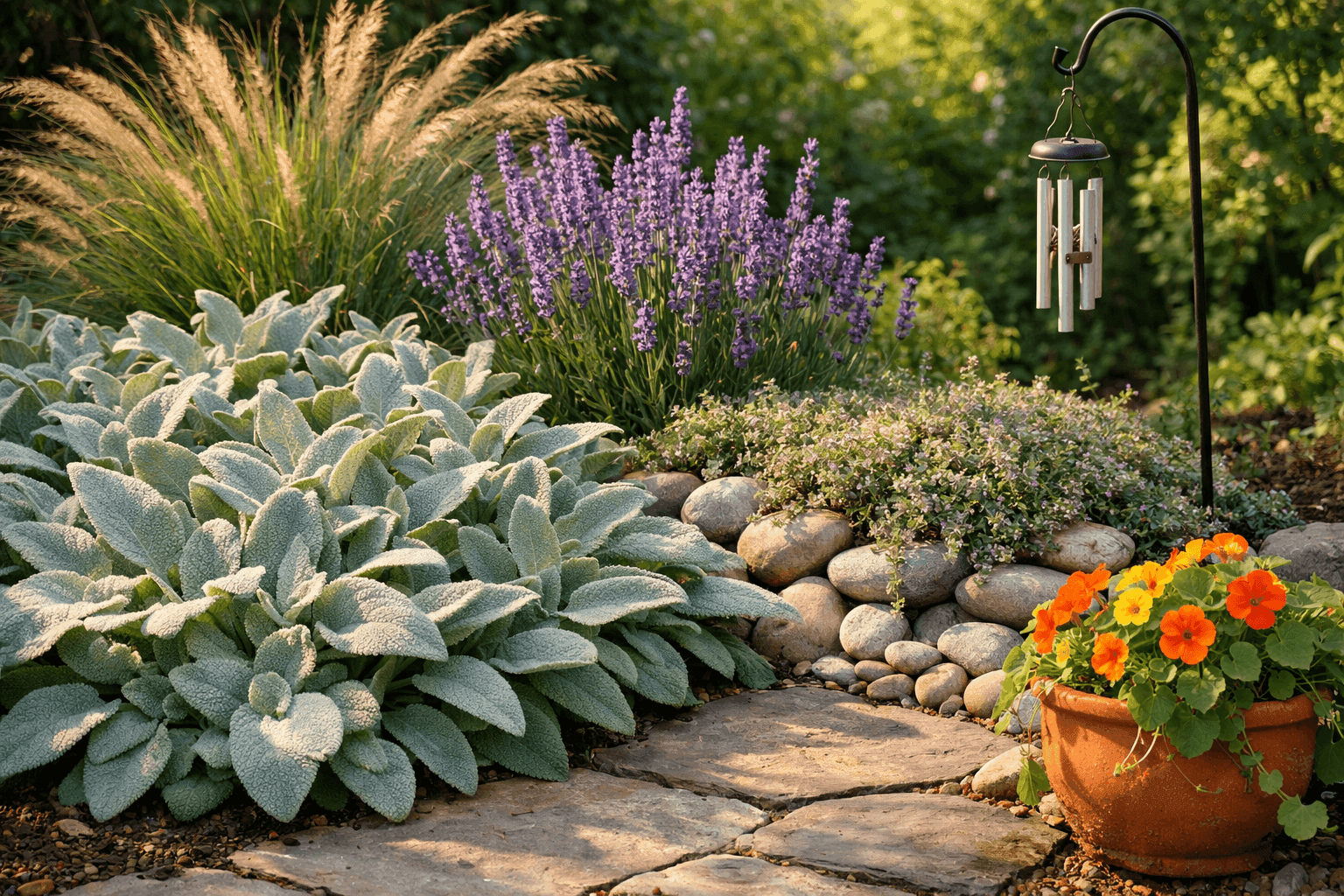
Most garden design focuses almost entirely on what things look like — and a sensory garden is the deliberate, joyful rejection of that single-sense approach. A four by six foot corner planted with lamb's ear, lavender, fountain grass, and creeping thyme gives you a space that engages touch, smell, sound, and sight simultaneously, and the effect on anyone who encounters it is immediate and completely instinctive: hands reach out, faces soften, and people slow down in a way that no purely visual garden feature quite produces. The plant selection is forgiving, the planting is straightforward, and the maintenance once everything establishes is genuinely minimal — perennial plants that largely care for themselves while delivering a sensory experience that children find magical and adults find unexpectedly therapeutic. Forty-five dollars in plants, two hours of planting, and you have created the most quietly extraordinary corner in your entire garden.
What You Need
- Lamb's ear (Stachys byzantina), 4–6 plants — the anchor texture plant; impossibly soft silver-gray foliage that children and adults alike cannot resist touching the moment they see it (~$4–6 per plant)
- Lavender (Lavandula angustifolia), 2 plants — for fragrance triggered by the lightest brush of a hand against the stems; 'Hidcote' and 'Munstead' are the most reliably fragrant compact varieties for small corners (~$6–8 per plant)
- Fountain grass (Pennisetum alopecuroides), 1 clump — for sound; the feathery plumes whisper and rustle in the slightest breeze and the long arching blades invite running fingers through them (~$8–12)
- Creeping thyme (Thymus serpyllum), 3–4 plants — for the pathway edge; releases warm herbal fragrance underfoot when brushed and spills softly over path borders (~$3–5 per plant)
- Smooth river stones, small bag — for the border edge; the contrast between soft plant textures and smooth cool stone completes the tactile range of the corner (~$6–8)
- Small wind chime — hung nearby to add an auditory dimension beyond the grass rustle; lightweight aluminum or bamboo chimes respond to the gentlest movement (~$8–15)
- Compost or garden soil amendment — for working into the planting area before installation; sensory plants are generally low-maintenance once established but benefit from good initial soil preparation (~$5–8 for a small bag)
- Garden trowel, kneeling pad, and watering can — standard planting tools
How to Plant It
- Choose your corner location with two non-negotiable criteria in mind: the space must be within arm's reach of a pathway so every plant can be touched without stepping into the bed, and it must receive at least six hours of direct sun daily for lavender and thyme to thrive and produce their best fragrance. A sensory garden planted too far from the path to touch without effort defeats its entire purpose — proximity to the visitor is the single most important design decision in the whole project.
- Clear the planting area completely and work two to three inches of compost into the top six inches of existing soil. Lamb's ear and lavender both perform poorly in heavy clay or consistently wet soil — if your corner drains slowly, this is the moment to either amend aggressively with compost and coarse sand or choose a better-draining location rather than discovering the drainage problem after the plants are in the ground.
- Arrange your plants in their nursery pots on top of the prepared soil before digging a single hole, stepping back to assess the composition from the pathway perspective — the angle from which every visitor will actually experience the corner. Place the fountain grass at the back where its height won't block access to the shorter plants in front, lavender in the middle tier, lamb's ear across the front and sides where it is most reachable, and creeping thyme along the very edge where it meets the path.
- Plant the fountain grass first since it anchors the back of the composition and establishes the height reference for everything else — dig a hole twice the width of the root ball and exactly the depth, settle the plant so the crown sits at soil level, and backfill firmly to eliminate air pockets around the roots. A grass planted too deep will sulk and fail to establish; planted at the correct depth it will establish quickly and begin moving in the breeze within weeks.
- Install the lavender plants next, spacing them eighteen to twenty-four inches apart to allow for their mature spread and to ensure adequate air circulation around each plant — lavender planted too closely develops the poor air circulation that leads to the crown rot that kills it over winter, and this spacing decision at planting time is far easier than trying to correct it later by moving established plants.
- Plant lamb's ear in clusters of two to three plants rather than spacing them individually across the front — grouped plants create the dense, touchable silver carpet that reads as intentional and lush, while individually spaced plants look sparse for two to three seasons while they spread to fill the gaps between them. Water the root balls thoroughly before removing plants from their nursery pots to reduce transplant stress on the fibrous root system.
- Edge the pathway border with creeping thyme plugs spaced six to eight inches apart, pressing each root ball firmly into the soil at the very edge of the bed where it will gradually spill onto the path surface. The slight overhang onto the path is intentional — thyme that brushes shoes and ankles as people pass releases its fragrance passively without requiring anyone to deliberately reach for it, which is the most effortless sensory experience in the whole corner.
- Place smooth river stones along the bed border between the creeping thyme plugs, pressing them firmly into the soil so they sit stable and level rather than perching on the surface where they shift underfoot. Hang the wind chime from a nearby shepherd's hook, fence post, or tree branch positioned so it catches the same breezes that move through the fountain grass — the auditory and visual movement elements should respond to the same wind from the same direction for the most cohesive sensory effect.
Horticultural therapists who design sensory gardens for therapeutic settings always include at least one plant in each of the five sensory categories — touch, smell, sound, sight, and taste — rather than doubling up on the more obvious categories of touch and smell at the expense of the others. For a home sensory corner, this means adding a single edible element like a compact alpine strawberry or a trailing herb like lemon thyme at the very front edge where a berry or leaf can be picked and tasted directly from the path. The taste dimension is the one most home sensory gardens omit entirely, and its inclusion is consistently what therapists identify as producing the strongest emotional response and the most vivid sensory memory in visitors of all ages.