Build a Rustic Log Slice Garden Pathway for $20
Storm timber, a chainsaw rental, and four hours — and your garden gets a pathway that looks like it was always there
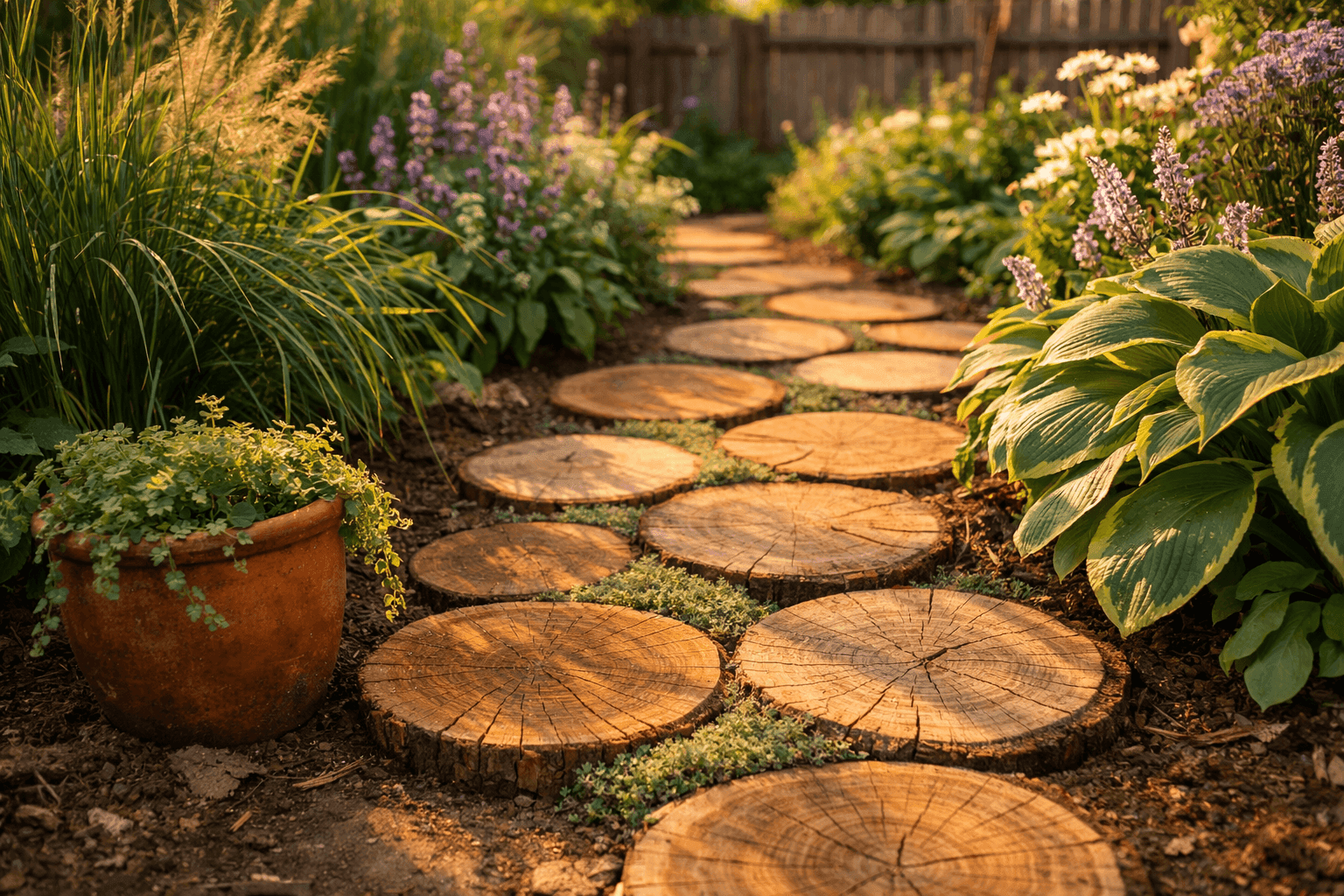
Storm damage has a way of leaving you with a pile of logged timber and absolutely no plan for it — and if that sounds familiar, this is the project that turns months of yard clutter into one of the most naturally beautiful garden features you have ever installed. Log slice pathways have a warmth and organic character that no paver, stone, or gravel path can replicate, because the material itself carries the history of the tree it came from: the rings, the grain, the slight irregularity of each round that makes the finished path look genuinely grown rather than installed. The investment is almost embarrassingly small — a chainsaw rental for the afternoon and a bag of gravel for drainage runs about $20 total if you're working with timber you already have, and the four hours of work produces something guests will slow down to appreciate every single time they visit. If you don't have storm timber on hand, tree services and arborists will often part with fresh-cut sections for free or nearly nothing just to avoid hauling them away.
What You Need
- Log sections, 8–18" diameter — hardwoods like oak, maple, and cherry last significantly longer in ground contact than softwoods like pine; aim for sections at least 8 inches across for stable stepping surfaces
- Chainsaw — for cutting uniform 3–4 inch slices; rent from a tool rental center for a half-day if you don't own one (~$40–50 rental, or borrow from a neighbor)
- Pea gravel or coarse sand, one bag — for the drainage base beneath each slice (~$5–8)
- Exterior penetrating wood sealer — Thompson's WaterSeal or similar; a quart covers a full pathway of slices (~$10–12)
- Garden spade or flat spade — for digging the shallow bed for each slice
- Rubber mallet — for tapping slices level without splitting the wood surface
- Long spirit level or straight board — for confirming each slice sits flush with surrounding soil grade
- Landscape fabric, optional — cut to fit beneath each gravel bed to suppress weed growth under the slices
- Safety gear — chainsaw chaps, eye protection, and hearing protection for the cutting phase
How to Build It
- Cut your log sections into uniform rounds of 3–4 inches thickness using the chainsaw, working on a stable surface with the log secured against rolling. Consistent thickness across all slices is what makes the finished pathway feel intentional rather than improvised — a slice that sits an inch higher than its neighbors becomes a trip hazard within one season of frost heave.
- Seal all cut faces and the bark edge of each slice with exterior penetrating wood sealer immediately after cutting, while the wood is still fresh and most receptive to absorption. Apply two coats to the bottom face that will sit in ground contact — this is the surface that deteriorates fastest and the one most people forget to treat.
- Plan your pathway route by laying the uninstalled slices on top of the soil in your intended arrangement before digging anything. Walk the path several times to confirm the spacing feels natural underfoot — slices spaced too far apart force an uncomfortable stride, while slices placed too close together look cluttered. Roughly 2–4 inches between rounds tends to feel most comfortable for an average adult step.
- Dig a shallow bed for each slice using a flat spade, tracing around the perimeter of the log round and excavating to a depth of about 4 inches — enough to accommodate a 1-inch gravel drainage layer plus the 3–4 inch slice thickness sitting flush with the surrounding grade. A slice that protrudes above grade will rock underfoot and deteriorate faster from freeze-thaw cycling.
- Add a one-inch layer of pea gravel to the base of each excavated bed and tamp it flat. The gravel layer is the detail that most casual pathway builders skip, and it's what separates a pathway that stays level and stable through years of seasons from one that sinks, tilts, and becomes uneven within the first winter.
- Set each slice into its gravel bed and tap it level with a rubber mallet, checking with a spirit level in two directions. Add or remove gravel beneath the slice to fine-tune the height until the surface sits flush with the surrounding soil on all sides.
- Backfill any gaps around the perimeter of each slice with the excavated soil, tamping firmly to eliminate voids that would allow the slice to shift laterally. Settled soil around the full perimeter of each round is what keeps the pathway from spreading apart over time.
- Apply a final top coat of exterior sealer to the upper face of each installed slice once the pathway is complete, working sealer into any end-grain checks or cracks that opened during installation. Reapply this top coat once per season at the start of spring to maximize the lifespan of your pathway through years of weather exposure.
Landscape designers who work with natural timber elements always plant low creeping groundcovers like thyme, Irish moss, or corsican mint in the gaps between pathway slices rather than leaving them as bare soil or mulch — the groundcover fills the spaces with soft living texture that makes the wood rounds look completely integrated into the garden rather than placed on top of it, and creeping thyme in particular releases a gentle herbal fragrance underfoot when brushed by passing shoes. The groundcover also suppresses weeds in the gaps without any ongoing maintenance, and it softens the edges of each slice in a way that makes the whole pathway read as genuinely naturalistic rather than installed. Start with small plug plants or divide an existing patch — a single flat of creeping thyme costs about $15 and fills an entire pathway's worth of gaps.