Light Rescue: Fix Flickering Strands Instead of Tossing Them
Save money and landfill space by repairing lights in minutes with simple fixes
Before you toss those frustrating flickering light strands in the garbage and head to the store for expensive replacements, take 10 minutes to try these simple fixes that rescue approximately 90% of supposedly "broken" holiday lights—saving you money while keeping perfectly repairable strands out of landfills where they'll sit for centuries. The truth about holiday lights is that most failures come from incredibly simple problems: one loose bulb affecting the entire series circuit, a blown fuse in the plug that costs 50 cents to replace, or corroded sockets that need nothing more than gentle scraping to restore conductivity. This troubleshooting approach costs essentially nothing beyond replacement bulbs or fuses you probably already have, takes 10-30 minutes depending on the issue, and transforms frustrating light failures into satisfying repair victories that extend the life of decorations you've owned for years. The environmental impact matters too—Americans throw away approximately 150 million pounds of holiday lights annually, most of which could be repaired with basic fixes that require no special skills or tools beyond patience and systematic checking. Whether you're dealing with one flickering strand or an entire box of lights that "worked fine last year," these methodical troubleshooting steps identify problems quickly and fix them permanently, proving that sustainable holiday decorating isn't about buying new every year—it's about maintaining what you already own through simple repairs anyone can master.
What You'll Need
- Basic Tools:
- Small flathead screwdriver
- Replacement bulbs (universal or strand-specific)
- Replacement fuses (3-amp or 5-amp, $2-3)
- Light keeper tool (optional but helpful, $15-20)
- Testing Equipment:
- Working electrical outlet for testing
- Multimeter for advanced troubleshooting (optional)
- Good lighting to see bulb details
- Clean work surface to lay out strands
- Cleaning Supplies:
- Small wire brush or sandpaper
- Cotton swabs for socket cleaning
- Electrical contact cleaner (optional)
- Dry cloth for wiping connections
- Safety Essentials:
- Always unplug before working on lights
- Work in dry conditions
- Replace damaged wire insulation immediately
- Discard strands with extensive wire damage
Troubleshooting Steps
- Start with the easiest fix by unplugging the strand and gently twisting each bulb to ensure it's fully seated in its socket—one loose bulb in series-wired strands can cause the entire string to fail or flicker.
- Identify visibly burned-out bulbs by looking for darkened glass, broken filaments visible inside, or bulbs that rattle when shaken gently, indicating the filament has broken loose from its connections.
- Replace dead bulbs with spares from your original packaging or universal replacement bulbs, ensuring voltage and base type match—most holiday lights use 2.5V or 3.5V mini bulbs with standard bases.
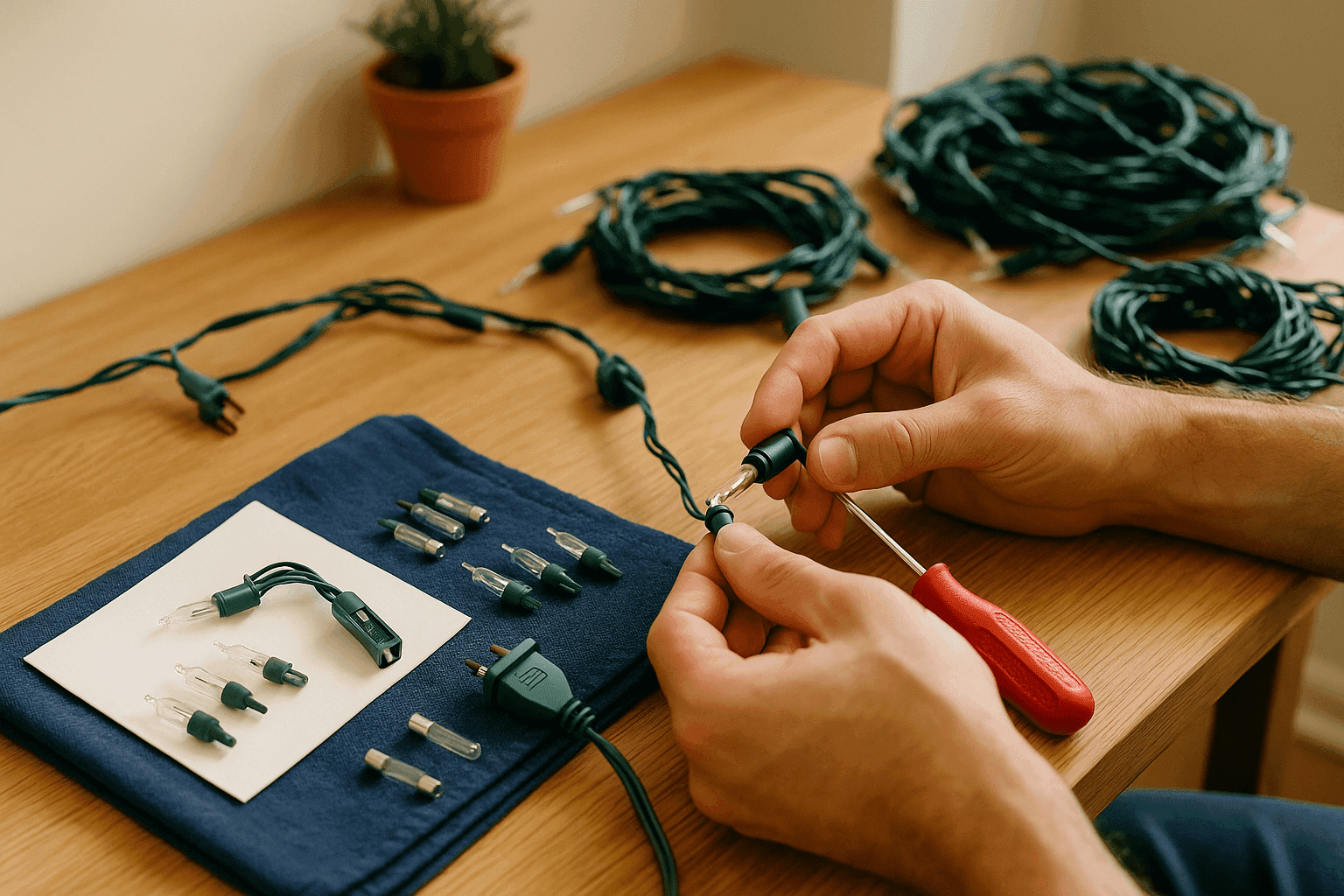
- Check the fuse compartment in the plug by sliding open the small door (usually on the prongs) and inspecting both fuses—blown fuses appear blackened or have broken internal wires visible through clear glass.
- Replace blown fuses with correct amperage replacements (typically 3-amp or 5-amp clearly marked on the fuse), using both fuses even if only one is blown since they work together to protect the circuit.
- Inspect sockets for corrosion—green, white, or brown buildup that prevents electrical contact—and gently scrape clean using a small screwdriver or cotton swab, being careful not to damage socket springs.
- Examine wire insulation near the plug where repeated coiling and uncoiling creates stress points, looking for exposed copper wire, cracks, or pinched areas that create short circuits or safety hazards.
- Use a light keeper tool if entire sections remain dark after bulb and fuse checks—this specialized tool identifies bad bulbs in series circuits by testing continuity and can sometimes repair shunts that bypass failed bulbs.
- Test after each fix by plugging the strand into a working outlet, checking for steady illumination without flickering, and ensuring no bulbs or sockets feel unusually hot which indicates resistance problems.
- Label successfully repaired strands with the date and issue fixed using masking tape, helping you track which strands are oldest and most likely to need attention again in future seasons.
Professional electricians recommend testing holiday lights immediately after removing them from storage rather than waiting until you're actively decorating—this gives you time to repair or replace strands without the pressure of incomplete decorating projects and holiday guests arriving imminently. The systematic approach that finds problems fastest: divide malfunctioning strands into sections by unplugging them and checking each segment individually, which isolates problems to specific areas rather than testing the entire 100-bulb strand repeatedly. For series-wired lights where one dead bulb affects the whole strand, the halfway method speeds troubleshooting: test bulbs starting at the midpoint, then move to the quarter points, repeatedly halving the search area until you identify the culprit much faster than checking every single bulb sequentially. Store replacement bulbs and fuses in a labeled envelope taped to your light storage box, ensuring repair supplies are always available when needed rather than discovering blown fuses on decorating day with no replacements and stores already sold out. The cost analysis that justifies repair time: a quality strand of LED lights costs $15-30, while replacement bulbs cost pennies and fuses cost 50 cents—spending 15 minutes on repairs saves significant money and keeps working lights in service for decades rather than years. Consider upgrading to LED strands gradually as incandescent strands truly die beyond repair, since LEDs last 50,000+ hours, use 90% less energy, stay cool to touch, and rarely need bulb replacements due to individual bulb failures. The safety red line that determines when to discard rather than repair: any strand with damaged wire insulation exposing copper, melted sockets from overheating, or extensive corrosion throughout multiple sockets should be recycled through proper e-waste channels rather than repaired, as these conditions create fire hazards that no amount of fixing makes safe. Remember that even "unrepairable" light strands have value—many hardware stores and municipal recycling centers accept holiday lights for copper wire recovery, keeping materials in circulation rather than contaminating landfills with plastics and metals that never biodegrade.