Deep Clean Outdoor Furniture Cushions for $10
Ninety minutes, a soft brush, and a garden hose — and the cushions you almost replaced come back looking genuinely new
Outdoor cushions have a way of looking so gradually worse over a season that you stop really seeing them — and then you pull them out of storage in spring and confront all of that accumulated deterioration at once, which is when the replacement shopping usually begins. Before you spend $200 on new cushions, ninety minutes and $10 in dish soap and white vinegar will almost certainly bring the ones you have back to a condition that makes you genuinely glad you didn't replace them. The cleaning method works on virtually every outdoor fabric — sunbrella, polyester, canvas, and acrylic all respond to the same dish soap and vinegar solution and soft brush technique — and the results on cushions that look dingy, stained, and musty are consistently dramatic enough to feel like an actual transformation rather than just a cleaning. Bright colors return. Stains lift. The storage smell disappears entirely. Your patio goes from tired to genuinely welcoming in a single Saturday morning.
What You Need
- Dish soap — a few tablespoons of standard liquid dish soap is the gentle degreasing agent that lifts body oils, food residue, and general surface grime from outdoor fabric without damaging the fibers or fading color
- White vinegar — the odor-eliminating component of the cleaning solution; vinegar neutralizes the musty compounds that build up in stored cushions and cuts through the mildew residue that causes that specific stale storage smell (~$3 for a large bottle)
- Warm water and a bucket — for mixing the cleaning solution; approximately one gallon of warm water with two tablespoons of dish soap and a quarter cup of white vinegar treats a full set of standard patio cushions
- Soft scrub brush — a dedicated cleaning brush with medium-soft bristles; stiff bristles abrade outdoor fabric weave and accelerate fading, while very soft bristles don't generate enough mechanical action to lift embedded dirt from woven fabric surfaces (~$4–6)
- Vacuum cleaner with upholstery attachment — for the essential dry debris removal pass before any wet cleaning begins
- Garden hose with adjustable nozzle — for thorough rinsing; a shower or gentle spray setting rinses cleaning solution from the fabric without the pressure that drives soapy water deeper into the cushion fill
- Baking soda — for stubborn musty smell that persists after the vinegar wash; sprinkled dry onto damp fabric and allowed to sit for thirty minutes before brushing off
- Fabric guard spray — optional but recommended after cleaning; a coat of Scotchgard or similar outdoor fabric protector on clean dry cushions dramatically slows re-soiling and makes the next cleaning significantly easier (~$8–10)
How to Do It
- Vacuum every surface and seam of each cushion thoroughly before introducing any moisture — run the upholstery attachment across all faces, along every seam, and into the piping channels where dirt and debris compact most densely. Skipping this dry pass and going straight to wet cleaning turns loose surface dirt into muddy paste that gets worked deeper into the fabric weave during scrubbing rather than being removed from it.
- Remove cushion covers for machine washing if your cushions have zippered removable covers — check the care label inside the zipper for washing instructions, but most outdoor fabric covers handle a cold gentle machine cycle far better than hand scrubbing and produce cleaner results with less effort. Leave non-removable covers on the insert and proceed with the hand cleaning method for the full cushion.
- Mix your cleaning solution in the bucket — one gallon of warm water, two tablespoons of dish soap, and a quarter cup of white vinegar — and stir until the soap is fully dissolved. The vinegar smell is strong during cleaning and dissipates completely as the cushion dries, leaving no trace of vinegar odor on the finished surface.
- Wet the entire cushion surface with plain water from the garden hose before applying the cleaning solution — pre-wetting the fabric prevents the cleaning solution from soaking immediately into the dry fabric and concentrating in one area, and allows the soap and vinegar to work across the surface more evenly during scrubbing.
- Scrub each cushion face with the brush dipped in cleaning solution, working in firm circular motions across the full surface and paying extra attention to stained areas, seams, and any piping channels that accumulate dark grime lines. Circular scrubbing lifts embedded dirt from the fabric weave more effectively than straight back-and-forth strokes, which push debris along the surface rather than dislodging it from between the fibers — this is the single technique detail that determines how much of the deep-set grime actually comes out.
- Treat stubborn stains by applying undiluted dish soap directly to the stained area, allowing it to sit for five minutes before scrubbing with extra circular pressure. For stains that resist dish soap alone — sunscreen, bird droppings, and tree sap all fall in this category — a paste of baking soda and a few drops of dish soap applied and left for ten minutes before scrubbing handles what the solution alone cannot.
- Rinse each cushion thoroughly with the garden hose on a gentle shower setting, working methodically from one end to the other and continuing until the water running off the cushion is completely clear with no soap bubbles remaining. Inadequate rinsing leaves soap residue in the fabric that attracts and holds new dirt significantly faster than clean fabric, which means a poorly rinsed cushion looks dingy again within weeks of cleaning.
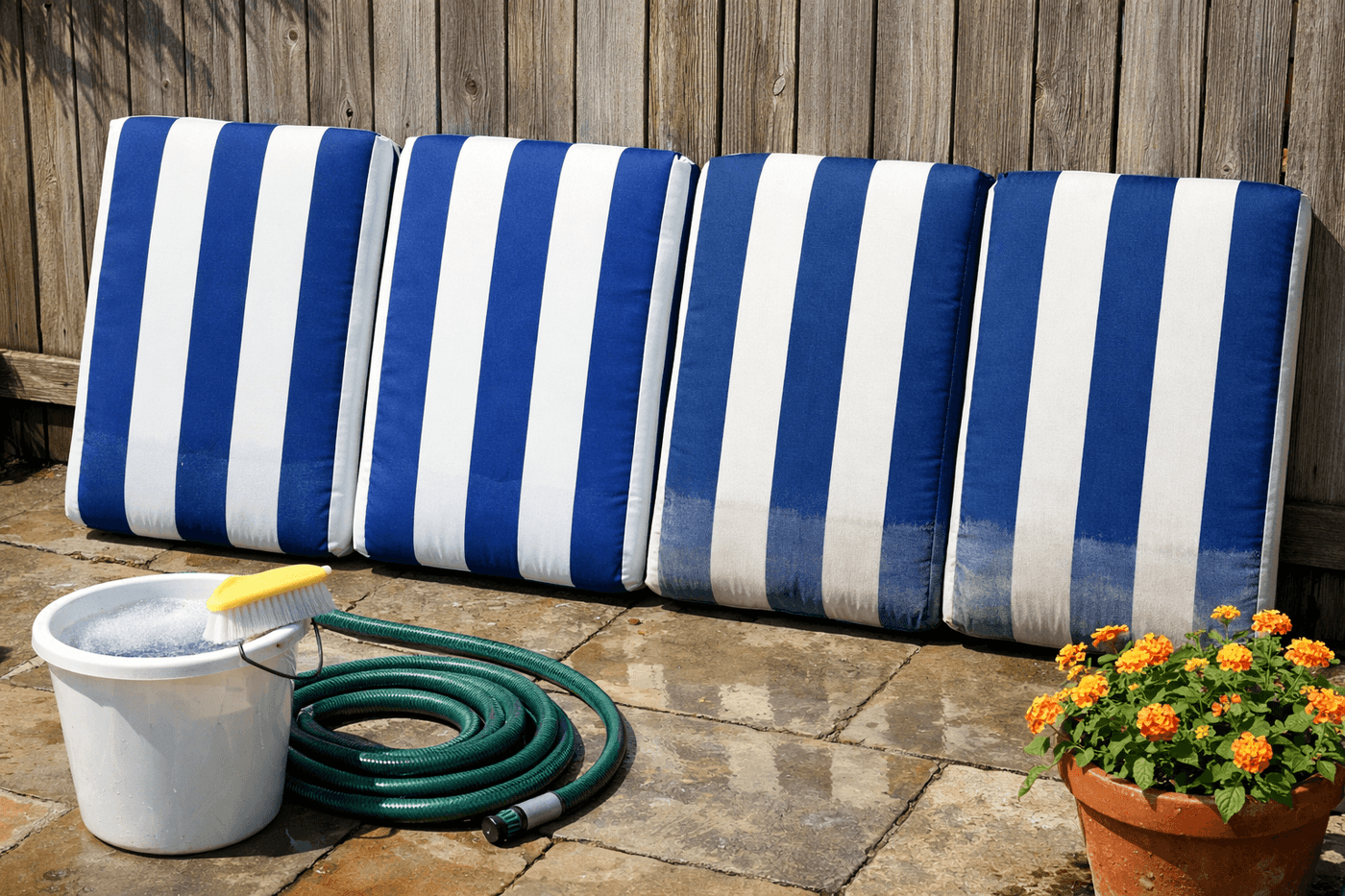
- Dry cushions by propping them on their long edges against a fence or wall in direct sunlight rather than laying them flat — standing cushions on edge exposes both faces to sun and airflow simultaneously and allows moisture to drain downward through the fill rather than pooling at the bottom. Cushions dried flat take significantly longer and remain damp in the center long after the surface feels dry, which is exactly the condition that allows the musty smell to return before the cushions even make it back onto the furniture.
Interior designers who style outdoor spaces for professional photo shoots and client installations always finish cushion cleaning with a spray application of outdoor fabric protector like Scotchgard while the fabric is still slightly damp from rinsing but before it has fully dried — the slightly open fabric fibers in a damp state accept the protector coating more deeply and evenly than fully dried fabric, which means the protection lasts significantly longer and repels water and stains more effectively through the season. One can of outdoor fabric protector applied at the end of the cleaning process costs about $10 and keeps the cushions in noticeably better condition through a full season of outdoor use, which means the next spring cleaning is a fifteen-minute refresh rather than a ninety-minute deep clean.