Chair to Wall Shelf: The Stud Anchor That Holds
Drywall anchors fail under shelf weight, so the screw that finds a stud decides whether this chair-back shelf stays up or lands on your floor.

I once hung a heavy shelf on two plastic drywall anchors and woke up to a crash at 2 a.m. Here's the lesson: a loaded shelf pulls outward and down, and drywall just crumbles under that leverage. Wood framing doesn't. This Transform-It Thursday project turns a thrifted wooden chair with a slatted back into a wall-mounted shelf, and the single variable that matters is anchoring through the back rail into a wall stud. Find the stud, drive a long screw through solid wood into solid wood, and the piece safely carries books, plants, and baskets. Skip it and the leverage will pull the screws free over time.
What You'll Need
- Wooden slat-back chair, thrifted, sturdy joints, about $8 to $12
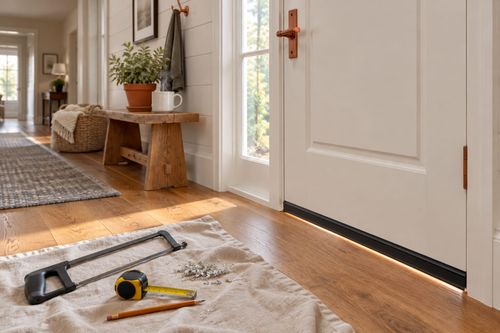
- Handsaw or flush-cut saw, to remove legs and seat frame, borrowed or $12
- Sandpaper, 120 and 220 grit, about $3
- Paint or stain with sealer, a sample pot works, about $5
- 3-inch wood screws, 2 to 3 screws, about $2
- Stud finder, borrowed or about $10
- Drill with bits, plus a level and pencil
How to Build It
- Inspect the chair first. Wiggle every joint and skip any chair with cracked back rails or loose slats, since the back becomes your shelf's structure.
- Cut the legs off flush beneath the seat with a handsaw, keeping the seat and back as one piece. Wear safety glasses and clamp the chair to a bench or table.
- Sand the whole piece with 120 grit, then 220 grit, rounding sharp cut edges and removing old finish so new paint grips.
- Finish with two thin coats of paint or stain, drying fully between coats, then add a clear sealer coat for scuff protection.
- Locate a wall stud with the stud finder, mark both edges, and pencil a level line where the chair's back rail will sit.
- Drill two pilot holes through the back rail, lined up with the stud center, so the screws bite without splitting the wood.
- Mount the chair seat-out with 3-inch screws driven into the stud. Check level, snug the screws, and test with gentle downward pressure before loading it.
Style it like a shelf, not storage: keep heavier items like books near the wall side, put trailing plants in front, and cap the load around 15 pounds. If your stud lands off-center from the chair, screw a short 1x4 board to the wall stud first, then mount the chair to that board.