Baseboard Reset: The Angle That Actually Cleans
Wiping straight across a baseboard just pushes dust along its length — the actual dirt lives in the top groove and bottom edge, which only come clean with a different motion entirely.
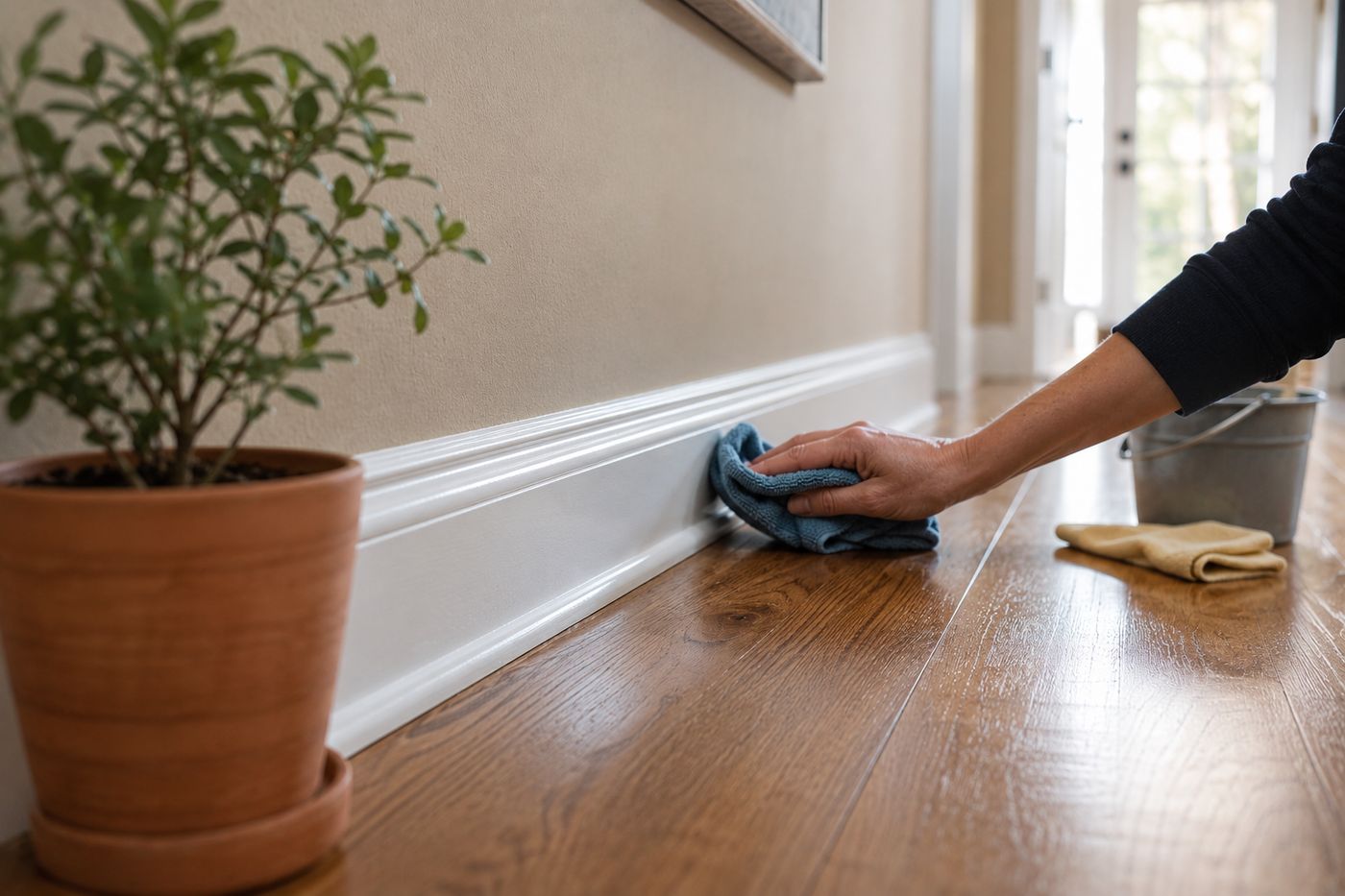
A quick wipe straight across the flat face of a baseboard looks like cleaning, but most of the actual dust and grime collects in two spots a flat side-to-side motion never reaches: the decorative groove along the top edge and the thin gap where the baseboard meets the floor. Wiping in one direction along the flat face just relocates the dust that's already sitting there instead of removing the buildup hiding in those recessed spots. The distinction between baseboards that look genuinely clean and ones that still look dingy after a quick pass comes down to that detail work — running a damp cloth into the top groove specifically, and along the floor-level gap, rather than only covering the flat surface in between. Get those two spots and the crisp, polished line the rest of the room depends on is actually there. A full-house pass costs about $8 in supplies, most of which is probably already under the sink, and takes roughly 30 minutes.
What You'll Need
- Microfiber cloths — about $5, or reuse any you already have
- All-purpose cleaner or a mild soap-water solution — about $3, or use what's already under the sink
- Soft-bristle brush or old toothbrush, for grooved trim detail
- Handheld vacuum or vacuum attachment (optional), for loose dust before wiping
- Small bucket, for rinsing cloths as you move room to room
- Magic eraser or scuff remover (optional), for stubborn shoe scuffs
How to Do It
- Vacuum loose dust and debris along the baseboards first if using an attachment, since removing loose dust before wiping keeps you from just smearing it into a damp paste.
- Dampen a microfiber cloth with your cleaner and wipe the flat face of the baseboard in long, even strokes.
- Run a soft brush or toothbrush along the top decorative groove specifically, since this recessed area collects dust that a flat cloth simply glides over without ever touching.
- Wipe along the very bottom edge where the baseboard meets the floor, catching the thin buildup that settles in that gap and rarely gets touched during regular floor cleaning.
- Treat any visible scuff marks with a magic eraser or scuff remover, working in small circular motions rather than pressing hard in one spot.
- Move room to room in the same sequence, rinsing your cloth in the bucket as it picks up visible grime rather than continuing to spread dirty water.
- Dry any baseboards that were left visibly wet with a clean dry cloth, especially in bathrooms or kitchens where lingering moisture near wood trim isn't ideal.
Professional house cleaners who do move-out and staging cleans often use a dryer sheet instead of a damp cloth for a quick maintenance pass between deeper cleanings, since the anti-static properties actually repel new dust from settling back onto the baseboard for longer than a plain damp wipe does. It's a small trick that stretches the time between full cleanings without any extra cost.