Wobbly Outlet Covers: The 5-Minute Real Fix
Tightening the center screw fixes a wobbly plate about half the time — the other half, tightening harder just strips the screw further, and the real fix is a different two-dollar part entirely.
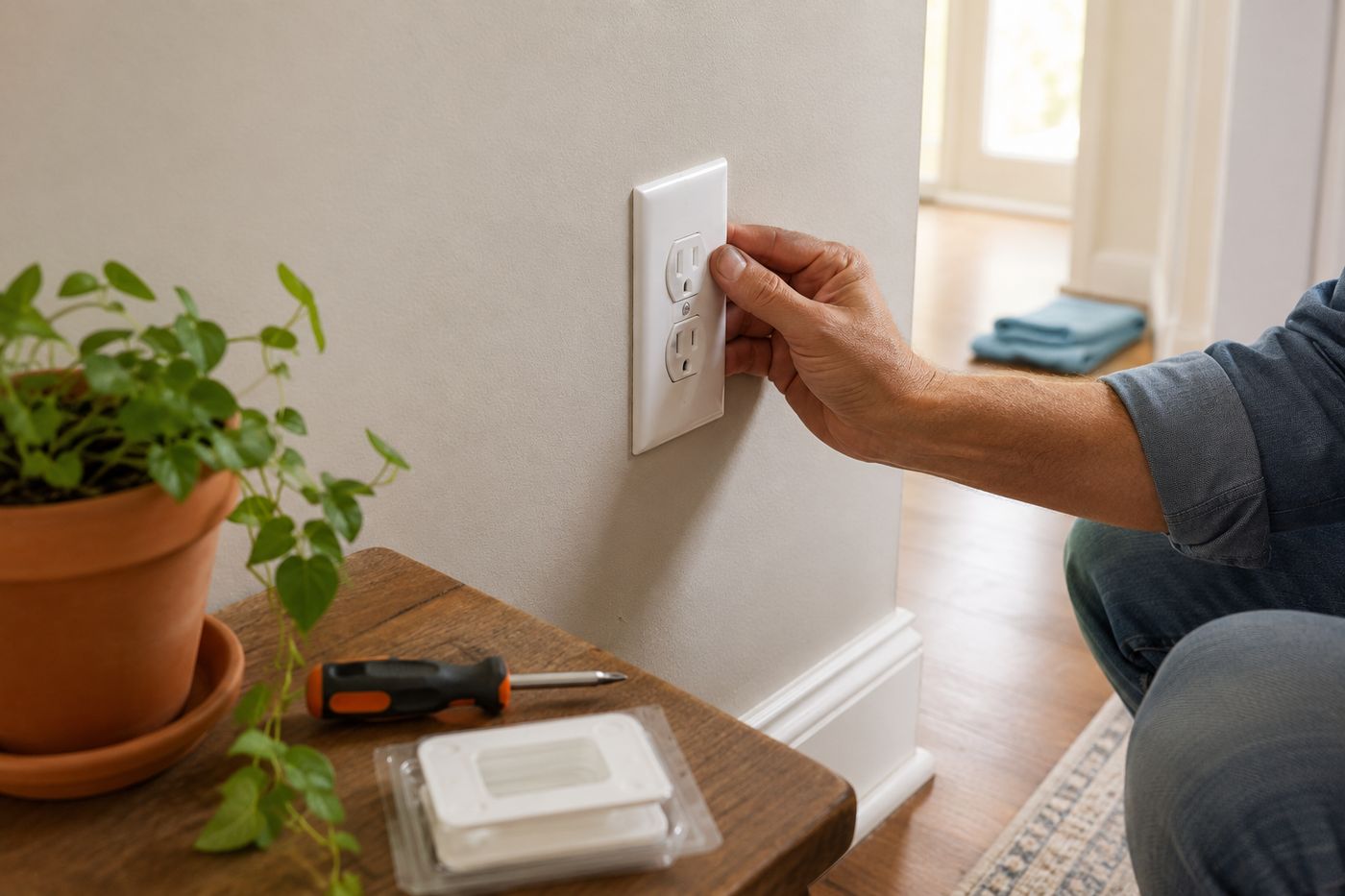
A wobbly outlet cover has two completely different possible causes, and the instinct to just crank the center screw tighter only actually solves one of them. If the screw itself has stripped its threads, tightening harder does nothing but spin uselessly, and if the outlet sits slightly too deep in the wall, the plate will still wobble no matter how tight that screw gets because there's a physical gap the screw can't close. The distinction that determines which fix you need is whether the plate wobbles because it's loose, or because there's empty space behind it — and that's exactly what a set of foam or plastic outlet spacers solves, by filling the gap between the wall and the plate so the screw finally has something solid to pull tight against. Once you know which problem you're looking at, every fix here takes about five minutes per plate and costs under a dollar for a fresh cover or a spacer.
What You'll Need
- Screwdriver (flathead or Phillips, matching your existing screws)
- Outlet/switch plate spacers (foam or plastic shims) — about $3-4 for a multi-pack
- Replacement outlet and switch plates — under $1 each
- Utility knife, for scoring painted-over plate edges
- Handheld vacuum or vacuum attachment, for clearing dust while plates are off
- Replacement mounting screws (if the outlet itself feels loose in the box)
How to Do It
- Try simply tightening the center screw first on any wobbly plate — this is the fast, free fix, and it works whenever the screw itself is just loose rather than stripped or facing a gap behind the plate.
- Check whether the plate still wobbles after tightening: if the screw spins without gripping, it's stripped; if the screw feels tight but the plate still rocks, there's empty space behind it that the screw can't close on its own.
- Add a foam or plastic outlet spacer behind any plate that still wobbles after tightening — this fills the physical gap so the screw finally has solid material to pull against instead of pulling into empty air.
- Turn off power to the outlet at the breaker before replacing any cracked, yellowed, or painted-over plate — even though the plate itself isn't wired, removing screws near live contacts is safer with power off.
- Score around the edge of any plate that's been painted over with a utility knife before unscrewing it, which cuts the paint seal cleanly instead of tearing wall paint away with the plate.
- Unscrew the old plate and install a fresh one, matching screw length to the new plate's mounting holes.
- Vacuum gently around the exposed outlet or switch while the plate is off, since this is the only time that accumulated dust is actually accessible.
- Tighten the mounting screws holding the outlet to its electrical box if the outlet itself moves when you plug something in — this is a different problem than a loose cover plate and means the outlet, not just the cover, needs to be secured; always do this with the breaker off and never work on the wiring itself with power on.
Electricians who do walkthrough home inspections often flag outlet plates as a quiet tell of a home's overall maintenance level, because they're one of the few details homeowners consistently overlook even when everything else is well kept. Swapping every mismatched or yellowed plate in a room to a single uniform finish — even without replacing anything else — is one of the cheapest changes that makes a whole room read as more finished and cared for.