Wobbly Light Fixtures: Never Charming, Always Overdue
A wobbly fixture isn't a quirky character trait of an old house — it's a mounting screw or wire nut working loose from years of vibration, and it only gets worse until someone climbs a ladder and fixes it.
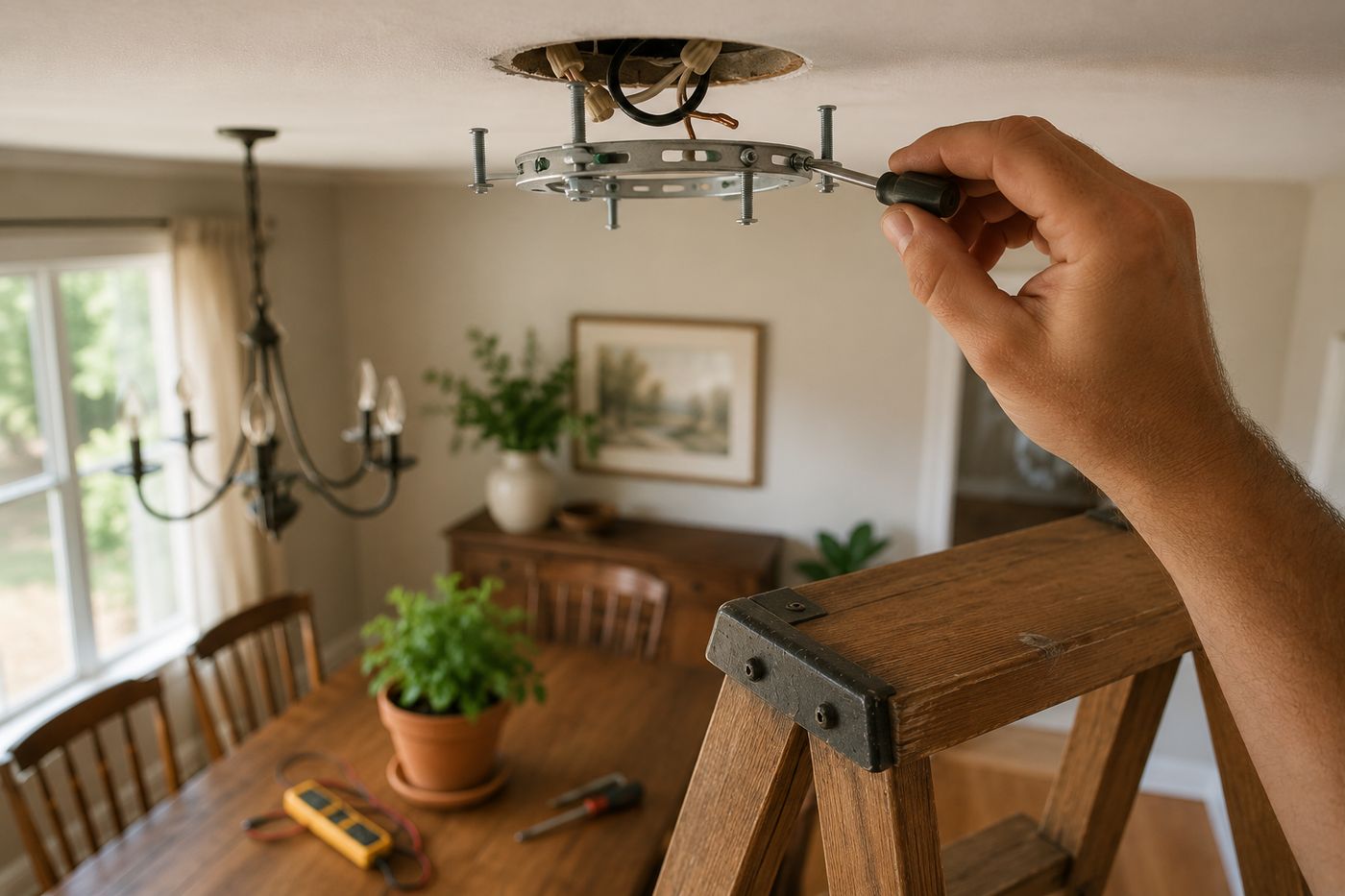
A ceiling fixture doesn't develop a wobble out of nowhere — years of temperature swings, minor vibration, and simple gravity gradually work mounting screws and wire connections looser than they were the day the fixture went up, and that loosening only ever moves in one direction without intervention. It's easy to explain away as character or a quirk of an older house, but a wobble is always a sign of an actual mechanical fastener that has backed off from where it needs to be, and it keeps getting looser rather than resolving on its own. The one part of this repair that isn't optional or open to shortcuts is confirming the circuit is fully de-energized before touching anything — flipping the breaker and verifying with a non-contact voltage tester, not just assuming the switch being off is enough, since some fixtures are wired to stay live at the switch even when the light itself is off. Once power is confirmed off, the actual repair is almost always just re-tightening a couple of screws and a wire nut. It costs nothing and takes about 20 minutes.
What You'll Need
- Screwdriver, matching the mounting screws on your fixture bracket
- Pliers, for reseating wire nuts firmly
- Non-contact voltage tester, to confirm power is fully off before touching any wiring — this is the one item on this list that isn't optional
- Sturdy ladder, appropriate for your ceiling height
- A helper (optional), to hold the fixture steady while you work on the mounting bracket
How to Do It
- Turn off the breaker for the circuit powering the fixture, then confirm the power is actually off using a non-contact voltage tester before touching anything — never rely on the wall switch alone, since some fixtures stay live at certain points in the wiring even with the switch off.
- Set up your ladder securely beneath the fixture, positioning it so you can work comfortably without overreaching.
- Remove the canopy, the decorative cover closest to the ceiling, to expose the mounting bracket and wiring underneath.
- Inspect the two mounting screws that secure the fixture bracket to the electrical box, and tighten any that have backed off — this is almost always where a wobble originates.
- Check that the electrical box itself is solidly anchored to the ceiling joist above it, since a loose box will cause the same wobble no matter how tight the bracket screws are.
- Reseat any wire nuts that feel loose or have visibly worked partway off, twisting firmly clockwise with pliers until each connection feels completely secure and doesn't spin freely.
- Reassemble the canopy and any decorative covers in reverse order once every screw and connection has been checked and tightened.
- Restore power at the breaker and test the fixture, confirming it's level and completely motionless before considering the repair finished.
Electricians who do preventive home maintenance visits often check every ceiling fixture in a house on the same trip once they've found one loose connection, since the same years of vibration and temperature cycling that loosened one fixture have almost certainly been working on every other fixture installed around the same time. A single loose fixture is rarely an isolated incident, and a full-house check on the same afternoon catches the others before they start wobbling too.