Fix Sticking Door Locks with Graphite Lubricant for $5
A tube of graphite powder, two minutes per lock, and every exterior lock on your property turns like new — for $5 total
A door lock that requires a specific key-jiggling ritual to open has a way of becoming so normalized that you genuinely forget what a smoothly operating lock feels like — until someone who doesn't know the ritual tries to use it, or until you fix it and discover that turning a key is supposed to feel completely effortless. Graphite powder lubricant is the $5 fix that locksmiths carry in their pockets precisely because it works permanently where every oil-based alternative eventually fails: dry graphite coats the pin tumblers inside the cylinder with a slick film that never becomes sticky, never attracts the dust and grit that turn oil-lubricated locks into something worse than they started, and never needs reapplication more than once or twice a year in regular residential use. Two minutes of spraying into the keyhole and working the key in and out restores smooth operation immediately — and fifteen minutes of addressing every exterior lock on the property while the tube is already out is the maintenance habit that means you will never wrestle with any of your locks again.
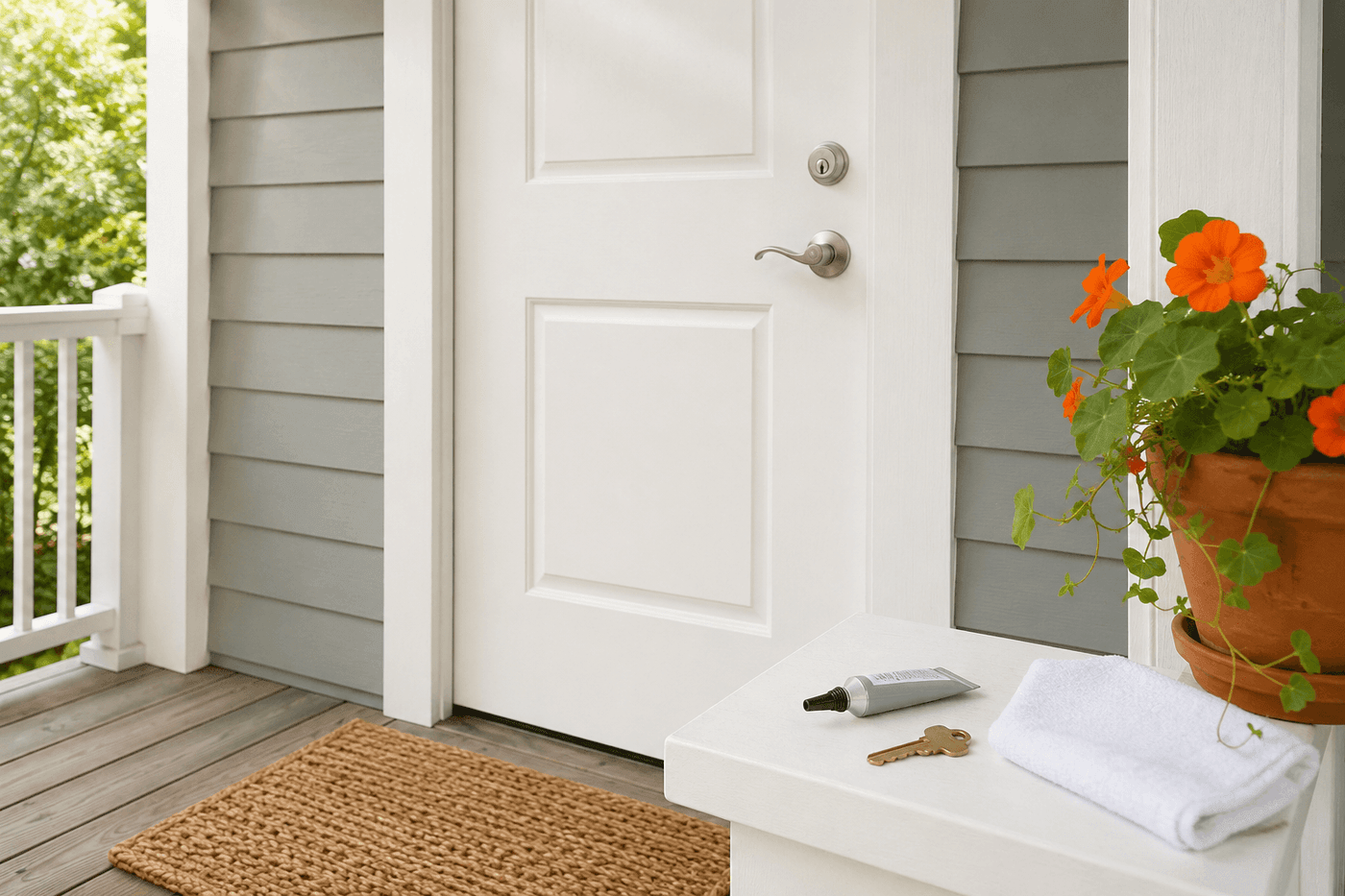
What You Need
- Graphite powder lubricant — available in a squeeze tube with a thin nozzle designed to insert directly into keyholes, or as a pressurized spray can with a precision tip; the squeeze tube gives more controlled application with less overspray onto the surrounding door finish (~$4–6 at any hardware store)
- Your key for each lock being treated — required for working the graphite through the full cylinder after application; the key is the distribution tool that carries graphite powder from the keyhole entrance through the pin tumblers to the back of the cylinder where sticking most commonly originates
- Clean cloth or paper towel — for wiping any graphite overspray from the door surface around the keyhole after application; graphite powder is dark gray and leaves visible marks on painted or stained door surfaces if allowed to accumulate without wiping
- That's genuinely the complete supply list — no tools, no disassembly, no prior knowledge required beyond the ability to insert a nozzle into a keyhole and squeeze
How to Fix Every Lock
- Walk every exterior lock on your property before treating any of them — front door, back door, garage side entry, shed padlock, and any gate or storage lock — and test each one by inserting the key and turning it through the full lock-and-unlock cycle. Note which locks require any force, hesitation, or specific technique beyond a single smooth turn, because those are the ones that need treatment today; the smooth-operating locks benefit from a light preventive graphite application as well, but identifying the problem locks first ensures you don't skip any in the maintenance pass.
- Insert the graphite tube nozzle directly into the keyhole as far as the nozzle tip will go — most squeeze tubes have a nozzle long enough to reach past the keyhole entrance into the cylinder where the pin tumblers are located. Apply two to three firm squeezes of the tube to deposit graphite powder inside the cylinder; you should see a small puff of dark gray powder emerge around the nozzle as the tube is squeezed, which indicates the graphite is reaching the cylinder interior rather than simply depositing at the keyhole entrance.
- Insert the key immediately after applying graphite and work it in and out of the lock ten to twelve times in smooth, full-depth strokes — this key-working phase is what distributes the graphite powder from the keyhole entrance through the full length of the pin tumbler stacks and into the back of the cylinder where sticking originates in most residential locks. The graphite needs mechanical distribution by the key to reach all the friction points in the cylinder; simply spraying graphite into the keyhole without working the key through it leaves the lubricant concentrated at the front of the cylinder and provides only partial relief.
- Turn the key through the full lock-and-unlock cycle five to six times after the working-in phase — each rotation carries graphite through the shear line between the cylinder plug and the cylinder housing, which is the second major friction surface in a lock cylinder beyond the pin tumbler stacks. A lock that was sticking primarily at the rotation phase rather than at key insertion will show the most dramatic improvement during this step rather than during the pin distribution phase.
- Apply a second light dose of graphite if the lock still shows any resistance after the first application and key-working session — some locks that have been running dry for extended periods have pin tumblers that have developed a slight corrosion roughness that requires a heavier graphite application to smooth out fully on the first treatment. A second application followed by another ten key-working strokes addresses the resistance that the first application reduced but didn't fully eliminate, and most locks that don't respond completely to a single application respond fully to a second.
- Wipe any graphite residue from the door surface around the keyhole with a clean cloth immediately after completing the application — graphite powder is a fine dark particulate that settles on painted and stained surfaces around the keyhole and leaves a gray halo that is visible on light-colored doors. Wiping immediately after application removes loose overspray before it sets; graphite that has been ground into a painted surface by repeated key handling around the lock is more difficult to remove than freshly deposited powder.
- Move to every other exterior lock on the property in sequence — the tube of graphite that fixed the front door handles every other exterior lock with enough product remaining for multiple future applications, so there is no reason to stop after the first lock. Back door locks, garage entry locks, and padlocks all respond identically to the same graphite application technique, and treating every lock in a single fifteen-minute session is the maintenance habit that means every lock on the property operates at its best simultaneously rather than discovering each one's deterioration only when it becomes problematic enough to force your attention.
- Schedule an annual graphite application for every exterior lock as a spring or fall maintenance task rather than waiting for sticking to recur — a lock treated with graphite before friction develops never reaches the point of the jiggle-and-hold ritual, and the annual application takes two minutes per lock from a tube that costs $5 and lasts several years of annual household use. Preventive graphite maintenance is the habit that keeps locks smooth for the full life of the hardware rather than requiring replacement years earlier than necessary from the mechanical wear that sustained dry-running accelerates.
Licensed locksmiths who service residential locks always apply graphite to the key blade itself in addition to the keyhole — rubbing the flat of the key blade across the graphite tube opening deposits a thin layer of powder on the key surface that the key then carries into the cylinder with each insertion and distributes through the pin stacks with each use. A key blade lightly coated with graphite and used regularly in a lock effectively re-lubricates the cylinder with every use, extending the interval between deliberate maintenance applications from months to years in many residential locks. This technique is particularly effective for locks that see heavy daily use — front door and garage entry locks that are operated multiple times per day — where key-borne graphite distribution maintains lubrication continuously rather than relying on occasional maintenance sessions to restore it after the previous application has been depleted.