Blanket and Pillow Refresh: Whole-Home Reset for $6
Half a cup of white vinegar in the rinse cycle, tennis balls in the dryer, a quick steam on the cushion covers — and the living room feels professionally refreshed from the inside out for $6.
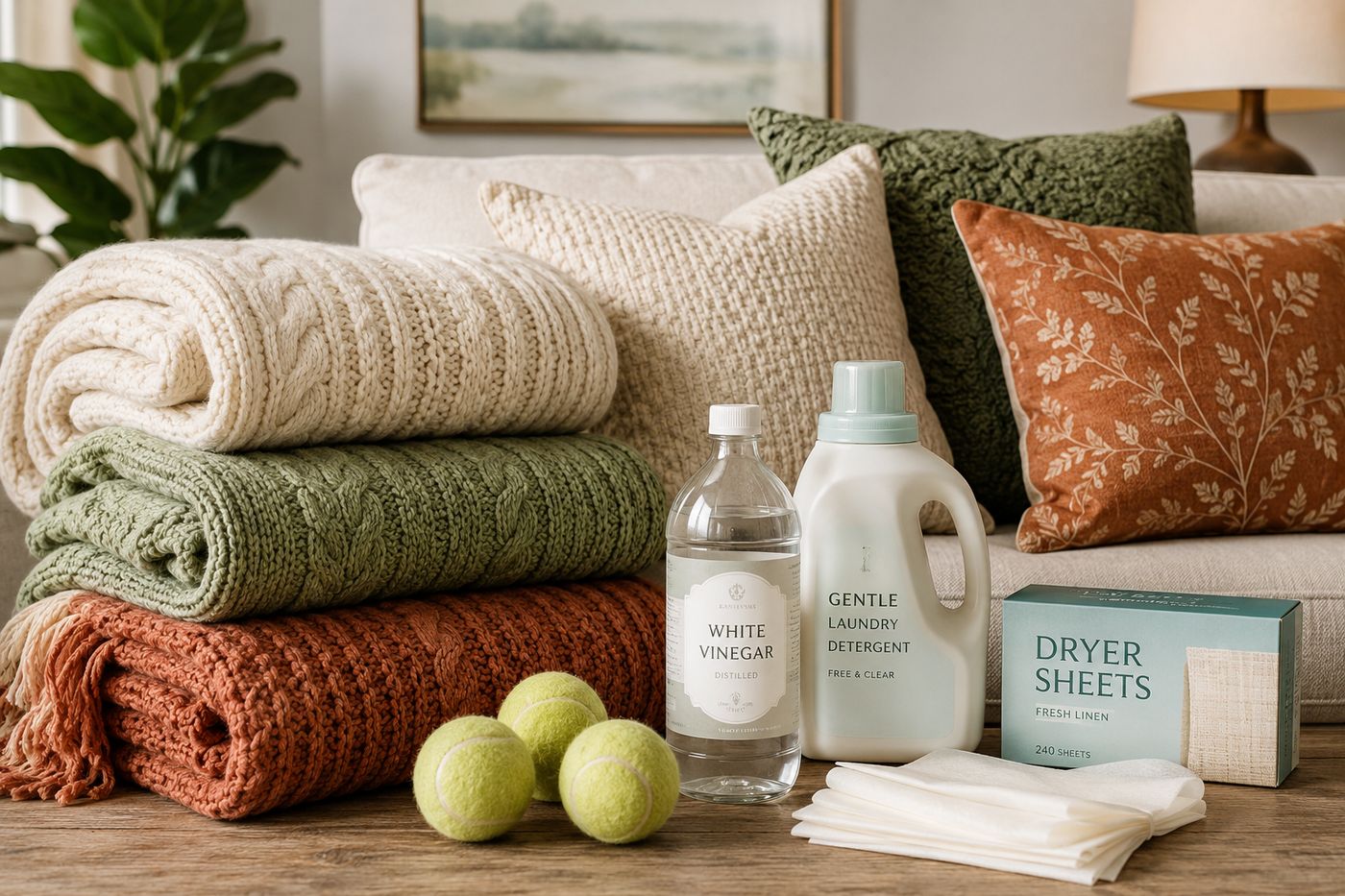
Throw blankets and decorative pillows are the soft goods that receive the most direct human contact of anything in a living room — draped over laps, leaned against, picked up and replaced dozens of times a week — and they are almost universally the last things anyone thinks to wash until the moment they actually smell them, at which point the information arrives with considerable force. A full Saturday morning running four consecutive loads through the washer and dryer costs about $6 in detergent and dryer sheets and produces a whole-home transformation that is more immediately noticeable than almost any decorating change at any price point — because clean, fluffy, fresh-smelling soft goods change the sensory experience of every room they are in simultaneously. The vinegar rinse is the technique that makes the biggest difference for blankets that have been through many washes: half a cup of white vinegar added to the rinse cycle instead of fabric softener strips the built-up detergent residue that causes the gradual stiffening and slight scratchiness that most people assume is just what their blankets are now, and restores the softness that the blanket had when it was new. The tennis ball dryer method handles decorative pillows that cannot be fully submerged. The clothes steamer finishes everything else. The result is a living room that smells like a fresh start costs nothing beyond a Saturday morning and $6.
What You'll Need
- Gentle liquid laundry detergent — for throw blankets and washable pillow covers; a gentle or delicate formula rather than a heavy-duty detergent, which can break down the fibers of knit throws and delicate fabric pillow covers more aggressively than necessary for soft goods that are not heavily soiled; one standard dose per load is sufficient — more detergent does not produce cleaner blankets and contributes to the residue buildup that vinegar is added to address (~$3–5 for enough to cover four loads)
- White vinegar, ½ cup per load — added to the fabric softener dispenser or directly to the rinse cycle; the acetic acid in white vinegar neutralizes alkaline detergent residue that has accumulated in the fabric fibers over multiple washes and is the specific cause of the stiffness and slight scratchiness that well-washed blankets develop over time; do not combine with fabric softener in the same load, which neutralizes both additives; white vinegar smell dissipates completely during the dry cycle and leaves no odor on the finished blanket (~$2–3 for a large bottle that covers many laundry sessions)
- Wool dryer balls or tennis balls, 2–3 — for drying thick blankets and decorative pillows; the balls agitate the load during drying, preventing fibers from matting and clumping together into dense, unevenly dried sections; particularly important for down-filled and fiber-filled decorative pillows where clumped fill never fully redistributes without mechanical agitation during the dry cycle; wool dryer balls can be used for the full session; tennis balls work equally well and are usually already in the house (~$0 if tennis balls are already owned)
- Upholstery spray cleaner — for decorative pillows that cannot go in the washer due to their fill type, cover fabric, or construction; apply to a soft cloth rather than directly to the pillow to prevent over-wetting the fill; spot treat visible marks only rather than saturating the full cover (~$4–6 for a small can)
- Soft bristle brush — for working upholstery cleaner into spot-treated areas and for brushing up the fabric nap on velvet and textured pillow covers after cleaning; a clean toothbrush works for small spot-treated areas on most decorative pillow fabrics
- Clothes steamer or steam iron — for finishing pillow covers after the dryer refresh cycle to eliminate any lingering odors, restore crisp fabric shape, and address any wrinkles that the dryer cycle did not fully remove; the steam also sanitizes fabric surfaces that were not fully washed (~$0 if a steamer is already owned)
- Dryer sheets — optional; add one per load during the dry cycle for additional fragrance and static reduction on synthetic fiber blankets and pillow covers; not necessary for loads where the vinegar rinse was used, since the vinegar addresses static at the fiber level (~$1–2 for a small box)
How to Do It
- Gather every throw blanket and decorative pillow from every room in the house before sorting or washing anything — pile everything in one location and read every care label before a single item goes near water. Care labels reveal the specific washing and drying restrictions that determine whether a pillow or blanket can be machine washed, hand washed only, or surface cleaned only; ignoring a care label on a dry-clean-only item produces an irreversibly damaged piece in the first wash cycle. Sort into three groups: machine washable, hand wash or spot clean only, and dry clean only.
- Smell every item in the machine-washable pile before sorting by color or fabric type — this is the motivating step that makes the full session feel necessary rather than optional, and the information it provides about which items most urgently need washing is more useful than any visual assessment. Items that smell noticeably of body odor, pet, or food should be pre-treated with a small amount of detergent applied directly to the fabric and allowed to sit for ten minutes before washing; items that simply smell stale or dusty wash adequately without pre-treatment.
- Sort machine-washable items into loads by color family and care requirement — darks together, lights together, delicates separate from sturdy knits. Washing a cream cable-knit throw with a dark navy blanket risks color transfer that no amount of rewashing fully reverses; washing a delicate linen pillow cover with heavy woven blankets risks mechanical abrasion damage to the lighter fabric. One blanket or two to three pillow covers per load rather than overstuffing the drum, which prevents thorough agitation and produces poorly cleaned, unevenly dried results.
- Wash each load on the gentle or delicate cycle with cool or warm water — hot water shrinks most knit blanket fibers and can set any remaining stains rather than releasing them; cool water is safe for every blanket and pillow cover fabric type and produces equivalent cleaning results for soft goods that are not heavily soiled. Add the measured detergent to the dispenser and add ½ cup of white vinegar to the fabric softener dispenser — the washing machine releases the vinegar during the rinse cycle at the correct stage without any additional timing required.
- Dry throw blankets and washable pillow covers on low heat with two to three dryer balls — low heat rather than high heat prevents fiber shrinkage and elastic damage in blanket edging and pillow cover zippers; the dryer balls agitate the load continuously during the cycle, which prevents the dense clumping that blankets develop when dried without mechanical agitation and that creates unevenly dried sections where damp, compressed fibers take much longer to dry than the surrounding fabric. Check for complete dryness by feeling the densest section of each blanket — the center fold — rather than the outer edges, which dry first regardless of the center's condition.
- Refresh non-washable decorative pillows with the dryer and tennis ball method — place each pillow in the dryer with two tennis balls and run on low heat for 15–20 minutes. The tennis balls beat the pillow fill repeatedly during the cycle, redistributing compacted fiber or down fill that has settled into the lower half of the pillow cover during use and restoring the plump, evenly filled appearance that the pillow had when new. This method also freshens the fabric surface through heat and agitation without any water contact, making it safe for pillow covers that cannot be wetted.
- Spot clean any visible marks on non-washable pillow covers with upholstery spray cleaner applied to a cloth rather than directly to the fabric — pressing the damp cloth against the mark and working from the outer edge of the mark inward prevents the mark from spreading outward as the cleaning solution dilutes it. Allow the cleaned area to dry completely before the pillow goes back into use; a damp pillow cover replaced on the sofa develops a musty smell at the damp spot within 24–48 hours that is more unpleasant than the original mark.
- Steam all pillow covers and any blankets with persistent odors or wrinkles after washing and drying — hold the steamer 2–3 inches from the fabric surface and work in slow, overlapping passes that allow the steam to penetrate the full fabric depth rather than skimming the surface. Steam particularly the seam areas and zipper edges of pillow covers where odors concentrate in the dense fabric layers, and the edges and corners of blankets where the binding traps residual smell that the wash cycle did not fully eliminate. Allow everything to cool and dry for 15–20 minutes after steaming before folding or returning to use.
Textile care specialists and home stylists who maintain soft goods for high-end residential clients and editorial shoots consistently recommend one storage practice between seasonal washes that dramatically reduces the odor and fiber degradation that makes throw blankets need washing more frequently: store throw blankets folded with a single cedar block or a small muslin sachet of dried lavender tucked inside the fold rather than storing them bare in a basket or on a shelf. Cedar and lavender both absorb ambient moisture — the primary cause of the musty smell that develops in stored textiles — and provide a mild natural deterrent to the moth larvae that damage natural fiber blankets during storage periods. Home stylists who maintain client textile collections specify cedar inserts for every storage location where natural fiber throws and blankets are kept between seasons, and describe the difference in the condition of stored blankets as the distinction between textiles that smell and feel fresh when retrieved after months of storage and ones that require immediate washing before use. The cedar block costs $2–3 and lasts through multiple seasons with occasional light sanding to refresh the surface oils that produce its preserving effect.