Roasted Tomato Sauce: Slow Oven, August Flavor
Simmering tomatoes on the stove cooks off water — roasting them low and slow drives off that same water while caramelizing sugars at the same time, and that second thing is the entire reason this sauce tastes nothing like a stovetop version.
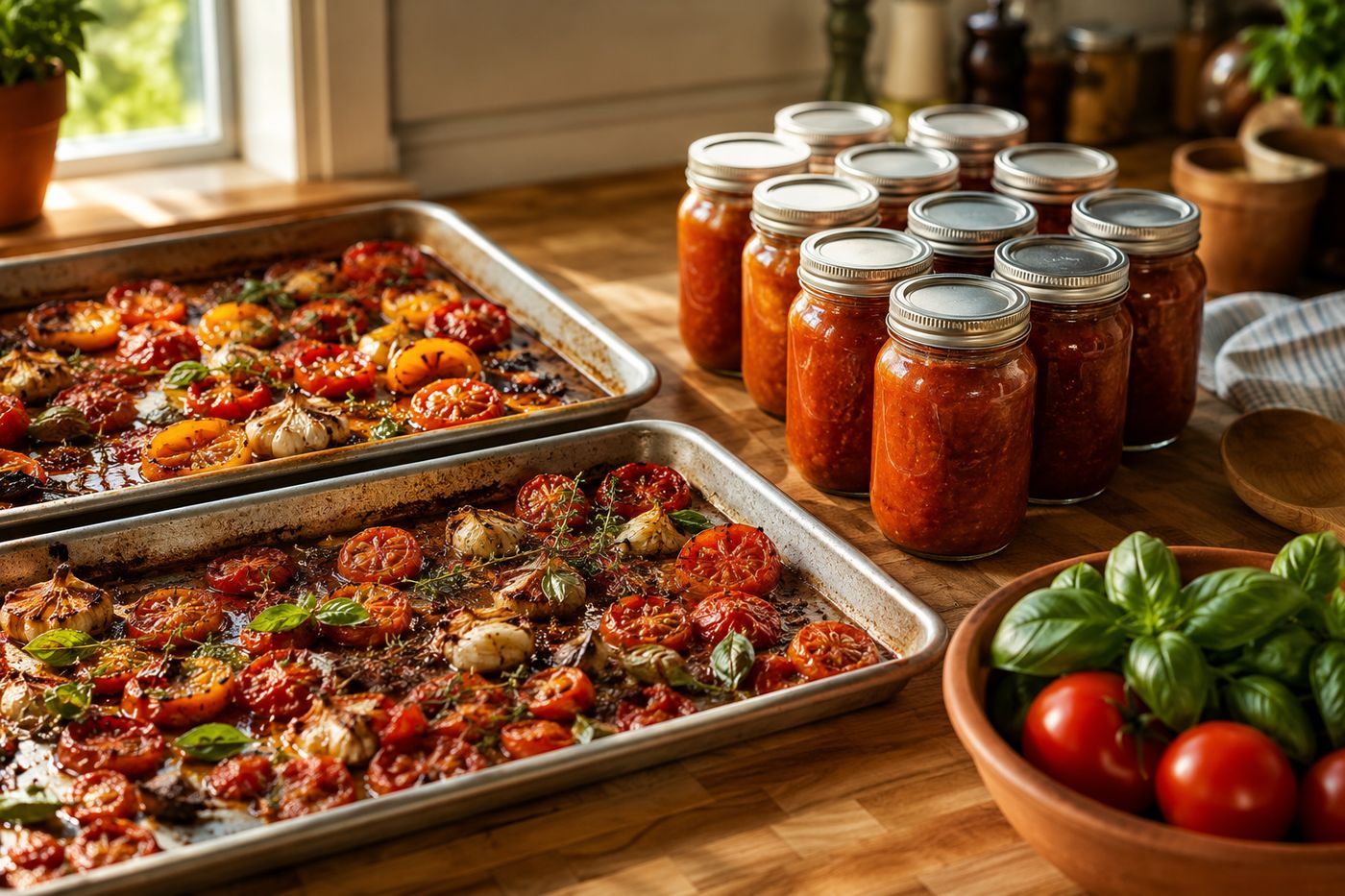
A stovetop tomato sauce simmers away excess water, but water isn't the only thing that changes when heat is applied — sugars caramelize too, and that reaction happens far more effectively in dry oven heat than in a pot full of simmering liquid, where the moisture actually slows caramelization down. Roasting tomatoes at a moderate 325 degrees for a full two hours gives sugars the dry, sustained heat they need to concentrate and brown, which is the entire mechanical reason this sauce tastes deeper and sweeter than anything simmered on the stove, even using the exact same tomatoes. The same slow dry heat caramelizes the whole garlic cloves roasted alongside the tomatoes, mellowing their sharpness into something rounder and sweeter than raw or quickly sautéed garlic ever gets. None of this requires any technique beyond patience — the oven does the actual work. Fifteen pounds of tomatoes and about $5 in additional ingredients makes roughly eight pints of sauce that taste like the exact month they were made in, even pulled from the freezer in the dead of winter.
What You'll Need
- 15 pounds mixed tomatoes, halved — free or nearly free from a home garden, or about $15-20 if purchased
- 1 whole head of garlic, broken into individual unpeeled cloves — about $1
- Olive oil, a generous pour — about $2
- Fresh basil and oregano — free if garden-grown, about $4 if purchased
- Salt and pepper, to taste
- Two large sheet pans
- Blender or immersion blender
- Freezer-safe containers or jars, for storage
How to Do It
- Halve all the tomatoes and spread them cut-side up across two sheet pans, giving them room to roast rather than steam, which happens when pieces are packed too closely together.
- Scatter the whole garlic cloves among the tomatoes, then drizzle everything generously with olive oil and season with salt and pepper.
- Tuck fresh basil and oregano sprigs among the tomatoes so the herbs roast alongside everything else, infusing the oil and juices as they cook down.
- Roast at 325 degrees for a full two hours — resist the urge to raise the temperature to speed things up, since it's the slow, moderate heat over time that concentrates sugars and caramelizes the garlic without scorching the tomatoes.
- Check at the two-hour mark that tomatoes have visibly collapsed and reduced, with edges showing light caramelization; if they still look plump and wet, give them additional time.
- Squeeze the roasted garlic cloves out of their skins directly into the pan of roasted tomatoes, discarding the papery skins.
- Blend everything from the sheet pans — tomatoes, garlic, roasted herbs, and all the caramelized pan juices — until smooth, working in batches if needed.
- Cool the sauce fully before portioning it into freezer containers, leaving room at the top of each for expansion, then freeze for up to a year.
Home cooks who preserve garden surplus at scale often roast a portion of their tomatoes past the two-hour point, into deeply browned, almost jammy territory, and freeze that batch separately from the standard sauce. That darker, more concentrated version works less as a pasta sauce and more as a flavor base for soups and braises later in the year, which turns one tomato harvest into two genuinely different pantry staples instead of just one large batch of the same thing.