Make Hand-Poured Soap Bars in 1 Hour for $20
Pour at the right temperature and your soap sets smooth and sweat-free; pour too hot and it scorches your scent and warps the bars.

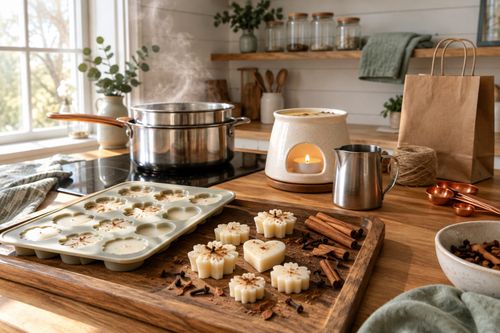
The first time I poured soap, I dumped fragrance oil into scorching-hot glycerin and the whole batch smelled like burnt candy and sweated beads of moisture for days. The difference between bars that set smooth and smell great and bars that fail comes down to pour temperature. Fragrance oils burn off above roughly 140°F, and glycerin poured too hot also shrinks and warps as it cools unevenly. Let the melted base cool to about 130°F before adding scent, and spritz the surface with rubbing alcohol to pop bubbles. The whole project takes about 1 hour of hands-on time for $20, and yields 8 to 10 gift-worthy bars, just in time for holiday giving.
What You'll Need
- Materials (~$17 total):
- 2 lb block of melt-and-pour glycerin soap base, white or clear (~$10)
- Skin-safe fragrance or essential oil, such as lavender or orange (~$5)
- Small bottle of 70% rubbing alcohol in a spray bottle (~$2)
- Optional: 1 tablespoon dried lavender buds or oats for texture (pantry)
- Tools (~$3 total if you need them):
- Silicone soap mold with 6 to 10 cavities (~$3 or reuse a silicone muffin pan)
- Microwave-safe glass measuring cup with a spout
- Sharp knife and cutting board
- Silicone spatula or wooden spoon
- Thermometer (an instant-read kitchen model works)
How to Do It
- Prepare your workspace by covering the counter with newspaper and setting the mold on a small baking sheet. Soap sets fast, and a tray lets you move the filled mold without spilling.
- Chop the soap base into 1-inch cubes. Small, even pieces melt at the same rate, so you avoid scorched edges and unmelted lumps.
- Melt the cubes in the glass measuring cup in the microwave in 30-second bursts, stirring between each. Short bursts keep the base from boiling, which creates bubbles and a rubbery texture.
- Cool the melted base until your thermometer reads about 130°F, stirring gently. This is the make-or-break step: cooler base protects fragrance and prevents sweating and warping.
- Scent the base with about 1 teaspoon of oil per pound, plus any dried lavender or oats. Stir slowly so you do not whip in air bubbles. Too much oil can irritate skin and keep soap from hardening.
- Pour into the mold in a thin, steady stream, filling each cavity just to the top. Pouring from the spouted cup gives you clean edges and less trimming later.
- Spritz the surface right away with rubbing alcohol to pop surface bubbles. Bubbles left alone harden into pitted, cloudy tops.
- Unmold after 2 to 4 hours once fully firm, or pop the mold in the freezer for 15 minutes to release easily. Wrap each bar in plastic or parchment to keep it from sweating in humid air.
Professional soap makers pour into molds in two thin layers, letting the first skin over for about 10 minutes before the second. This keeps heavy add-ins like dried lavender or oats suspended in the middle of the bar instead of sinking to the bottom. Stir add-ins into the second layer only, and the result looks like a boutique bar.