Lavender Eye Pillow: Sew One in 30 Minutes
Soft cotton, flax seeds, dried lavender, and half an hour — and you have something genuinely therapeutic that costs $8 and lasts for years.
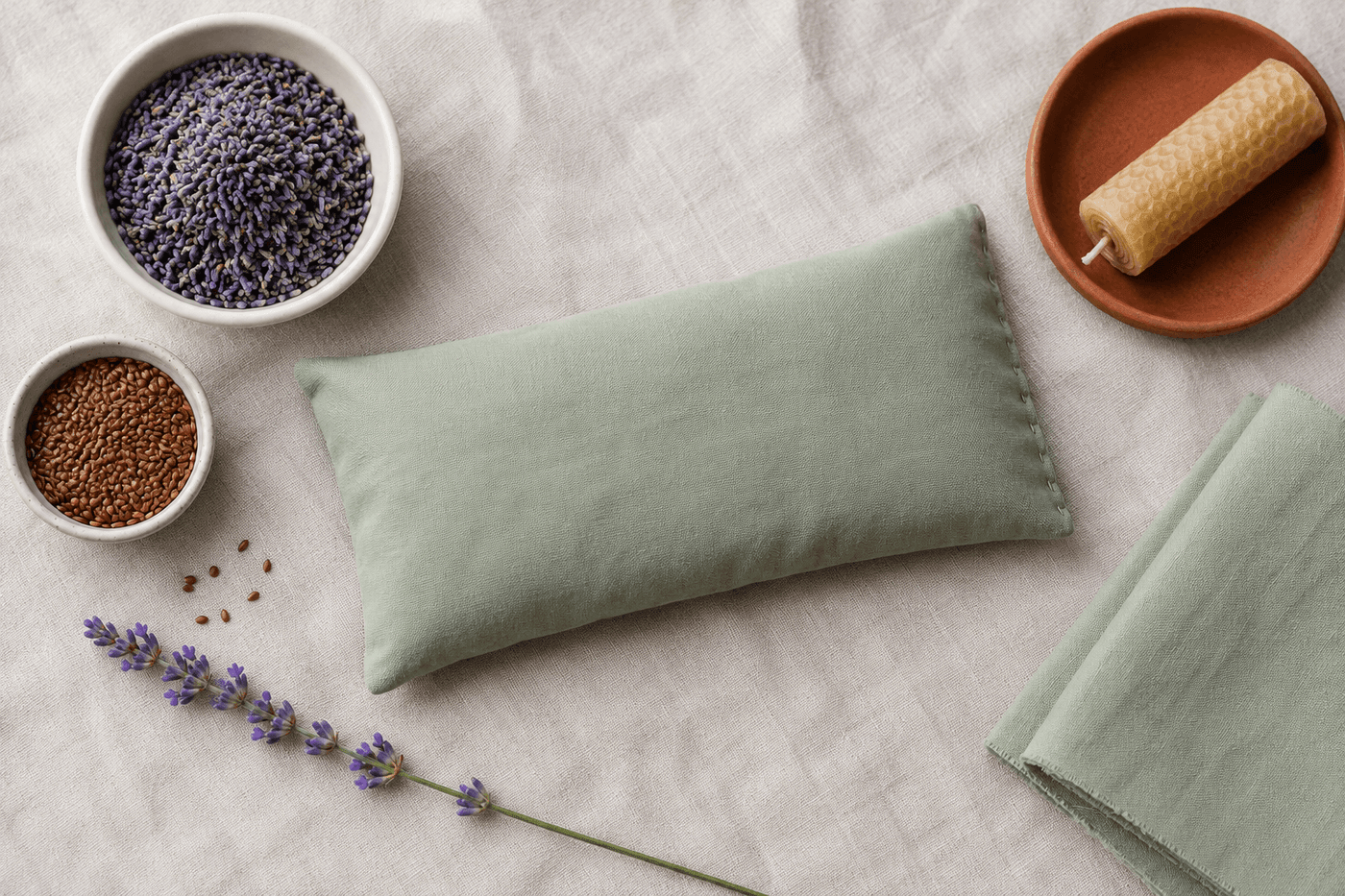
A lavender eye pillow is one of those objects that sounds like a wellness accessory until you actually use one — and then it becomes one of those things you reach for so consistently that you eventually make extras to keep in different rooms and press on everyone you know who mentions a headache or a hard day. The combination of gentle weight, conforming flax seed fill, and lavender scent does something measurable to a stressed nervous system that is difficult to articulate before the experience and completely obvious after it. The construction is as simple as sewing gets — two rectangles of soft cotton, three machine-sewn sides, a fill of flax seeds and dried lavender buds, and a hand-stitched closure — and the total time from cutting the fabric to placing the finished pillow over your eyes for the first time is about 30 minutes. Eight dollars in materials, a sewing machine, and one of the more useful half-hours you will spend this week produce something that works equally well chilled in the freezer for headache relief, warmed briefly in the microwave for sinus pressure, or used at room temperature as a simple light-blocking aid for sleep and meditation. This is also the handmade gift that has the highest ratio of perceived thoughtfulness to actual effort of anything in the DIY canon — nobody receives a handmade lavender eye pillow and feels anything other than genuinely cared for.
What You'll Need
- Soft cotton fabric — quilting cotton, cotton muslin, or cotton jersey; avoid synthetic fabrics that don't breathe against skin and hold heat uncomfortably during use; you need two pieces at 4"x9" per pillow (~$2–3 for a fat quarter that makes several pillows)
- Flax seeds — the essential filling ingredient; whole flax seeds conform to facial contours, hold heat and cold effectively, and provide the gentle weighted pressure that makes eye pillows genuinely therapeutic rather than decorative; find at health food stores or online (~$3–4 for a bag that fills several pillows)
- Dried lavender buds — culinary or craft grade; culinary grade is more fragrant and consistent in quality; look for buds rather than stems for the best scent-to-volume ratio; find at health food stores, craft stores, or online (~$3–4 for a small bag)
- Fill ratio — approximately ½ cup flax seeds to 2 tablespoons dried lavender buds per standard eye pillow; this ratio produces a pillow with adequate weight and a lavender scent that is present but not overwhelming
- Thread — cotton thread in a color matching or complementing the fabric; polyester thread is more durable for the machine-sewn sides but cotton thread is preferable for the hand-stitched closure which will be handled during refilling
- Sewing machine — for the three machine-sewn sides; the straight stitch only, at a slightly shorter stitch length than standard to prevent flax seeds from working through the seam over time
- Hand sewing needle — for the slip stitch closure of the final side after filling
- Scissors or rotary cutter and mat — for cutting fabric rectangles accurately; consistent dimensions ensure the finished pillow sits evenly across both eyes without gaps at the edges
- Pins or wonder clips — for holding fabric layers together during machine sewing
- Iron — for pressing seams before turning right-side out; pressed seams produce sharper corners and flatter edges on the finished pillow
- Small funnel or rolled paper cone — for transferring flax seeds into the sewn pillow without spilling; flax seeds are small enough to go everywhere during filling without a funnel to direct them
How to Sew It
- Cut two rectangles of soft cotton fabric at 4 inches wide by 9 inches long — this produces a finished eye pillow of approximately 3½ by 8½ inches after seam allowances, which is the standard size that covers the full eye area and brow ridge comfortably on most adult faces without extending uncomfortably past the temples. Cut both pieces simultaneously by layering the fabric and cutting through both layers at once to guarantee identical dimensions.
- Layer the two fabric pieces with right sides together — the printed or finished sides facing each other on the inside — and secure with pins or wonder clips around all four edges. Right-side-together assembly is what produces a finished pillow with clean exterior seams hidden inside rather than visible on the outside surface that rests against the face.
- Sew three sides of the rectangle with a ¼-inch seam allowance using a slightly shortened stitch length — 2.0–2.5mm rather than the standard 2.5–3.0mm — which produces a tighter seam that flax seeds cannot work through over years of use and washing. Sew both short ends and one long side, leaving the remaining long side open for filling; backstitch at the beginning and end of each seam to lock the thread without knots that create lumps against the face.
- Clip the two sewn corners diagonally close to the stitching line before turning right-side out — this removes the fabric bulk at the corners so they turn out as sharp, defined points rather than rounded, thick bumps that are immediately visible and feel uncomfortable pressed against the brow bone during use.
- Turn the pillow right-side out through the open long side, pushing the corners fully out with a blunt tool — a chopstick, knitting needle, or the eraser end of a pencil reaches the corner depth that fingers cannot and produces the sharp corner definition that distinguishes a well-made eye pillow from a rushed one. Press the turned pillow lightly with an iron, pressing the open side seam allowances inward along the original stitching line so they are ready to close neatly after filling.
- Mix the flax seeds and dried lavender buds in a small bowl before filling — combining them before they go into the pillow distributes the lavender buds evenly throughout the fill rather than concentrating them in one layer, which produces more consistent scent distribution across the full pillow surface during use. The standard ratio of ½ cup flax seeds to 2 tablespoons lavender buds fills a standard eye pillow to approximately two-thirds capacity — full enough to have weight and conform to facial contours, but not so full that the pillow cannot drape and mold.
- Fill the pillow through the open long side using a small funnel or rolled paper cone, pouring the seed and lavender mixture slowly to allow it to settle into the corners before adding more. Do not overfill — a pillow filled to more than two-thirds capacity feels rigid and sits on top of the face rather than conforming to its contours, which defeats the therapeutic benefit of the weighted, conforming fill that makes lavender eye pillows work. Shake the pillow gently after filling to distribute the contents evenly before closing.
- Close the open side with a hand-sewn slip stitch — fold the raw edges inward along the pressed line, thread a hand needle with a length of matching thread knotted at one end, and work a slip stitch along the opening by alternately catching a few threads from the front folded edge and the back folded edge, pulling the thread snug after every few stitches to draw the edges together invisibly. The slip stitch produces a closure that is invisible from the outside and secure enough to withstand gentle washing, while remaining easy to open with a seam ripper if the lavender scent fades and the pillow needs to be refreshed with new buds.
Aromatherapists and wellness product makers who design therapeutic eye pillows for yoga studios and spa retail consistently recommend one scent-longevity technique that extends the effective lavender fragrance from a few months to over a year without replacing the fill: add 3–4 drops of pure lavender essential oil directly to the dried lavender buds in the mixing bowl and allow them to absorb for 24 hours before filling the pillow. Dried lavender buds lose their volatile aromatic compounds relatively quickly once removed from the plant, particularly in a warm, enclosed environment — the essential oil refreshes and amplifies the natural bud fragrance significantly and bonds to the dried plant material in a way that releases slowly over time rather than dissipating quickly. Spa product makers who specify this technique report lavender eye pillows that maintain therapeutic fragrance intensity for 12–18 months rather than the 3–4 months that unfixed dried buds typically deliver — and the same technique can be used to refresh a pillow whose scent has faded by carefully opening the slip-stitched closure, adding a few drops of oil to the existing fill, resealing, and allowing 24 hours before use.