Build a Stacked Stone Garden Water Feature for $55
A submersible pump, stacking stones, and three hours — the garden corner that was missing something finally gets the sound it needed
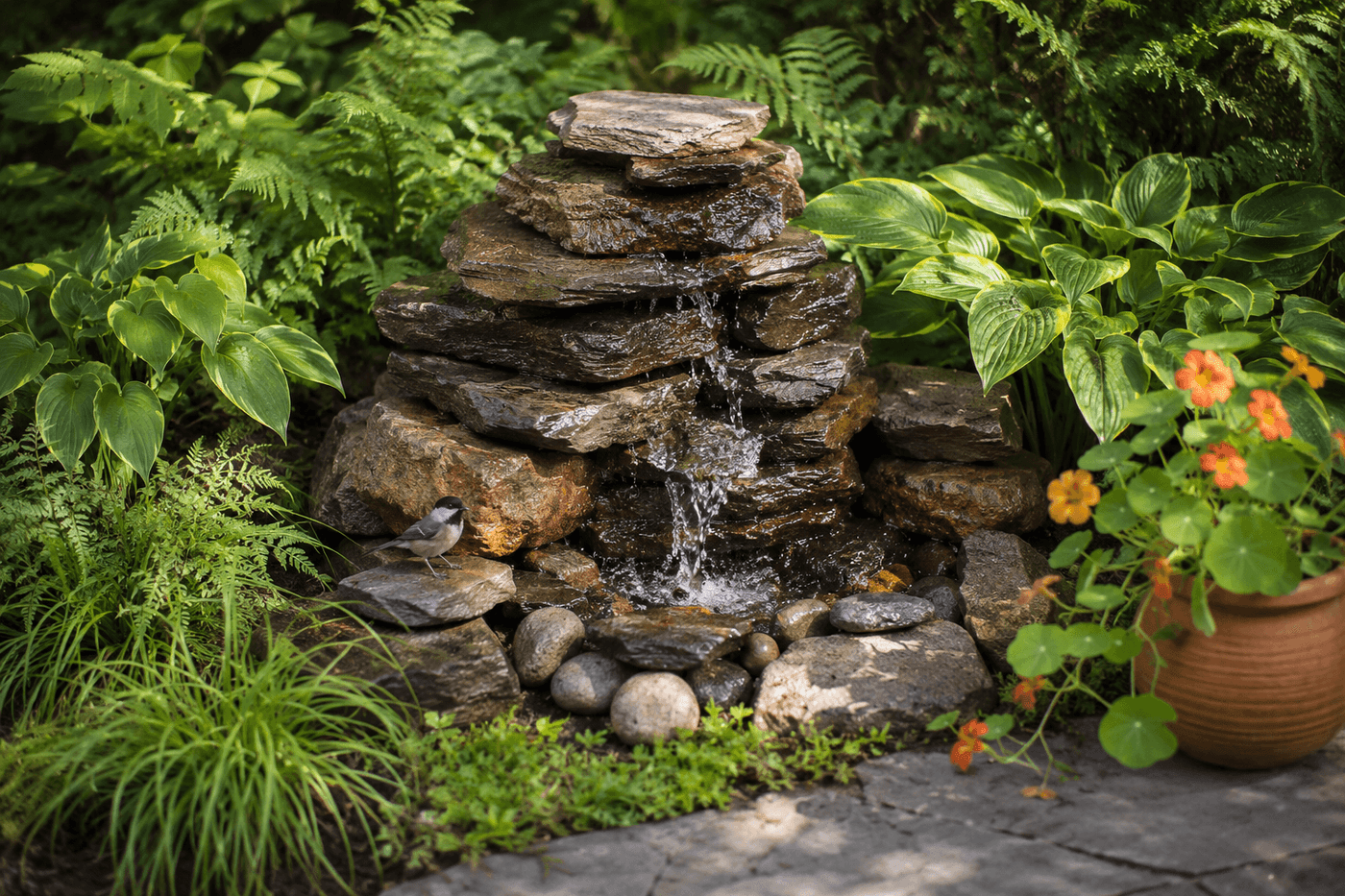
Moving water does something to a garden space that no static element — no sculpture, no planting, no lighting — can fully replicate: it adds sound, which changes the entire sensory character of the space in a way that is immediately and consistently calming. A small stacked stone water feature running on a recirculating submersible pump costs $55 in materials, takes three hours to build, and produces the kind of quiet, continuous trickling that masks traffic noise, draws birds and beneficial insects, and makes every person who sits near it instinctively reach for their phone less and their attention more. The construction hides all the mechanics beneath artfully stacked stone — the pump and reservoir are invisible, the tubing runs through the rock arrangement, and what remains visible is exactly what you'd hope to see: water appearing at the top of a natural-looking stone stack and trickling quietly back down through the rocks to begin the cycle again. This is the garden feature that changes how a space feels rather than simply how it looks.
What You Need
- Submersible recirculating pump, 80–160 GPH flow rate — sized for a small garden feature; look for pumps with an adjustable flow dial that allows you to tune the water sound from a gentle trickle to a slightly more audible flow depending on the ambient noise level in your garden (~$20–30 online or at garden centers)
- Flexible tubing, ½" diameter, 3–4 feet — connects the pump outlet to the top of the stone stack through which water will emerge; most submersible pumps include a short section of tubing, but additional length may be needed depending on your stack height (~$3–5 if not included with pump)
- Plastic reservoir basin or storage tub, 5–10 gallon — the hidden underground water reservoir that the pump sits in and that catches the recirculating water as it trickles back down through the stones; a dark-colored tub is less visible if any portion becomes exposed (~$8–12 at any home goods or hardware store)
- Flat stacking stones, 15–20 pieces — flagstone, slate, and sandstone all stack cleanly and look natural in a garden setting; varying sizes from large base stones to progressively smaller stones toward the top creates the most natural-looking arrangement (~$20–25 for a mixed selection at a landscaping supply yard)
- River rocks, 10–15 lbs — for surrounding the base of the stone stack and concealing the reservoir basin edges; smooth river rocks in varying sizes look most natural and complement flat stacking stones well (~$5–8)
- Landscape fabric or mesh screen — cut to cover the reservoir basin opening; allows water to drain back into the reservoir through the stones while preventing debris from falling in and clogging the pump intake (~$3–5)
- Outdoor extension cord or GFCI outlet access — the pump requires a standard 120V outdoor outlet within cord reach; a GFCI-protected outdoor outlet is required by electrical code for any water feature application
How to Build It
- Choose the location before purchasing any materials — the site needs to be within cord reach of a GFCI-protected outdoor outlet, in a position where the water sound will be audible from your primary seating area, and on ground level enough that the reservoir basin can be set level in the soil without significant excavation on one side. A corner location with existing planting behind it gives the water feature a natural backdrop that makes the stone arrangement look as though it grew from the surrounding garden rather than being placed in it.
- Excavate a hole sized to accept the reservoir basin set completely below grade — the top rim of the basin should sit flush with or just slightly below the surrounding soil surface so the water trickling back through the stones drains into the reservoir naturally rather than pooling on the soil surface beside it. Set the basin in the hole and confirm it sits level in both directions before backfilling soil around the exterior sides; a basin that sits at an angle causes water to pool on one side of the stone arrangement and drain unevenly.
- Place the submersible pump in the bottom of the reservoir basin and run the pump cord up over the basin rim and toward the outlet location, tucking the cord under the soil surface or behind surrounding plants to conceal it from view. Attach the flexible tubing to the pump outlet fitting — most pumps use a friction fit connection that simply presses onto the outlet; confirm the connection is firm enough that the tubing won't pull free when the stone weight is placed above it.
- Cut landscape fabric or mesh screen to cover the full reservoir basin opening and trace it with a small slit or hole at the center for the pump tubing to pass through — this cover layer is what prevents leaves, soil, and debris from falling into the reservoir and clogging the pump intake over time. A pump that runs continuously in a debris-filled reservoir requires cleaning every few days; the same pump in a screened reservoir may go weeks between cleanings.
- Begin stacking stones over the covered reservoir, starting with the largest, most stable flat stones as the base layer and threading the pump tubing up through the gaps between stones as the stack rises. The tubing needs to emerge at the very top of the finished stack — plan the tubing route through the stone arrangement before placing each layer so you don't reach the top and realize the tubing is buried too deep to reach the surface without dismantling the stack.
- Stack progressively smaller and more interesting stones as the arrangement rises, aiming for a natural, slightly irregular silhouette rather than a perfectly symmetrical column — water features that look too geometrically precise read as manufactured rather than natural, and the slight randomness of genuine stone stacking is what produces the authentic character that makes this kind of feature so visually satisfying. The stack height that produces the most pleasing water sound for a small recirculating feature is typically 18 to 24 inches — tall enough for the water to develop an audible trickle as it falls, but not so tall that the pump struggles to push water to the summit.
- Position the tubing outlet at the top of the stack so water emerges from between two closely spaced stones rather than from an open tube end — tucking the tubing end between the final two stones conceals the mechanical element and makes the water appear to spring naturally from the rock rather than being pumped through it. A flat stone positioned slightly offset above the tubing outlet creates a natural spill edge that directs the water in a controlled direction down the front face of the stack.
- Fill the reservoir basin with water, plug in the pump, and turn it on to test the flow before placing the surrounding river rocks that will conceal the basin edge — this test run reveals any tubing connections that need tightening, any stone positions that direct water away from the reservoir rather than back into it, and the flow rate adjustment needed on the pump dial to produce your preferred water sound. Surround the base of the finished, tested stone arrangement with river rocks to conceal the basin rim and landscape fabric, and top off the reservoir to the correct level before the first full day of operation.
Landscape designers who install recirculating water features always add a tablespoon of white vinegar to the reservoir basin every two weeks rather than waiting for mineral scale to visibly accumulate on the pump and tubing — the mild acid prevents the calcium and mineral deposits that build up from tap water evaporation from hardening into the scale that reduces pump efficiency and eventually requires disassembly to remove. They also always position at least one large flat stone within the splash zone of the water feature at ground level, because birds use flat stones in moving water for bathing and drinking in a way that they won't use stones set back from the water's reach — and a water feature that regularly attracts birds becomes a dynamic, living garden element rather than simply a decorative one.