Wrap Fruit Tree Trunks in 30 Minutes for Around $15
Bark splits when winter sun heats it by day and night frost freezes it, and a reflective, breathable wrap is what stops the swing.

Every winter, young fruit trees quietly split their bark and nobody notices until spring, when the damage is done. The cause is sunscald: on a sunny winter afternoon the sun-facing side of the trunk warms well above freezing and the cells wake up, then at dusk the temperature plunges and those active cells freeze and burst. What separates a tree that sails through from one that cracks is the wrap's color and breathability. A light-colored, loose, breathable wrap reflects the heat so the bark stays dormant, while black plastic or a tight seal traps moisture and invites rot. This project takes about 30 minutes and costs around $15 for a couple of trees, and it also blocks rabbits and mice from gnawing the bark.
What You'll Need
- Materials (~$15 total):
- White or cream tree guard wrap, 3-4 inch wide spiral plastic or crepe paper tree wrap, 20-25 feet (~$8-10)
- Hardware cloth, 1/4-inch mesh, one 12-inch by 36-inch piece per tree for rodent protection (~$5)
- Biodegradable garden twine or 2 reusable plastic zip ties per tree (~$2)
- 2 inches of wood chip mulch, about half a bag (optional, ~$0 if on hand)
- Tools:
- Work gloves (heavy-duty, to handle cut mesh edges)
- Tin snips or sturdy scissors
- Tape measure
How to Do It
- Wait until after leaves have dropped and the first hard frosts arrive, usually late fall to early winter. Wrapping too early traps warmth and moisture and encourages pests to settle in.
- Inspect the trunk for cracks, borers, or peeling bark. Catching existing damage first means you won't seal a problem in under the wrap.
- Clear grass, weeds, and old mulch from the base. Bare ground within a few inches of the trunk removes the cover mice use to reach the bark.
- Measure the trunk from the soil line up to the first main branches, usually 24-36 inches. This tells you how much wrap to cut and makes sure the whole sun-exposed trunk gets covered.
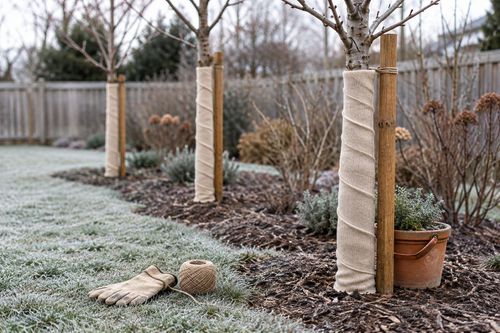
- Wrap the trunk starting at the bottom, spiraling upward with a 1-inch overlap on each pass, keeping it snug but never tight. The overlap sheds water and the looseness lets the bark breathe and expand as the tree grows.
- Secure the top with twine or a loose zip tie. A secure top stops wind from unwinding the wrap, while a loose fit won't girdle the trunk as it swells.
- Cage the base with a cylinder of hardware cloth, pressed 2 inches into the soil and standing about 24 inches tall, leaving a finger's width of space around the trunk. Mice can chew through plastic but not metal mesh.
- Mulch around the base with 2 inches of wood chips, keeping them 3 inches away from the trunk. Mulch insulates the roots, while the gap prevents moist bark and hiding spots for voles.
Orchardists in cold-climate fruit regions wrap or whitewash only the south and southwest sides of the trunk, because that's where the afternoon sun hits hardest. Check your tree at 3 p.m. on a sunny winter day and note which side is warmest, then make sure that side gets the extra overlap. Remove the wrap in early spring once nighttime lows stay above freezing.