Under-Bed Reset: Lidded Bins Change Everything
Items stored loose under a bed sit in direct contact with the dust that space naturally accumulates — a sealed lid isn't about tidiness, it's the actual barrier between your stored belongings and the dust settling on everything nearby.
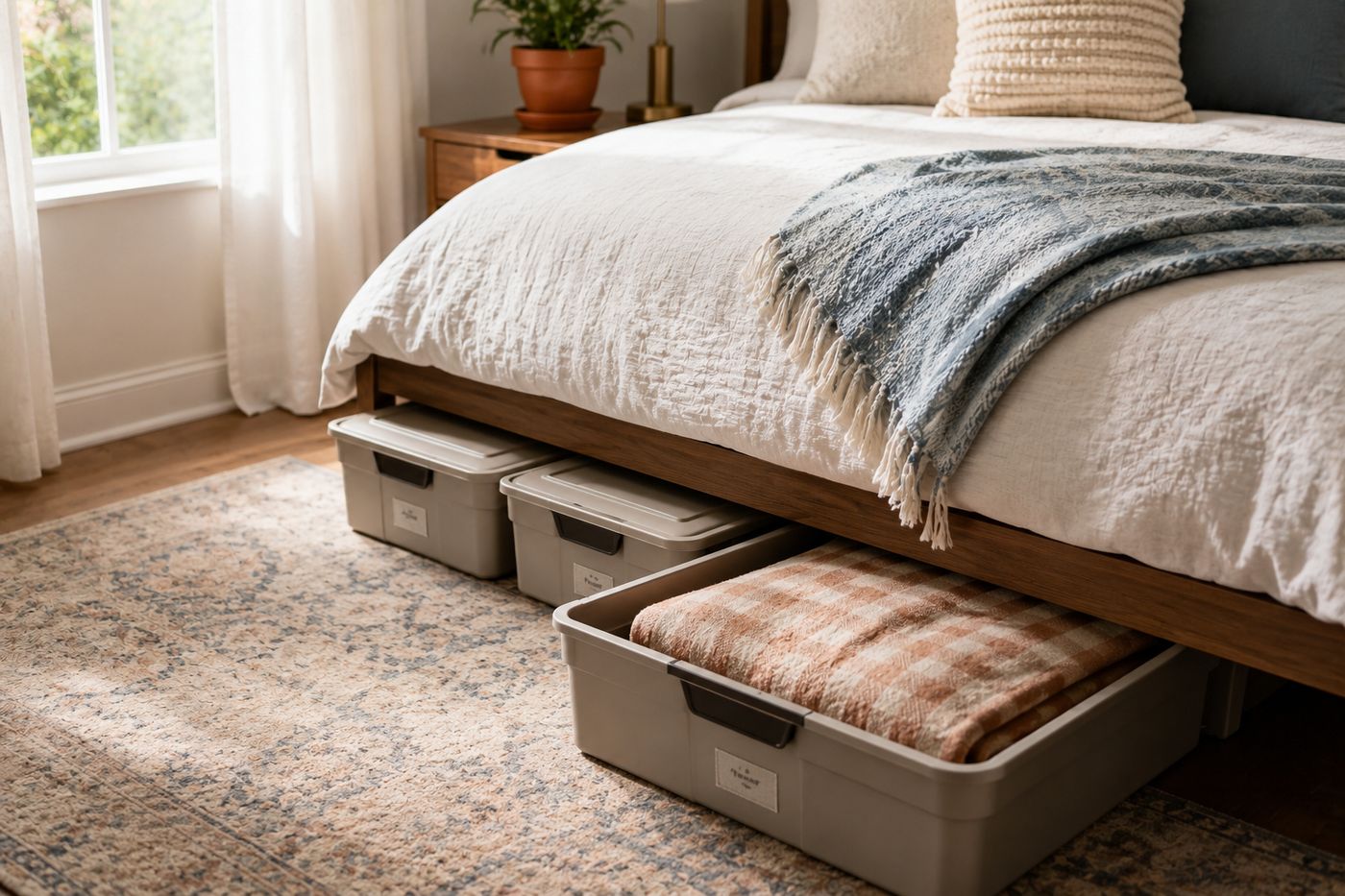
The space under a bed collects an unusual amount of dust compared to open floor elsewhere in a room, since low airflow and infrequent disturbance let it settle and build up undisturbed, and anything stored loose or in an open box down there sits in direct contact with that accumulation the entire time it's stored. That's the actual reason lidded bins matter more here than in almost any other storage spot in a house — a sealed container is a physical barrier between your folded linens or off-season clothes and the dust actively settling around them, while an open bin or bare items just accumulate that dust right alongside whatever's stored. The organizing and labeling makes the space easier to use, but the sealed lid is what keeps what comes back out from under the bed as clean as it was going in, which matters more for allergy-sensitive households than it might initially seem. Vacuum-sealing bulky bedding takes that same principle further, both compressing volume and sealing out dust in one step. The whole reset takes about 20 minutes.
What You'll Need
- Flat, lidded under-bed storage bins, sized to your bed's clearance
- Vacuum storage bags (optional), for bulky bedding or seasonal clothes
- Labels or masking tape and marker
- Vacuum or broom, for the exposed floor
- A donation box
- A trash bag
How to Do It
- Pull everything out from under the bed completely, so you can see exactly what's been accumulating there.
- Sort each item quickly into keep, donate, relocate, or trash as you handle it, being honest about anything that was clearly shoved under there and forgotten.
- Vacuum or sweep the exposed floor thoroughly, since this area accumulates a genuinely surprising amount of dust that can affect air quality and allergies for anyone sleeping in the room.
- Decide what actually deserves this prime, hard-to-reach storage spot — off-season clothing, extra linens, shoes, or seasonal decor are strong candidates, while everyday items you need frequent access to generally aren't.
- Place your keepers into flat, lidded storage bins rather than loose boxes or bags — the sealed lid is what actually keeps dust from settling directly onto stored items during their time under the bed.
- Vacuum-seal any bulky bedding or seasonal clothing to compress it flat and add an extra layer of dust protection.
- Label each bin clearly so contents are identifiable without opening every one to check.
- Slide the organized, labeled bins back under the bed, leaving a little breathing room rather than packing the space completely full.
Professional organizers who tackle under-bed storage regularly often choose bins with wheels or built-in handles specifically for this spot, rather than plain flat containers, since the low clearance and awkward reach under a bed frame makes sliding a wheeled or handled bin out for access noticeably easier than dragging a handle-free box across carpet or flooring.