Toilet Troubles: Two Problems, Two Different Culprits
A running toilet and a weak flush might feel like the same general "toilet trouble," but they're caused by completely different parts failing in completely different ways — fixing one never touches the other.
A running toilet and a weak flush get grouped together as generic "toilet problems," but they actually come from two unrelated systems failing separately — a running toilet is almost always a sealing problem at the flapper, letting tank water leak into the bowl and trigger the fill valve over and over, while a weak flush is a delivery problem, mineral deposits clogging the small rinse holes under the rim that the water needs to pass through to actually clean the bowl with force. Because they're separate systems, fixing the flapper does absolutely nothing for clogged rinse holes, and clearing rinse holes does nothing for a leaking flapper — treating them as one problem means you might fix half the issue and assume the whole toilet is repaired when the other half is still quietly wasting water or leaving a weak flush. Diagnosing which one you actually have, running water sound versus a flush that doesn't clear the bowl properly, determines which fix to reach for first. Both repairs are genuinely simple once correctly identified, cost $5-8 or less, and take about 20-30 minutes combined.
What You'll Need
- Universal replacement flapper — about $5-8
- Small mirror, for viewing under the bowl rim
- Bent wire or small stiff brush, for clearing rinse holes
- White vinegar, for dissolving mineral buildup
- Paper towels, for soaking stubborn buildup under the rim
- Adjustable wrench or pliers (if needed for the supply valve)
How to Do It
- Identify which problem you actually have first — a constant running or refilling sound points to the flapper, while a bowl that doesn't fully clear or feels weak during flushing points to clogged rinse holes — since the two require completely different fixes.
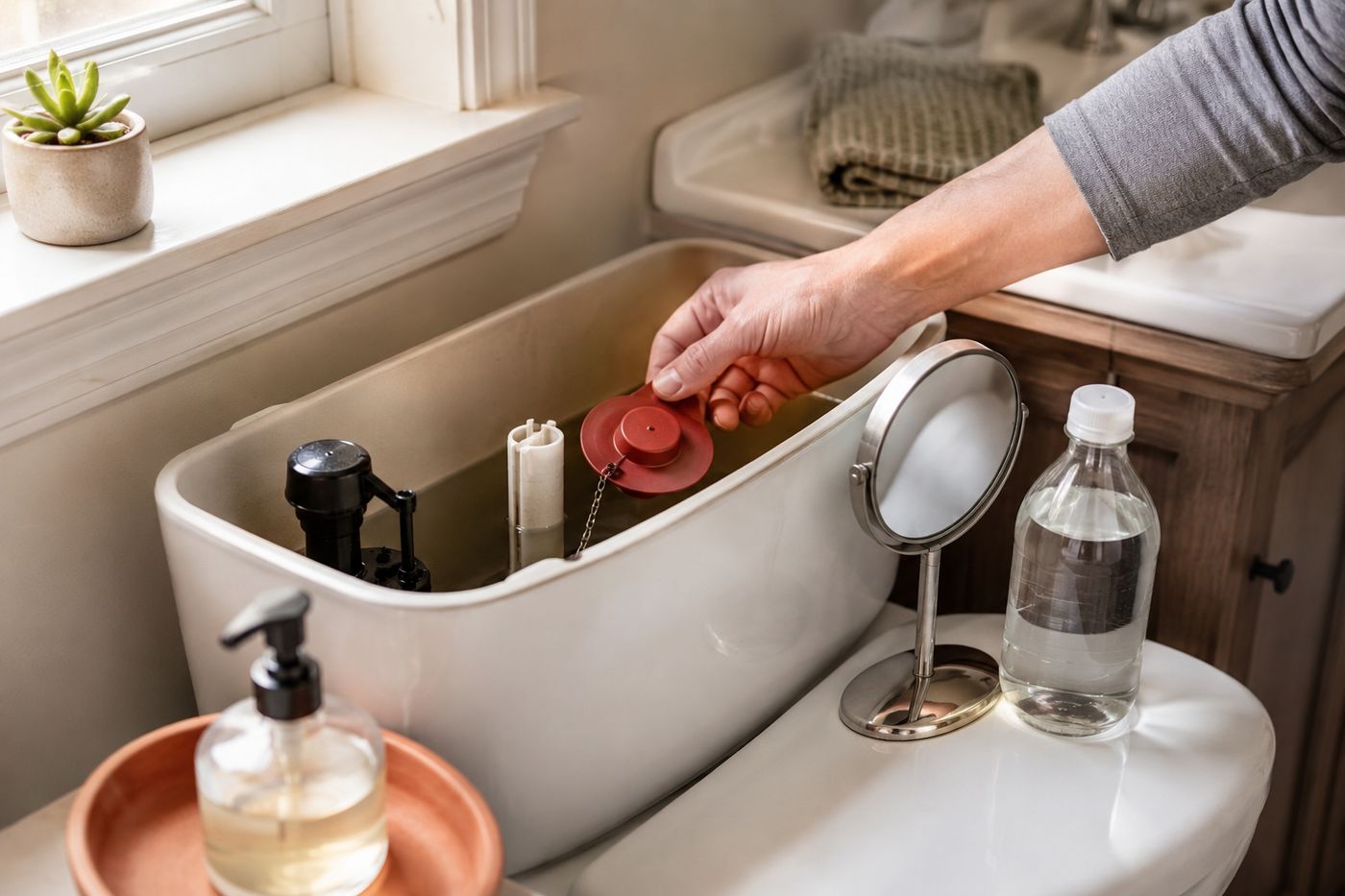
- For a running toilet: remove the tank lid and observe the flapper, checking whether it looks warped, stiff, or coated in mineral buildup.
- Turn off the supply valve and flush to empty the tank before removing anything.
- Unhook the old flapper and install a new universal one, then adjust the chain length so there's just a little slack — too long and it catches under the flapper, too short and it holds the flapper open.
- Check whether water is spilling into the overflow tube, and lower the float if so to reduce the fill level.
- For a weak flush: use a small mirror to look under the bowl rim and spot mineral deposits blocking the rinse holes.
- Clear each blocked hole with a bent wire or a small brush dipped in vinegar, working through every hole around the rim rather than just the most visibly clogged ones.
- Soak vinegar-dampened paper towels pressed under the rim for an hour on stubborn buildup, then scrub, and check that the tank fills to the proper water line, adjusting the float upward if the level is too low for a strong flush.
Plumbers who handle routine toilet maintenance calls often recommend replacing the flapper on a fixed schedule, roughly every five years, rather than waiting for a running toilet to develop, since rubber flappers degrade gradually from constant water exposure and a proactive swap avoids the water waste that happens during the weeks or months a slowly failing flapper often goes unnoticed before someone catches the sound.