
T-Shirt Rags: Free Cloths, No Sewing Required
A cotton t-shirt makes a better cleaning cloth than a paper towel for one specific mechanical reason — the knit structure grabs dust instead of pushing it around, and cutting with that structure instead of against it is what actually matters here.
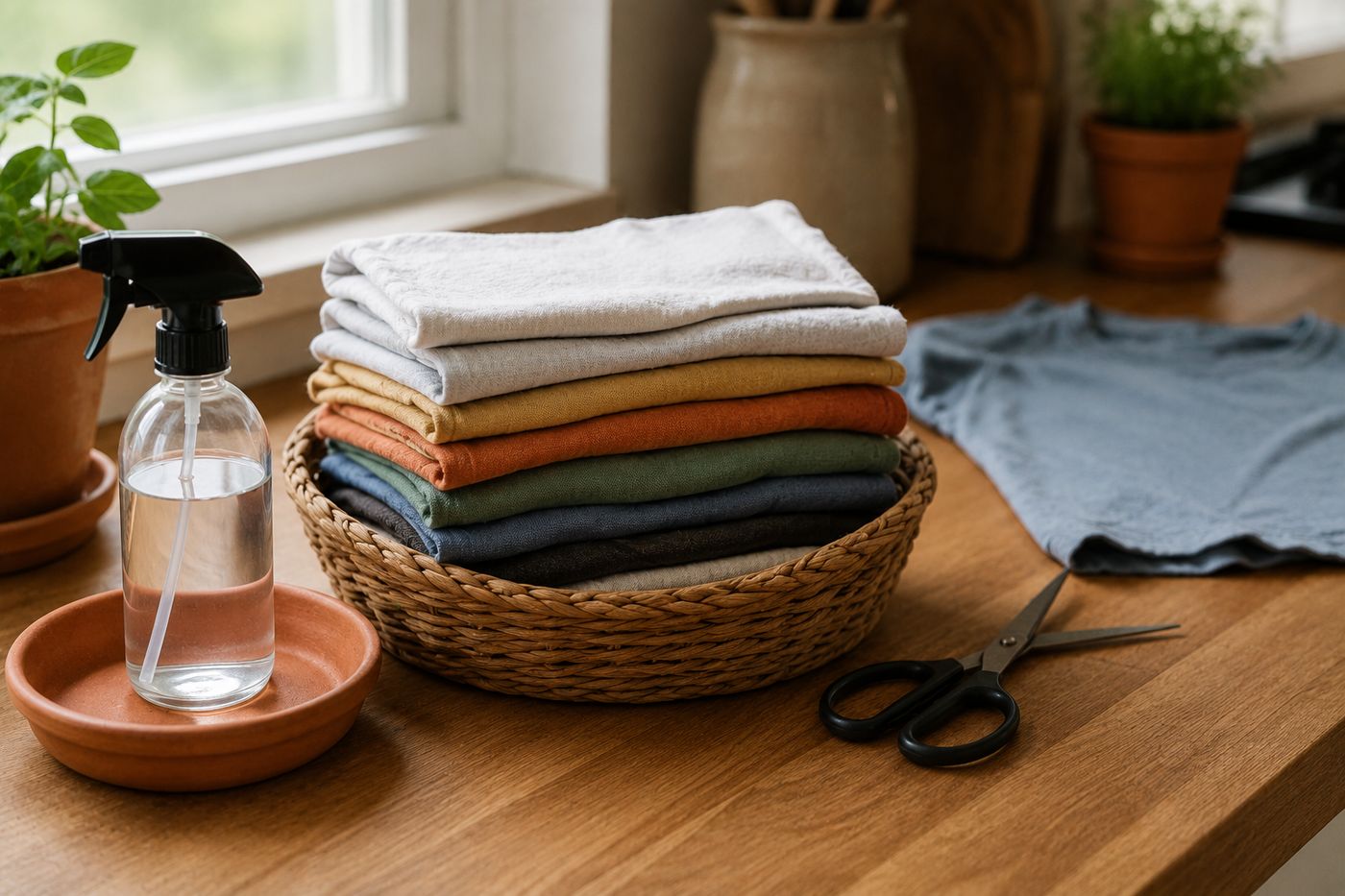
A paper towel's fibers are pressed flat and bonded together, so it mostly moves dust from one spot to another rather than actually trapping it, while a cotton t-shirt's knit structure has texture and slight stretch that catches dust and grabs onto grime instead of sliding across it. That's the actual mechanical reason old t-shirts outperform paper towels for most cleaning tasks, not just that they're free and reusable. The one detail that determines whether the cloths hold up to repeated washing is cutting them into simple squares or rectangles from the flat body of the shirt rather than trying to preserve seams, sleeves, or the neckline — those thicker, multi-layered areas fray and pill differently than the single-layer knit body, so a rag with a seam running through it wears unevenly compared to a clean square cut from open fabric. Skip the seams and hems, and a single old t-shirt turns into a stack of durable rags in about 15 minutes, for free.
What You'll Need
- Old cotton t-shirts, worn or stained enough to retire from regular wear — free, already owned
- Scissors or a rotary cutter
- Ruler or straight edge (optional), for consistent square sizing
- A bin or basket, for storing the finished rags
How to Do It
- Lay the t-shirt flat on a table or cutting surface, smoothing out any wrinkles so your cuts stay straight.
- Cut off the sleeves, collar, and any hemmed edges first and set them aside — these thicker, seamed sections wear differently than the flat body fabric, so keeping them separate (or setting them aside for other uses) gives you a cleaner working piece.
- Cut the remaining front and back panels into squares or rectangles roughly 12x12 inches, adjusting the size based on what feels useful for your typical cleaning tasks.
- Avoid cutting directly through any remaining seam lines when possible, since a rag with a seam through the middle tends to fray unevenly compared to a single flat piece of knit fabric.
- Stack the finished squares as you go, sorting by size if you're cutting from multiple shirts of different fabric weights.
- Repeat with additional shirts until you've built up the supply you want — a single shirt typically yields somewhere between four and eight usable rags depending on size.
- Store the rags in a bin or basket somewhere accessible, like under the kitchen sink or in a laundry closet, so they're grabbed as easily as a roll of paper towels would be.
People who fully replace paper towels with cloth rags at home often keep a designated "dirty" bin right next to the "clean" rag basket, rather than tossing used rags directly into the general laundry hamper, since cleaning rags — especially ones used for bathrooms or greasy kitchen messes — often need a separate hot wash cycle rather than getting mixed in with regular clothes. Keeping that separation from day one is what actually makes the system sustainable long-term instead of something that quietly falls apart after a few weeks.