Spice Cabinet Fix: Tiered Shelves End the Digging
The reason you keep buying duplicate spices isn't disorganization — it's that you literally can't see the jars you already own, and one $18 fix changes that permanently.
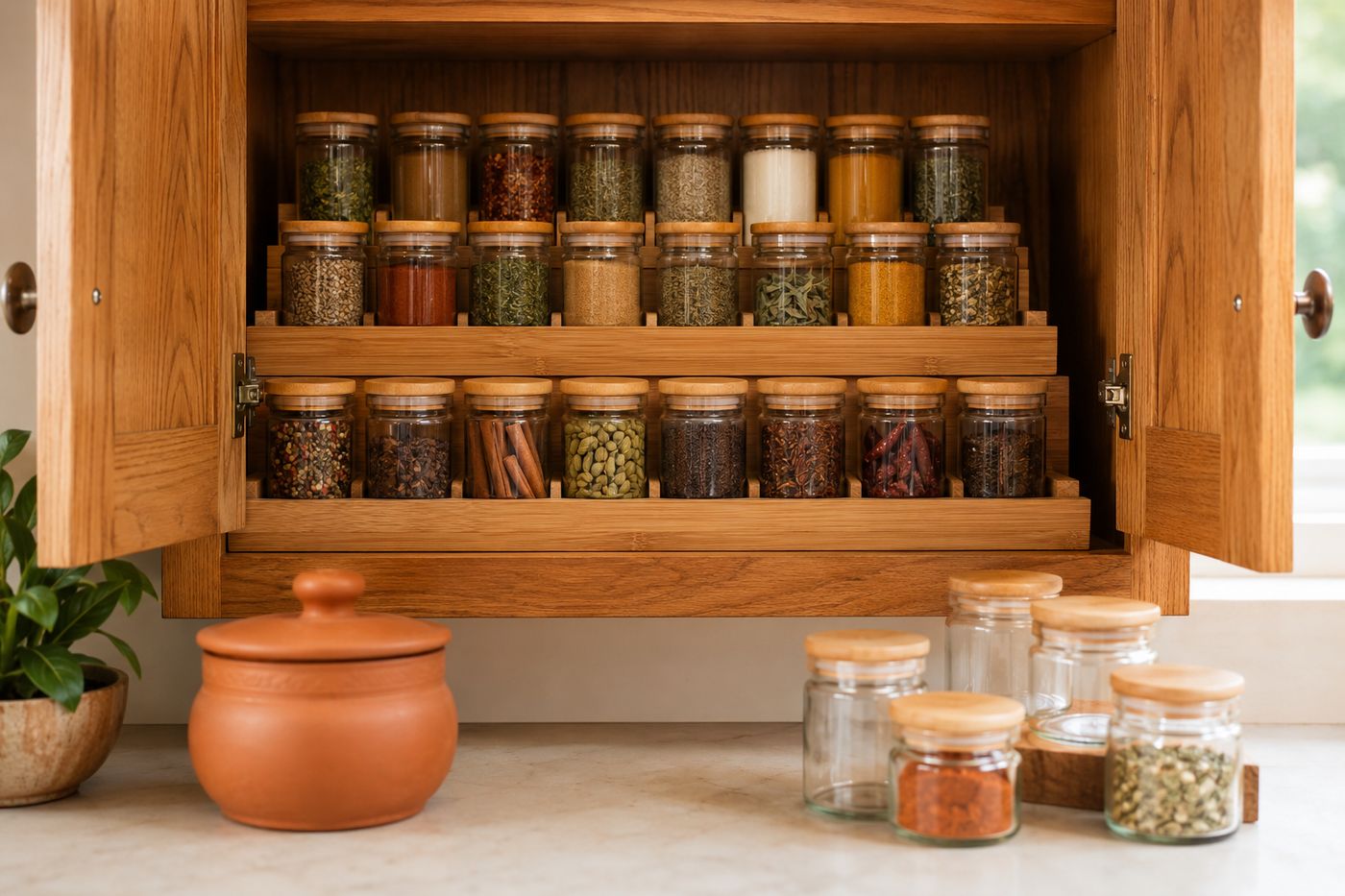
A spice cabinet with every jar sitting at the same height creates an inherent visibility problem: front-row jars physically block the labels of everything behind them, so every search becomes an excavation regardless of how carefully the cabinet was organized to begin with. The distinction between a spice cabinet that stays organized and one that resets to chaos within weeks isn't sorting or labeling — it's height. Tiered shelving raises the back row two to three inches above the front row, which puts every label at a different eye level and eliminates the physical blocking problem at its root instead of just rearranging jars around it. Once every jar is visible without moving anything, duplicate-buying stops on its own, because the reason for a fourth jar of cumin was never disorganization — it was literally not being able to see the three you already owned. An $18 shelf riser set solves that actual mechanical problem in about an hour, while alphabetizing and relabeling just make the now-visible system pleasant to look at.
What You'll Need
- Two tiered bamboo (or metal) shelf risers sized to your cabinet width — about $18 for a two-pack
- Uniform small glass or plastic spice jars to replace mismatched containers — about $8 for a set of 12-16
- Paint pen or chalk marker for labeling jar lids or fronts
- Damp cloth for wiping down shelves before reloading
- Trash bag for the expiration date audit — you'll need it
- A flat surface nearby (counter or table) to hold everything while you sort
How to Do It
- Empty the entire cabinet onto your counter or table so you can see every spice you own at once — this is the only way the duplicate audit and expiration check actually work, since half of both problems are hidden by the cabinet's poor visibility in the first place.
- Check the expiration date on every jar as you pull it out, and set aside anything expired without a second thought — ground spices lose potency fast, and a spice that's been sitting for years past its date is diluting your cooking even if it isn't spoiled.
- Consolidate duplicates into a single jar per spice, combining contents where freshness allows, and discard the empty containers.
- Wipe down the empty cabinet shelves before placing anything back in.
- Install the tiered risers toward the back of each shelf, checking that the front tier doesn't block the sightline to the raised back tier at your typical viewing angle.
- Sort spices into categories — baking, savory herbs, blends — and group each category together rather than scattering by size or shape.
- Transfer anything in a mismatched or clunky container into a uniform jar, which matters more for visibility than aesthetics: uniform jar heights keep the tiered risers working as intended instead of tall outliers blocking the tier behind them.
- Label every jar lid or front with a paint pen, then load everything back onto the risers by category, front row and back row both fully visible at a glance.
Professional kitchen organizers rarely alphabetize a full spice collection start to finish, because it forces you to memorize where one specific spice sits in a long unbroken sequence. Instead, they group by category first — baking, savory, blends — and alphabetize only within each small group. That way you're navigating to "the baking section, then B" instead of scanning fifty jars in a single alphabetical line, which is faster in practice even though it looks less rigidly organized on the shelf.