Shoe Organizer Herb Wall: 30 Plants, One Fence Spot
Loosely packed soil is the reason most fabric pocket planters fail within weeks — the fix isn't the plants or the pockets, it's how firmly you pack the soil around each root ball before you ever water.
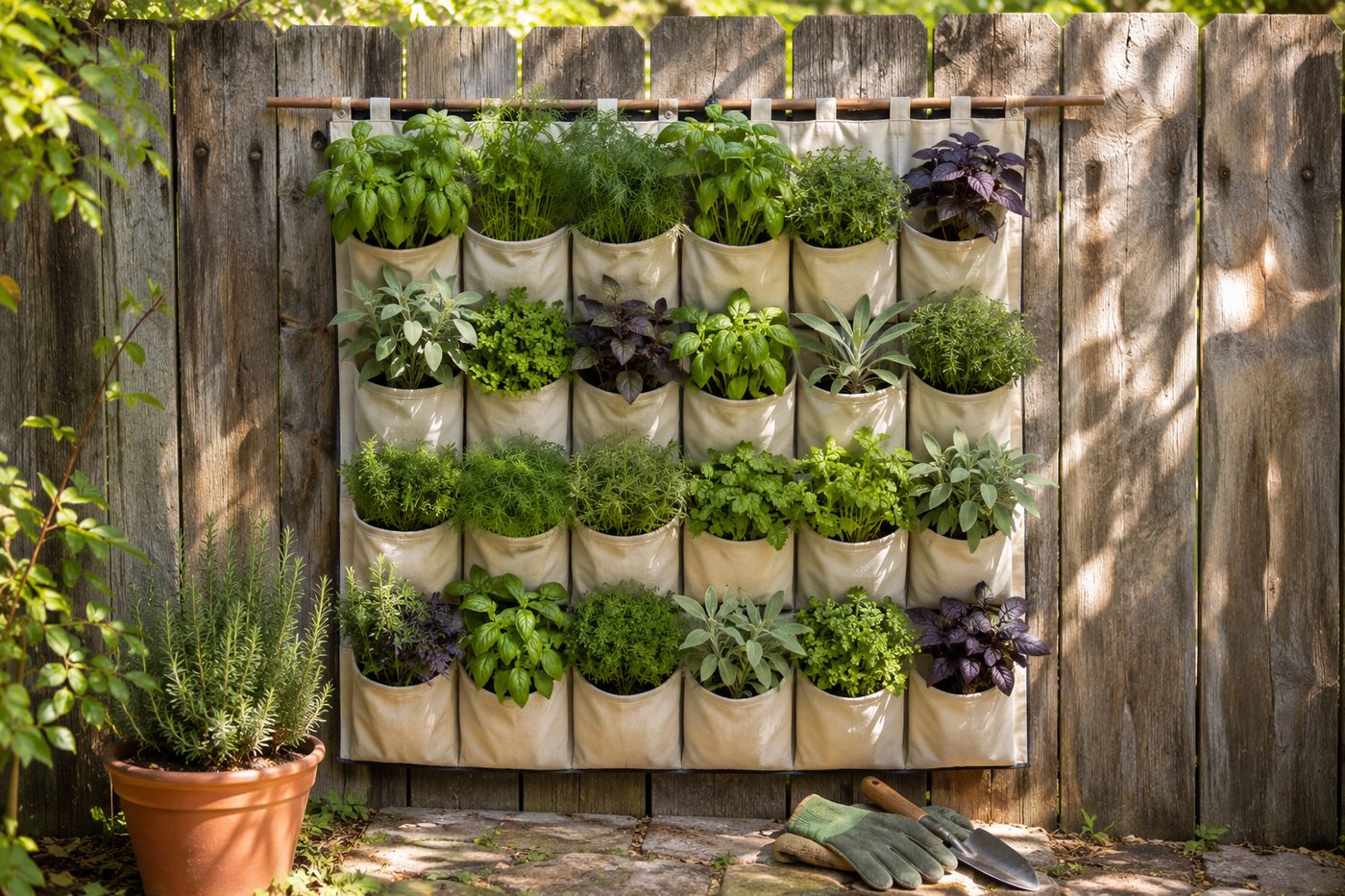
A fabric shoe organizer pocket is a small, shallow growing space with no rigid structure holding the soil in place, which means a loosely filled pocket shifts every time it's watered, exposing roots and eventually working the plant loose entirely. The distinction between an herb wall that thrives for a full season and one that fails within a couple of weeks comes down to packing density: soil pressed firmly around the root ball, with extra soil packed into the sides of the pocket, creates enough structure that watering doesn't disturb the plant's position at all. Skip that packing step and gravity plus regular watering will slowly work every plant loose regardless of how carefully it was planted. The fabric's natural weave already solves the drainage half of the equation on its own, so packing density is really the only variable that determines success here. Thirty herb plants across a $4 dollar-store organizer, plus potting mix and starts, runs about $16 total and takes roughly 45 minutes to plant and hang.
What You'll Need
- Fabric over-the-door shoe organizer, with individual pockets — about $4 at a dollar store
- Bag of potting mix — about $6
- Flat of herb starts, enough to fill your pockets — about $6, mixing varieties like basil, Thai basil, dill, and sage
- Tension rod or fence/wall hook, for hanging
- Small trowel or scoop, for filling pockets
- Watering can
How to Do It
- Lay the shoe organizer flat on the ground or a table before planting, which makes packing each pocket far easier than trying to fill it while it's already hanging vertically.
- Fill each pocket about two-thirds full with potting mix, leaving enough room for the root ball without overfilling to the very top edge.
- Tuck the root ball of an herb start firmly into the soil in each pocket, centering it so roots have even soil contact on all sides.
- Pack additional soil firmly around the sides of each root ball — this is the step that actually determines whether the plant stays put through repeated watering, so don't rush it or leave the soil loose.
- Plan your layout as you plant, alternating textures and colors — feathery dill next to broad basil leaves, purple Thai basil against silver-green sage — so the finished wall reads as a deliberate design rather than a random fill.
- Continue filling every pocket the same way until the organizer is fully planted.
- Hang the organizer using a tension rod across a fence gap or a hook mounted to a wall or fence post, checking that it hangs flat and secure before watering.
- Water thoroughly once hanging, letting excess drain naturally through the fabric weave — this drainage happens on its own, so there's no need to punch extra holes or add drainage material.
Market gardeners who grow herbs in tight vertical spaces often plant the bottom rows with herbs that tolerate more shade and moisture, like mint and parsley, and save the top rows for sun-loving, drought-tolerant herbs like rosemary and thyme, since a vertical wall naturally gets less light and more residual moisture near the bottom. Matching each herb to its row position based on that light and moisture gradient, rather than planting by color alone, is what keeps every plant thriving instead of just the top half of the wall.