Fix Wobbly Furniture: Steady Solutions for Shaky Pieces
Transform unstable furniture into rock-solid pieces using simple tools and techniques
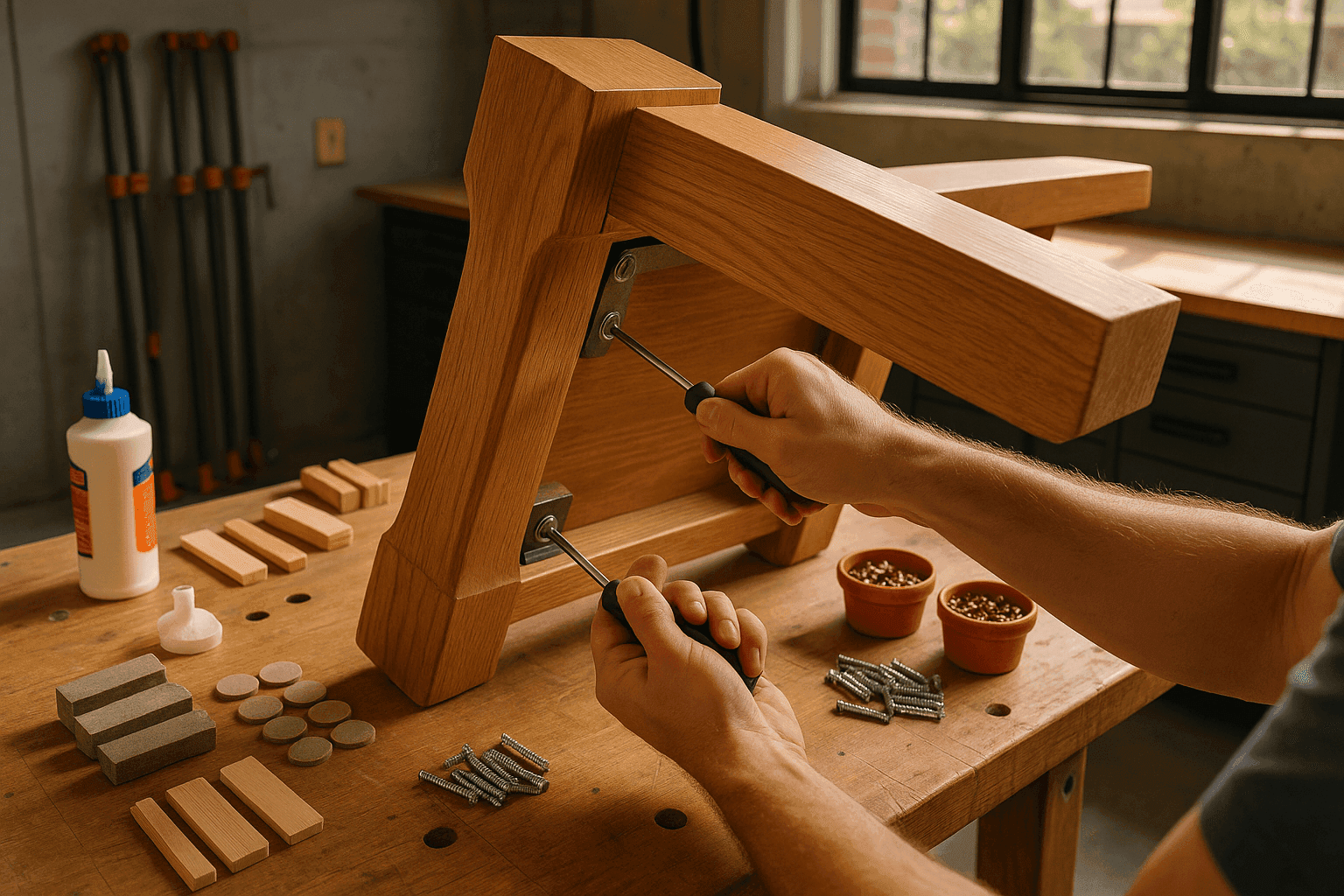
Wobbly furniture is one of those daily annoyances that gradually drives you crazy – the dining chair that rocks during meals, the table that makes your coffee cup dance, or the desk that shakes every time you write. The good news is that most furniture stability issues have surprisingly simple solutions that take minutes to implement and cost almost nothing to fix permanently. Whether the problem stems from loose screws, uneven legs, or worn joints, basic tools and materials can restore your furniture to rock-solid stability that makes it feel brand new again. Learning these fundamental repair techniques saves money on furniture replacement while extending the life of pieces you love, turning frustrating daily wobbles into forgotten problems that stay fixed for years to come.
Repair Materials
- Basic Hardware: Replacement screws in various lengths, wood screws for reinforcement, washers for better grip
- Leveling Solutions: Felt pads in multiple thicknesses, wooden shims, adjustable furniture glides
- Joint Repair: Wood glue for loose connections, wood filler for stripped screw holes, sandpaper for surface prep
- Tools Required: Screwdriver set, drill with bits, level for checking alignment, pliers for hardware removal
- Reinforcement Items: Corner braces for extra stability, metal brackets for permanent fixes, rubber bumpers
Stabilization Process
- Diagnose the wobble source by checking if it's loose hardware, uneven legs, or worn joints
- Tighten all visible screws and bolts, replacing any that are stripped or damaged with slightly larger sizes
- Check leg heights using a level, identifying which legs need adjustment or padding
- Add felt pads or wooden shims under short legs to eliminate rocking motion completely
- Apply wood glue to loose joints, clamping if possible and allowing full cure time for permanent bonds
- Reinforce weak corners with metal brackets or wooden braces attached from underneath
- Fill stripped screw holes with wood filler, allowing to dry before re-drilling proper-sized pilot holes
- Test stability after each fix, making fine adjustments until the furniture sits perfectly steady
Professional furniture repairers always address the root cause rather than just the symptoms – if one leg is consistently short, measure all legs to determine if the floor is uneven or if the furniture itself has a structural issue. For chairs that wobble due to loose joints, inject wood glue directly into the joint using a syringe for better penetration without disassembly. The secret to lasting repairs is using slightly longer screws than the originals when possible, as they grab fresh wood and create stronger connections that won't loosen as quickly over time.