Drop Zone Reset: Garage Entry in 20 Minutes
Every item gets a designated home, the floor gets swept, and the chaos that accumulates at the most-used door in your house stops migrating into the rest of it.
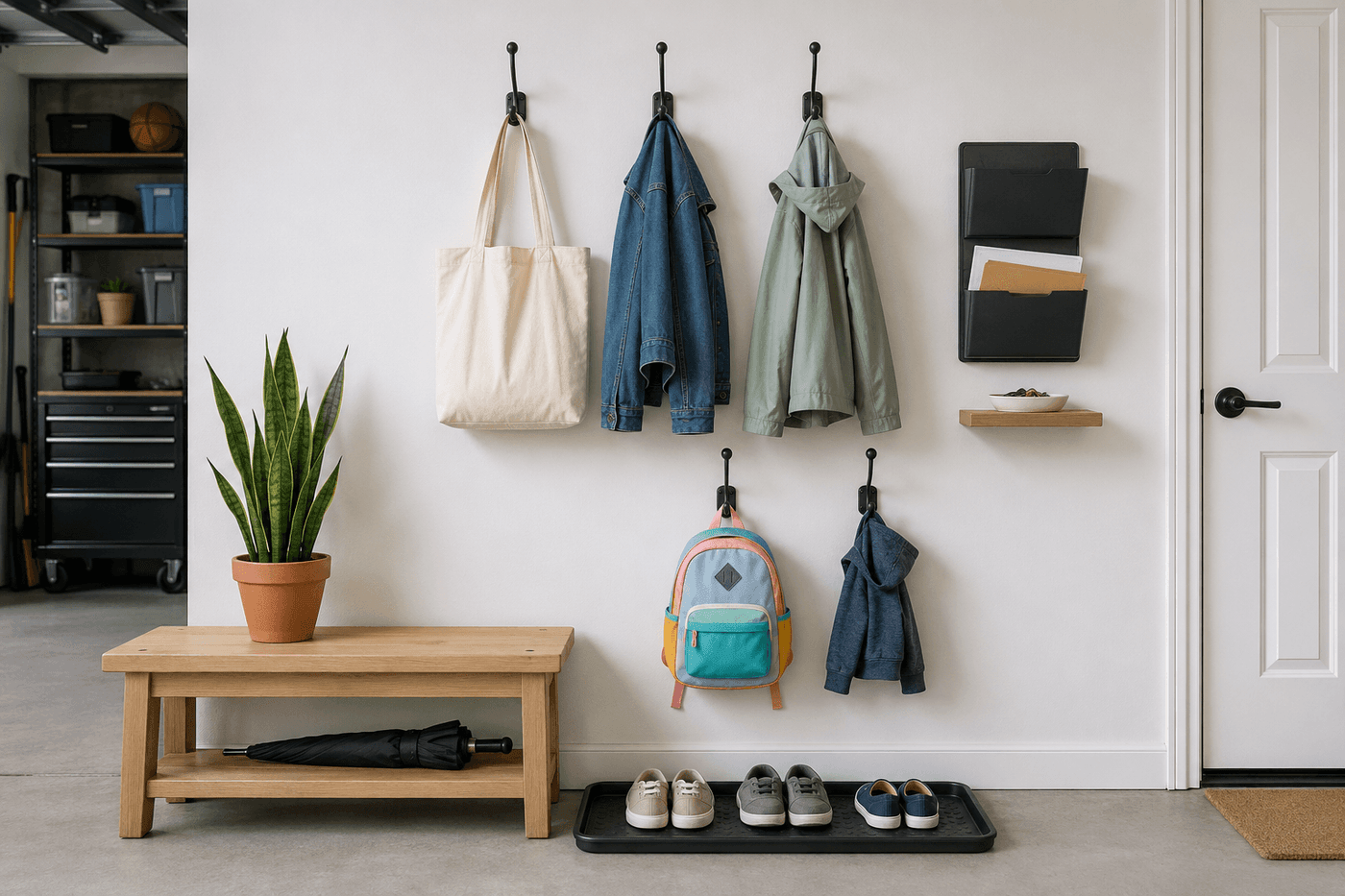
The garage entry is the most honest room in any house — it shows exactly what the household's daily coming-and-going rhythm actually looks like rather than how anyone intends it to look, and the gap between those two things is usually measured in piles of shoes, unread mail, misplaced keys, and backpacks dropped exactly where someone stopped walking. A functional drop zone does not eliminate this accumulation — it channels it. Every item that lands at the garage entry has a designated spot to land in rather than a flat surface to pile onto, and the difference between those two situations is whether the clutter stays contained at the entry or gradually migrates through the house until every flat surface has a layer of garage-entry overflow on it. Twenty minutes of sorting, wiping, sweeping, and returning misplaced items to their correct homes resets the space completely, and the weekly Sunday cadence is the maintenance interval that keeps a properly set-up drop zone from ever reaching the state that requires a bigger intervention. The systems — hooks, boot tray, key dish, mail basket — do the organizational work between resets; the weekly 20 minutes simply returns everything to the system it drifted away from during the week.
What You'll Need
- Wall hooks, heavy-duty — one per family member plus two to three extras for guests; mount at two heights — adult height (60–66 inches) for bags and jackets, child height (42–48 inches) for backpacks and small coats; the correct height means items actually get hung rather than dropped on the floor below the hook (~$8–15 for a row of hooks)
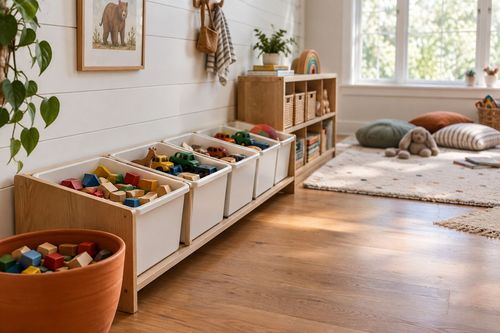
- Boot tray or individual shoe bins — a single large boot tray handles wet weather shoes for the full family; individual fabric bins (one per family member) work better for dry-season shoe management and allow each person to find their own shoes without excavating a communal pile; both options keep shoes off the bare floor where they spread dirt and become trip hazards (~$10–20)
- Small key dish or wall-mounted key hooks — the most critical single item in a functional drop zone; keys without a designated landing spot migrate to every flat surface in the house; a ceramic dish at arm height beside the door or a wall-mounted key hook strip eliminates the morning key search that starts every day with frustration (~$5–15)
- Mail basket or wall pocket organizer — one basket for incoming mail that needs action and one for outgoing items (returns, library books, items leaving the house); wall-mounted pockets keep these off the flat surfaces where mail piles develop; label both clearly so other household members use them correctly (~$10–15)
- Small bench or step stool — makes shoe removal significantly easier and provides a surface that keeps shoe-removing activity contained rather than spreading across the entry floor; a bench with storage underneath doubles as a shoe container (~$25–60 for a basic storage bench)
- Broom and dustpan or handheld vacuum — for the floor sweep that is the single most immediately impactful visual improvement in any drop zone reset; garage entry floors accumulate dirt, gravel, and debris faster than any other floor in the house
- All-purpose cleaner and microfiber cloth — for wiping the bench surface, hook area wall, and any shelving surfaces where dust and grime accumulate between weekly resets
- Waterproof labels or label maker — for labeling each hook, bin, and basket so every family member returns items to the correct location independently; unlabeled systems default to the nearest available space regardless of intended use
The Reset Sequence
- Clear every surface and the floor completely before sorting or cleaning anything — pull every item out of the drop zone area into a temporary holding pile, which gives you a clear visual of both the full scope of what has accumulated and the actual surface area of the space that needs wiping and sweeping. Working around accumulated items rather than removing them first means cleaning only the visible portions of surfaces and missing the dirt and debris that items were covering.
- Sort the cleared pile into four categories before returning anything to the zone — items that belong in the drop zone and will be returned to their designated spots, items that belong elsewhere in the house and need to be relocated right now rather than in a future trip, items that need to leave the house entirely (outgoing mail, returns, donations), and obvious trash. The relocation step is the one most people skip by putting misplaced items back in the drop zone for convenience, which is exactly how the zone accumulates items that have no designated home there and gradually fills beyond its intended capacity.
- Relocate the misplaced items to their correct homes in the house before doing any cleaning — taking the stack of items that belong elsewhere to their proper locations now rather than after the drop zone is reset prevents the cleaned zone from immediately accumulating the relocated pile that often gets set down "just for a moment" and stays for another week.
- Sweep the floor thoroughly, working from the back of the zone toward the entry door so debris moves toward the garage rather than further into the house — garage entry floors accumulate dirt, gravel, and organic debris faster than any other interior floor surface, and the sweep is the visual reset step that makes the biggest immediate difference in how the space reads. Follow with a damp mop pass on any sticky spots or dried mud that the broom loosened but did not remove.
- Wipe all surfaces in a single pass — the bench top, the wall area around hooks where hands make contact, any shelving surfaces, and the key dish or mail basket interiors. A single damp microfiber cloth with all-purpose cleaner handles all of these surfaces without needing to switch products; working from the highest surface downward means any drips or crumbs fall onto surfaces not yet cleaned rather than onto already-cleaned ones.
- Return drop zone items to their designated spots in the correct system positions — shoes to boot tray or individual bins in matched pairs, bags and jackets to their assigned hooks, keys to the key dish, mail sorted into incoming or outgoing basket. Return items to the correct position rather than the nearest available space, because the system works only when every item occupies its assigned location and creating even one exception establishes a precedent that household members follow consistently.
- Address any system failures revealed by the reset — a hook that consistently holds items belonging to a different category, a bin that is always overflowing, a surface that consistently accumulates items with no designated home. The weekly reset is the diagnostic that shows where the system needs adjustment; a hook in the wrong position, a bin that is the wrong size, or a category without a designated spot all show up as consistent problem points across multiple weekly resets and are worth addressing with a small system adjustment rather than managing as a recurring reset challenge.
- Set a weekly recurring reminder for Sunday drop zone reset — the system that works is the one with a maintenance cadence short enough that disorder never accumulates to the overwhelming level, and the 20-minute weekly reset interval is specifically calibrated to the speed at which a household drop zone accumulates drift in normal daily use. A reset that happens every week takes 20 minutes; the same reset deferred to every month takes an hour and feels like a project rather than maintenance, which is the perception that causes the monthly reset to be deferred to never.
Professional organizers who design functional entry systems for residential clients consistently identify one drop zone design principle that determines whether a system is maintained by the household or quietly abandoned within three weeks: the system must require less effort to use correctly than to use incorrectly. A hook that requires a slight reach is used less consistently than one at perfect arm height; a shoe bin that requires a lid to be lifted is used less consistently than an open-top bin; a mail basket that requires relocating other items to access is used less consistently than one with clear, unobstructed access from the direction of approach. Professional organizers call this "friction audit" — systematically identifying every point in the system where the correct behavior requires more physical effort than the incorrect behavior (dropping on the floor, setting on the bench, leaving in the bag) and eliminating or reducing that friction until the correct behavior is the path of least resistance. A drop zone system that passes the friction audit gets used automatically without anyone thinking about organization; a system with friction points gets used intentionally for one week and then abandoned as daily momentum overrides organizational intention.