Spoon Fed: Make Charming Garden Markers for $5
Dollar store spoons plus a paint pen equals the most charming — and cheapest — garden markers your vegetable beds have ever seen
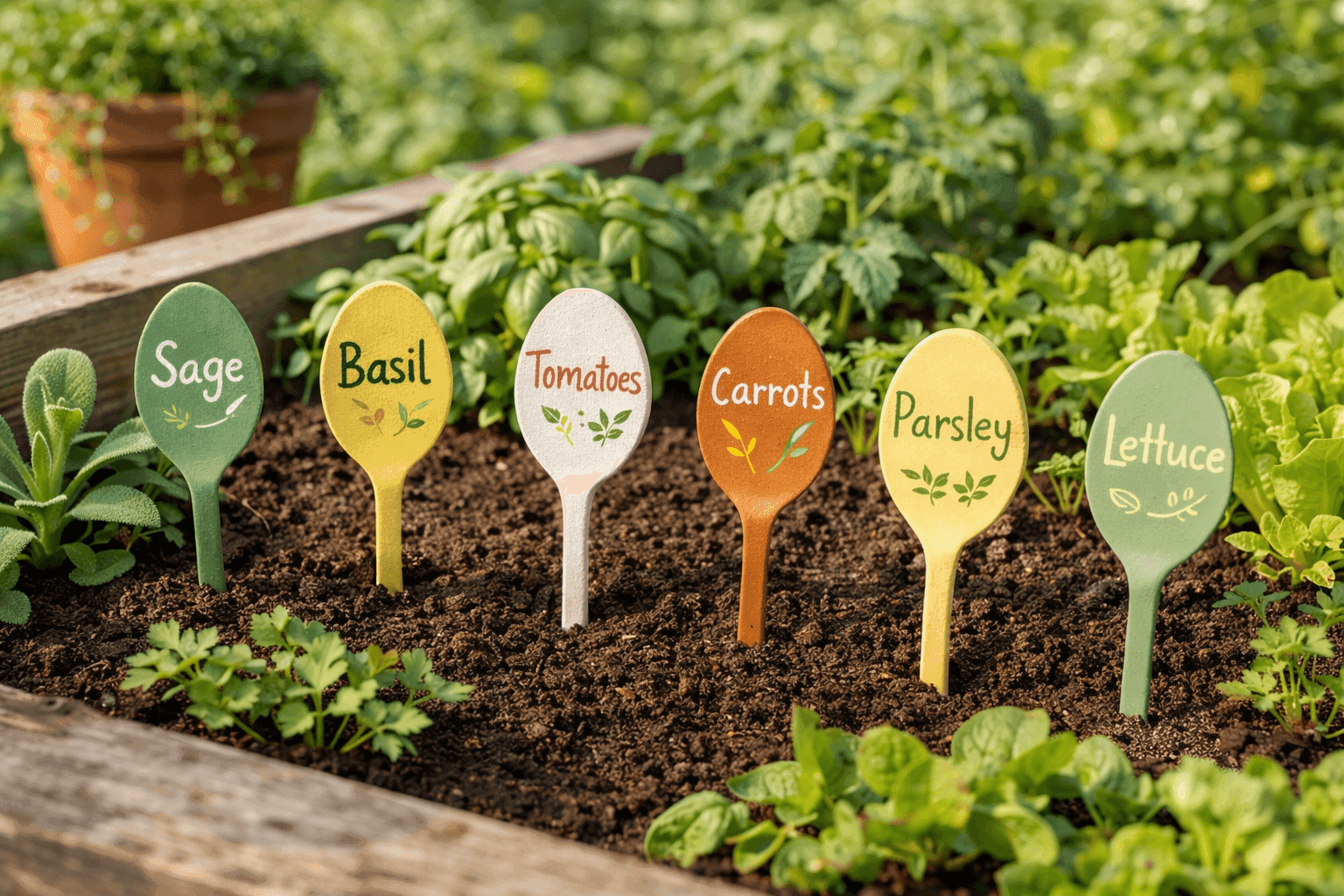
Every gardener has stood in front of a row of seedlings that all look identical and felt that sinking "which one is which?" panic — and the usual solution is a plastic stick with barely legible permanent marker that fades by July and snaps off by August. These dollar store spoon markers solve that problem completely, cost about 25 cents each, and look so intentionally charming that people actually ask where you bought them. A pack of dollar store spoons, a few colors of outdoor acrylic paint, and a paint pen is genuinely all you need to make 15–20 markers for your entire vegetable garden for under $5 total. They're sturdy enough to stay put through a full growing season, easy enough to make in a single sitting while watching TV, and thoughtful enough to give as gifts to every gardener you know. This is the Thrifty Tuesday project that proves the best garden accessories don't come from a boutique catalog — they come from the dollar store and thirty minutes of your time.
What You'll Need
- The Spoons
- Metal spoons from the dollar store — a pack of 6–8 utensils runs about $1.25 and gives you enough spoons for a full raised bed with handles long enough to push firmly into soil
- Wooden craft spoons are an excellent alternative — they take paint beautifully, cost even less, and have a naturally rustic look that works especially well in cottage-style gardens
- Plastic spoons work too and are the cheapest option, but they can become brittle in strong sun after a full season — use them for indoor herb pots where UV exposure is minimal
- Paint & Color
- Outdoor acrylic craft paint in 3–4 base colors for the spoon bowls — soft sage, butter yellow, terra cotta, and white make a beautiful coordinated set — ~$1–$2 per bottle at craft stores, one bottle covers many spoons
- Paint pen or fine-tip paint marker in black or white for writing plant names — a Posca paint marker or Sharpie Oil-Based paint pen both work reliably — ~$2–$4 each
- Fine detail brush for anyone who wants to add tiny illustrations — a size 0 or 00 craft brush from the dollar store works perfectly
- Prep & Sealing
- Rubbing alcohol or white vinegar for cleaning metal spoons before painting — paint won't bond to oily or greasy metal surfaces without this step
- Clear outdoor sealer or polyurethane spray — one can covers an entire batch of 20 markers — ~$6–$8 (or use brush-on Mod Podge Outdoor for ~$5)
- Fine-grit sandpaper (220 grit) for lightly scuffing metal spoon bowls before priming for maximum paint adhesion
- Optional Extras
- Small adhesive label stickers for anyone who wants a cleaner base writing surface on metal spoons
- Twine and small kraft tags for gifting finished marker sets — a bundle of 5–6 tied with twine makes a genuinely lovely gardening gift
- Foam brush for applying base coat evenly without brush strokes on the spoon bowl
How to Make Them
- Clean every spoon thoroughly before touching paint — wipe metal spoons with a rubbing alcohol-dampened cloth to remove any manufacturing oils or handling residue, and let them dry completely before moving on. This 30-second step is the entire reason some painted spoon projects look great for a full season and others start peeling within two weeks.
- Lightly sand metal spoon bowls with 220-grit sandpaper using small circular motions to create a slightly roughened surface that paint can grip — you're not trying to remove metal, just dull the shine enough that the acrylic has somewhere to bond. Wipe off all sanding dust with a dry cloth before applying any paint.
- Plan your color scheme before opening any paint — decide which base color goes on which spoons and whether you're doing a coordinated palette (all the same colors in a pattern) or a mixed set where each spoon is its own color. A coordinated palette looks more intentional as a full garden display, while a mixed set has a cheerful collected quality that works beautifully for gifting individual markers.
- Paint the spoon bowl with two thin coats of your chosen base color using a foam brush or flat paintbrush — apply the first coat, let it dry for 15–20 minutes, then apply the second coat for smooth, even coverage without brush strokes. Paint only the bowl of the spoon and leave the handle unpainted so the metal handle pushes cleanly into soil without paint flaking off underground where moisture accelerates peeling.
- Write the plant name on each spoon bowl using your paint pen once the base coat is completely dry — press firmly and move slowly for clean, legible lettering, and practice your plant names on paper first if you're not confident in your handwriting under pressure. Keep names short and readable from standing height: "Basil" not "Sweet Genovese Basil," "Tomatoes" not "Cherokee Purple Heirloom Tomato."
- Add simple illustrations if you'd like — a tiny tomato, a small basil leaf outline, a simple carrot shape — using your fine detail brush and a contrasting paint color. These don't need to be perfect or elaborate; a three-stroke leaf or a simple circle with a stem reads immediately as a plant illustration and adds enormous charm to the finished marker without requiring any real artistic skill.
- Seal every finished spoon with two coats of clear outdoor sealer — spray sealers give the most even coverage on curved spoon bowls, but brush-on Mod Podge Outdoor works equally well applied with a soft brush. Let the first coat dry fully before applying the second, and pay particular attention to sealing the painted edges where the bowl meets the handle, since that transition point is where weather and soil moisture tend to get underneath paint first.
- Push markers into the soil beside each plant with the bowl facing toward the main garden path so plant names are readable without crouching or leaning over the bed. Push handles in at a very slight backward angle so the bowl tilts gently toward the viewer rather than facing straight up — this small adjustment makes them dramatically easier to read from a standing position and keeps rain from pooling in the painted bowl and breaking down the sealer over time.
The detail that takes these from cute craft project to genuinely polished garden accessory is consistency in your lettering style across the whole set — and the easiest way to achieve that without being a calligrapher is to use all capital letters in a simple block print rather than attempting cursive or mixed case. All-caps block lettering is forgiving of imperfect spacing, reads clearly from a distance, and looks intentional even when it's not perfectly even. If you want to take the lettering up a notch without any artistic skill at all, print your plant names on paper in the font you like, tape the paper to the back of the painted spoon bowl, hold it up to a window, and lightly trace the letters onto the front with a pencil before going over them with your paint pen — an old trick from sign painters that works just as well on a spoon as it does on a storefront. For gifting, bundle five or six markers with a small seed packet tucked into the twine — it turns a 25-cent craft into a genuinely thoughtful hostess or housewarming gift that any gardener will actually use.