Interior Design

Recent Content

Shoe Bench Build: The Cubby Depth That Keeps Pairs Upright

Shoe Bench Build: The Cubby Depth That Keeps Pairs Upright

Build a wooden entryway shoe bench for $35—the cubby depth is what keeps boots standing instead of toppling into a pile every morning.

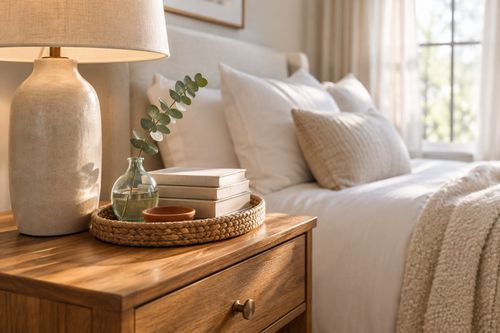
Style a Layered Nightstand Vignette in 1 Hour for $35

Style a Layered Nightstand Vignette in 1 Hour for $35

Turn a cluttered nightstand into a cozy styled vignette with the height-rule trick—1 hour, $35, instant bedroom upgrade.

The Cafe Rod Trick for a Fake Built-In Vanity

The Cafe Rod Trick for a Fake Built-In Vanity

Fake a built-in bathroom vanity shelf with a tiny cafe rod and basket—zero drilling, zero suction cups, full deposit intact.

Tension Rod Shelf: The Rod Width That Won't Slip

Tension Rod Shelf: The Rod Width That Won't Slip

Build a hidden double-decker shelf under your sink for $6—the rod tension width is what keeps it from crashing down on cleaning day.

Mulch Perennial Beds for Winter in 1 Hour for $25

Mulch Perennial Beds for Winter in 1 Hour for $25

Tuck your perennials in right! A 3-inch mulch blanket now saves roots from winter heave for about $25.

logo
  • Home Improvement
  • DIY Projects
  • Interior Design
  • Gardening & Outdoor
  • Real Estate
  • Home Improvement
  • DIY Projects
  • Interior Design
  • Gardening & Outdoor
  • Real Estate
  • ​

Linen Closet Fix: The Compression Ratio Nobody Expects

A comforter takes up a whole shelf because it's mostly trapped air, not fabric — remove that air with a vacuum seal, and the actual bedding underneath it turns out to need a fraction of the space.
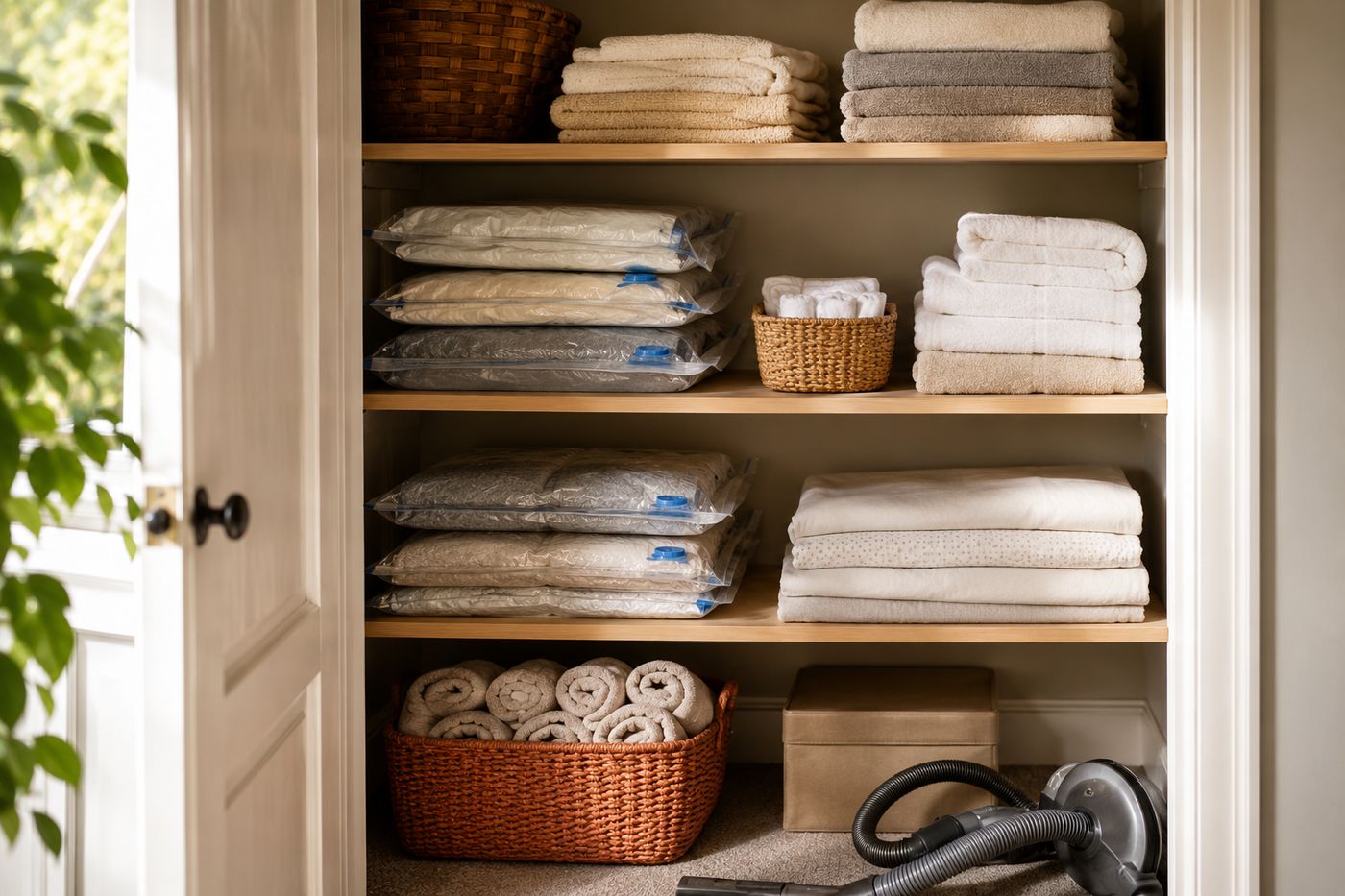
An organized linen closet with vacuum-compressed storage bags holding flattened bedding, freeing up shelf space
Interior Design

A fluffy comforter feels bulky because the fill inside it — down, poly-fill, whatever the insulation is — traps huge amounts of air between the fibers, and that trapped air is what actually accounts for most of the item's physical volume, not the fabric or fill material itself. A vacuum storage bag removes that air specifically, which is why a king-size comforter that occupies an entire shelf can compress down to the thickness of a hardcover book once the air is gone — the actual material was never taking up that much space to begin with. That's the mechanical reason this storage method works so much better than simply folding items more tightly, since folding can't remove air trapped inside the fill the way a vacuum seal does. The airtight seal has a second benefit beyond space: it keeps out dust, moths, and moisture completely, which is why bedding stored this way for months comes out smelling clean rather than musty. A pack of bags costs about $18 and reorganizing a full closet takes about an hour.

What You'll Need

  • Vacuum storage bags, assorted sizes — about $18 for a pack of eight
  • Vacuum cleaner with a hose attachment
  • Clean, dry bedding to store — comforters, pillows, blankets, off-season linens
  • Labels or masking tape, for identifying contents once bags are flattened

How to Do It

  1. Empty the linen closet completely so you can see everything you're working with and plan the new layout from a clean slate.
  2. Confirm every item going into a bag is fully clean and completely dry — sealing away any dampness or residue traps it inside the airtight bag for months, which defeats the whole freshness benefit.
  3. Stuff a comforter, pillow set, or blanket into an appropriately sized bag, even if it looks impossibly full at first.
  4. Seal the zip closure completely along its full length, checking for any gaps that would let air back in during compression.
  5. Attach your vacuum hose to the bag's valve and run the vacuum until the bag has fully compressed and stops shrinking further, which typically takes under a minute.
  6. Remove the hose and confirm the valve seals itself, keeping the bag airtight without the vacuum attached.
  7. Label each flattened bag with its contents, since compressed bedding looks nothing like its original shape and is hard to identify at a glance later.
  8. Stack the flattened bags on shelves, taking advantage of the reclaimed space to reorganize the rest of the closet's contents more logically.
DESIGNER TIP

Professional organizers who set up seasonal storage systems often avoid vacuum-sealing down-filled bedding for extended periods beyond a single season, since prolonged heavy compression can affect how well the down fibers loft back to their original fluffiness once released, unlike synthetic fill which generally bounces back regardless of how long it was compressed. Reserving vacuum bags for synthetic-fill items or shorter seasonal storage keeps this method working well for every type of bedding in the closet.
Related Content

Interior Design

04 November 2026

Post

Style a Layered Nightstand Vignette in 1 Hour for $35

Turn a cluttered nightstand into a cozy styled vignette with the height-rule trick—1 hour, $35, instant bedroom upgrade....

Interior Design

02 November 2026

Post

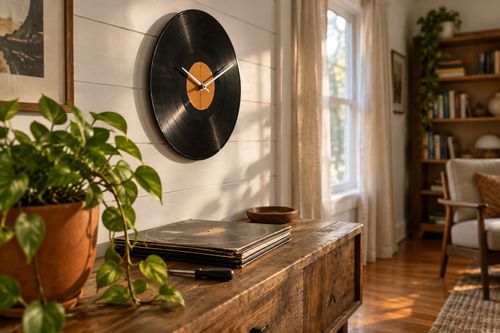
Vinyl Record Clock: The Center Hole Size That Matters

Turn a scratched vinyl record into a working wall clock—the center hole size is what keeps the mechanism snug instead of wobbling off-center. Under $15....

Interior Design

26 October 2026

Post

Fish Tank Terrarium: The Drainage Layer That Saves It

Turn a leaky old fish tank into a stunning terrarium—the gravel drainage layer is what stops root rot before your plants ever get a chance....

Interior Design

24 October 2026

Post

Tie-Dye Shower Curtain: The Fold That Makes Spirals

Turn a plain $8 shower curtain into a wild tie-dye spiral—the fold-and-twist technique is what makes the pattern radiate instead of blotch....

Interior Design

21 October 2026

Post

Peel-and-Stick Wallpaper Accent Wall in 3 Hours for $60

Turn one blank wall into a showstopper with peel-and-stick wallpaper—no wet paste, no mess, just a sharp accent wall by dinnertime....

Interior Design

19 October 2026

Post

Necktie Wall Organizer: The Knot Spacing That Holds

Turn old neckties into a boho wall organizer for keys and mail—even knot spacing is what keeps the pockets from sagging open. Under $10....

Interior Design

17 October 2026

Post

Neon Ombré File Cabinet: The Tape Order That Prevents Bleed

Turn a beige metal file cabinet into a neon ombré showstopper—the tape-layering order is what keeps colors crisp instead of muddy. Under $25....

Interior Design

15 October 2026

Post

Style a Cozy Fall Guest Bathroom Refresh in 2 Hours for $35

Turn a sterile guest bath into a warm fall retreat with layered textiles and scent—2 hours, $35, zero renovation required....

Interior Design

13 October 2026

Post

Whisk Jewelry Holder: The Bend That Stops Sagging

Turn a $1 dollar-store whisk into a boutique earring holder—the wire bend angle is what stops it from drooping under real jewelry weight....

Interior Design

12 October 2026

Post

Shutter Towel Rack: The Anchor Screw That Won't Rip Out

Turn a salvaged wood shutter into a bathroom towel rack—the stud anchor is what stops it ripping out under soaked towels....

Interior Design

11 October 2026

Post

Style a Cozy Window Seat Nook in 2 Hours for $45

Turn a bare window seat into a cozy fall reading nook with the right cushion layering trick—2 hours, $45, instant curl-up energy....

Interior Design

10 October 2026

Post

Sunburst Mirror: The Ray Overlap That Hides Gaps

Paint a bold rainbow sunburst mirror for $25—overlapping each ray's base is the trick that hides gaps and makes it look store-bought....

Interior Design

07 October 2026

Post

Style a Cozy Fall Bedroom Refresh in 2 Hours for $50

Layer flannel, wool, and warm light the right way and your bedroom finally feels like fall — 2 hours, $50, zero renovation....

Interior Design

03 October 2026

Post

Style a Fall Bookshelf Refresh in 2 Hours for $40

Turn a cluttered bookshelf into a magazine-worthy fall vignette using the triangle rule and warm accents—2 hours, $40, zero carpentry....

Interior Design

03 October 2026

Post

Gold Leaf Frame: The Size Overlap That Prevents Cracks

Turn a plain thrift mirror into a bold gold-leaf statement piece—overlapping each sheet correctly is what stops the finish from cracking and flaking later....
Terms and ConditionsDo Not Sell or Share My Personal InformationPrivacy PolicyPrivacy NoticeAccessibility NoticeUnsubscribe
Copyright © 2026 DIY HomeBoost