Bookshelf Restyle: 25 Minutes to Gallery-Like
A shelf packed tight with books lined up the same way isn't organized, it's just dense — the actual thing that makes a shelf look styled is breaking that repetition on purpose.
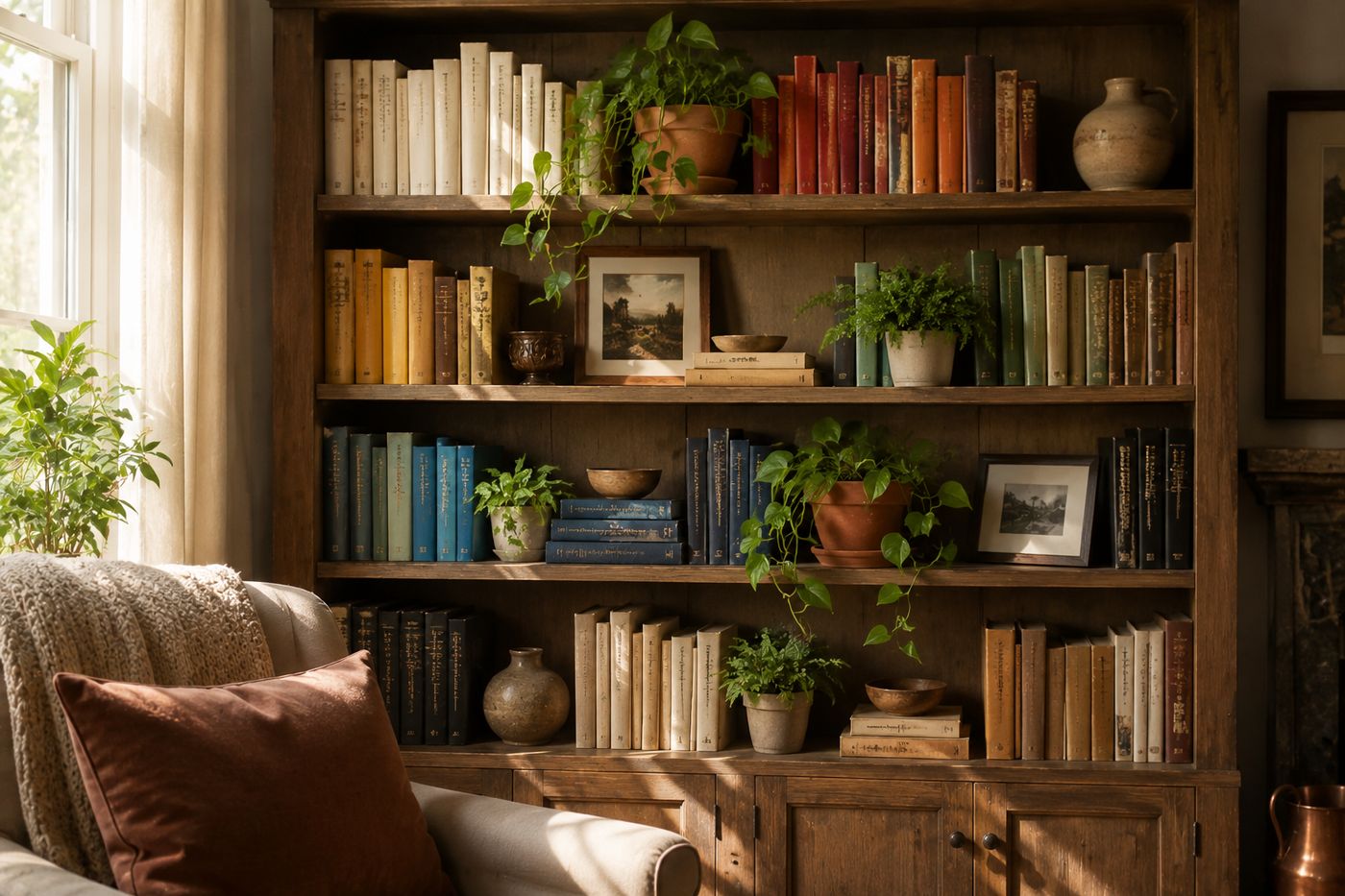
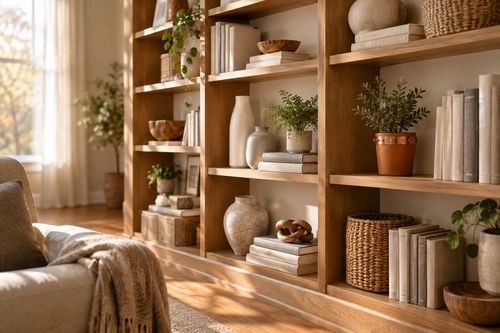
A shelf where every book stands upright, spine-out, in one continuous row reads as storage, not decor, because the eye has nothing to land on — every object is doing the exact same visual job at the exact same height. The distinction between a shelf that looks curated and one that just looks full comes down to visual rhythm: some books standing, some stacked flat, a few objects breaking up the book line entirely, and a bit of empty space left on purpose instead of packing every inch. That variation is what gives the eye somewhere to rest and makes the shelf read as intentional rather than simply stored. Grouping any decorative objects in odd numbers — the same "rule of three" designers use everywhere from vase arrangements to gallery walls — reinforces that same effect, since odd-numbered groupings feel balanced without feeling matched. None of this costs anything beyond the 25 minutes it takes to pull everything off, decide what stays, and put it back with intention.
What You'll Need
- A dust cloth or microfiber towel
- A box or bag for donations
- A few decorative objects you already own — a plant, a small framed photo, a bowl, a small sculpture
- Nothing else required — this is a styling project, not a shopping trip
How to Do It
- Remove everything from one shelf at a time rather than emptying the whole bookshelf at once — working shelf by shelf keeps the mess contained and the decisions manageable.
- Dust the empty shelf and wipe down the surface thoroughly, since bookshelves collect dust in a way that's easy to ignore until everything is off of them.
- Sort each book and object into keep, donate, or relocate as you handle it, being honest about books you know you'll never reread and knickknacks that are only there out of habit.
- Stack some books horizontally and stand others vertically as you return them — this single variation is what breaks up the repetitive spine-out row and creates the visual rhythm that separates styled shelves from stored ones.
- Group books loosely by color or size within each section for a cohesive look, rather than mixing heights and colors randomly across the shelf.
- Leave some breathing room rather than filling every available inch — negative space is part of what makes a shelf read as curated instead of crammed.
- Intersperse a few decorative objects among the books in odd-numbered groupings — three feels intentional in a way two or four doesn't — and pull a few pieces slightly forward of the books behind them for visual depth.
- Place heavier books toward the lower shelves as you finish, both for visual balance and practical stability.
Interior stylists who style bookshelves for photography or staging often use a stack of horizontal books as a small pedestal for a single object on top, rather than placing that object directly on the shelf surface. Elevating one piece — a small plant, a framed photo — even by just a few inches gives the whole grouping a sense of height variation that a flat row of objects can't achieve on its own.